

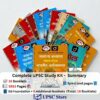
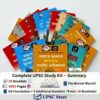
Drishti IAS GS Foundation + Additional Booklets Hindi Medium 2026-27 | 16 Booklets | Hindi Medium | UPSC Study Material
Binding Guide
Pick the binding that fits how you study.
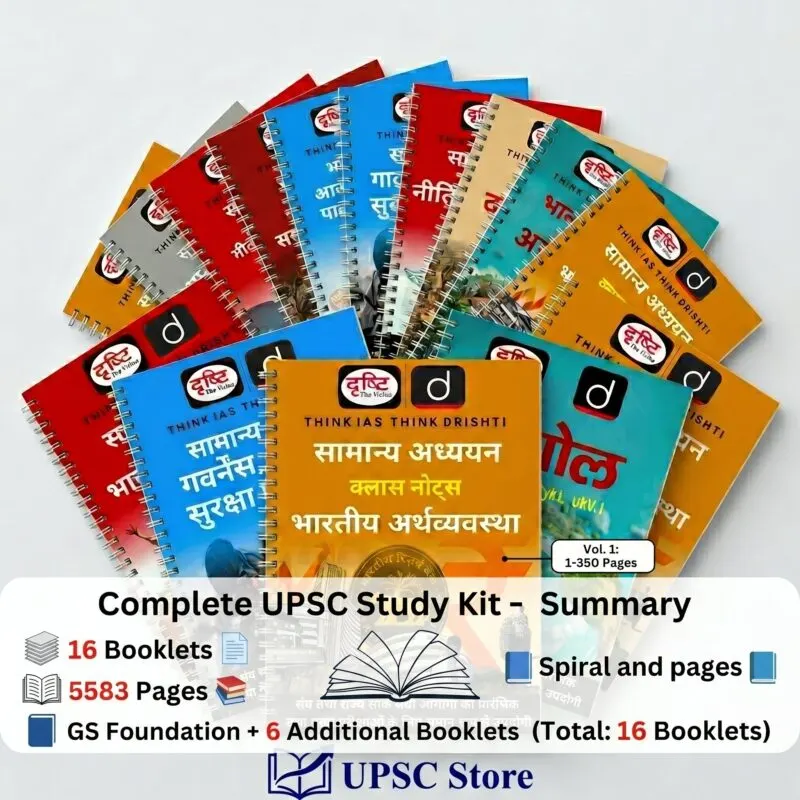
Spiral Binding
- Lays completely flat
- 360° page rotation
- Great for note-taking
- Best for maths, science, reference
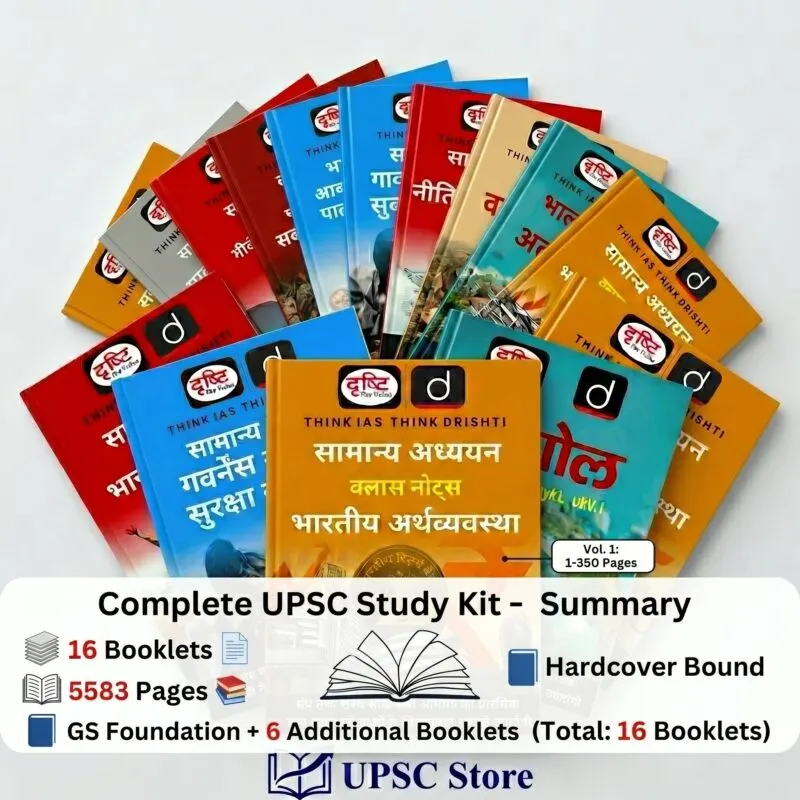
Without Spiral
- Compact & professional
- Sturdy glued/stitched spine
- Easy to stack & store
- Best for textbooks & long-term
About Drishti IAS Hindi GS Foundation
The Drishti IAS Hindi GS Foundation is a printed UPSC study material set sold by UPSC Store — India’s trusted source for genuine, latest-batch civil services preparation books. This page covers full booklet details, syllabus coverage, pricing, shipping, and frequently asked questions. Useful for UPSC CSE, BPSC, UPPSC, MPPSC, RAS and other state PSC examinations.
Drishti IAS Hindi Medium 16 Booklet Combined New Edition 2026-27 | GS Foundation | UPSC Study Material
Related: Drishti IAS notes · General Studies notes
Product Overview
Buy Drishti IAS GS Foundation printed notes online — the complete 16-booklet Hindi medium set designed for UPSC aspirants targeting 2026-27 examination cycle. This comprehensive collection covers the entire General Studies syllabus with naturally written Hindi content, not translated material. Perfect for Hindi medium students preparing for both prelims and mains examinations.
| Feature | Details |
|---|---|
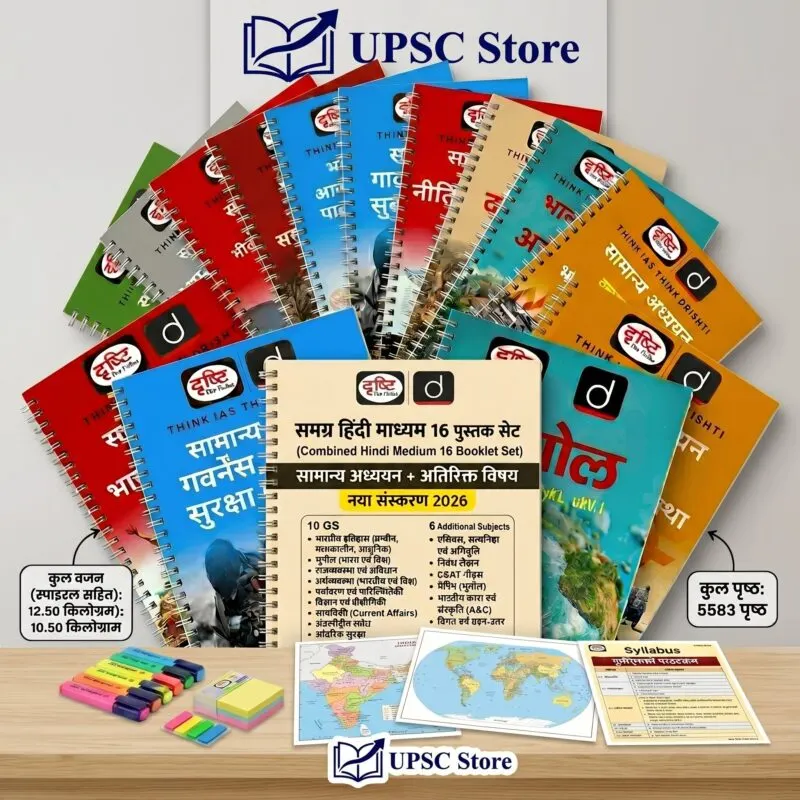
| Booklets Count | 16 Individual Printed Booklets — Complete GS Foundation Curriculum |
| Total Pages | 5583 Pages Across All 16 Booklets |
| Language | Hindi Medium (हिंदी माध्यम) — Naturally Written, Not Translated |
| Publisher | Drishti IAS (Drishti The Vision Foundation) |
| Edition | 2026-27 — Latest High-Quality Printed Batch |
| Condition | Brand New, Unmarked, Fresh Stock |
| Format | High-Quality Printed Booklets — Spiral or Book Binding Options |
| Paper Quality | 75 GSM Ultra-White — Highlighter Safe, Zero Bleed-Through |
| Weight (Spiral) | 12.50 kg — Portable Yet Comprehensive |
| Weight (No Spiral) | 10.50 kg — Compact Book Binding Option |
| Shipping | Pan India Delivery in 3-5 Business Days — Tracked with WhatsApp Updates |
| Also Useful For | BPSC, UPPSC, MPPSC, RAS, KPSC, JPSC, OPSC and all State PSC Examinations |
Free Items & Selection Kit (₹0 Additional Cost)
When you buy this Drishti IAS GS Foundation 16-booklet set, you receive premium freebies designed to enhance your UPSC study experience:
- Highlighter Pen Set: Multi-color highlighters (FREE) — for color-coded revision and important concept marking across all 16 booklets without bleed-through on 75 GSM paper
- Sticky Notes Bundle: Self-adhesive repositionable sticky notes (FREE) — for quick reference flags, margin notes, and topic cross-references across General Studies sections
- India Political & Physical Maps: Full-color laminated wall maps (FREE) — essential for Geography, History, Governance, and International Relations booklet study
- World Map: Comprehensive world map (FREE) — for World History, International Relations, and disaster management geographical context
- UPSC CSE Syllabus Booklet: Complete official UPSC 2026-27 syllabus (FREE) — cross-reference guide showing how each booklet aligns with prelims and mains requirements
Total Freebie Value: ₹1,200+ — All items included at zero additional cost when you buy online from our Mukherjee Nagar store.
Complete Booklet Catalog
This 16-booklet Drishti IAS GS Foundation set covers the entire UPSC General Studies syllabus for both prelims and mains examination. Designed specifically for Hindi medium aspirants, each booklet provides structured, naturally written content aligned with current affairs, recent policy changes, and UPSC question patterns.
- Booklet 1: निबंध (Essay) — Essay writing techniques, structure, and models for UPSC mains General Studies Paper V. Includes 15+ sample essays on current topics, essay planning strategies, and evaluation methods used by UPSC examiners for 250-mark essay section.
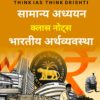
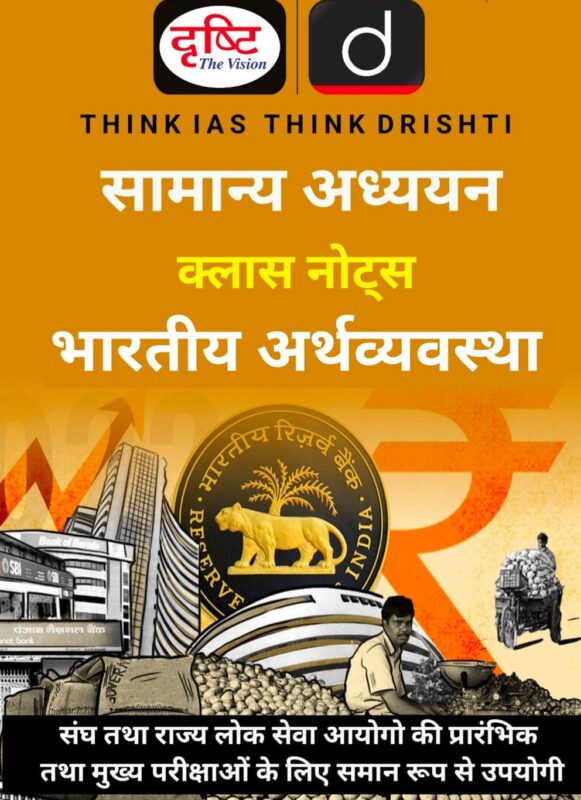
- Booklet 2: अर्थव्यवस्था (Economy) — Macroeconomics, microeconomics, Indian economic policy, monetary policy, fiscal policy, inflation, GDP, trade, foreign investment, agriculture economics, and industrial policy relevant to UPSC mains General Studies Paper III.
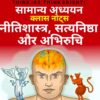
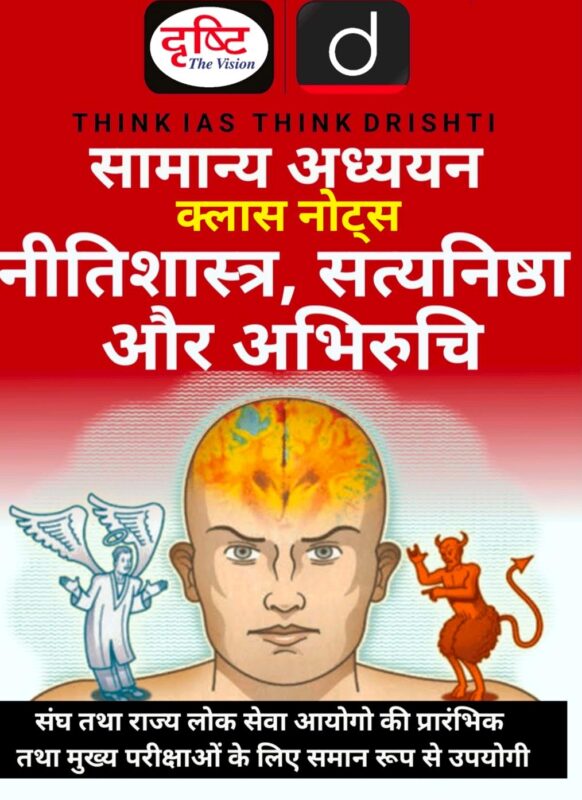
- Booklet 3: नैतिकता और अंतर्संबंध (Ethics & Integrity) — Ethics, integrity, honesty, values in governance, public administration ethics, case studies for UPSC mains General Studies Paper IV. Includes 25+ real-world ethical dilemmas and decision-making frameworks for aspirants.
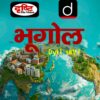
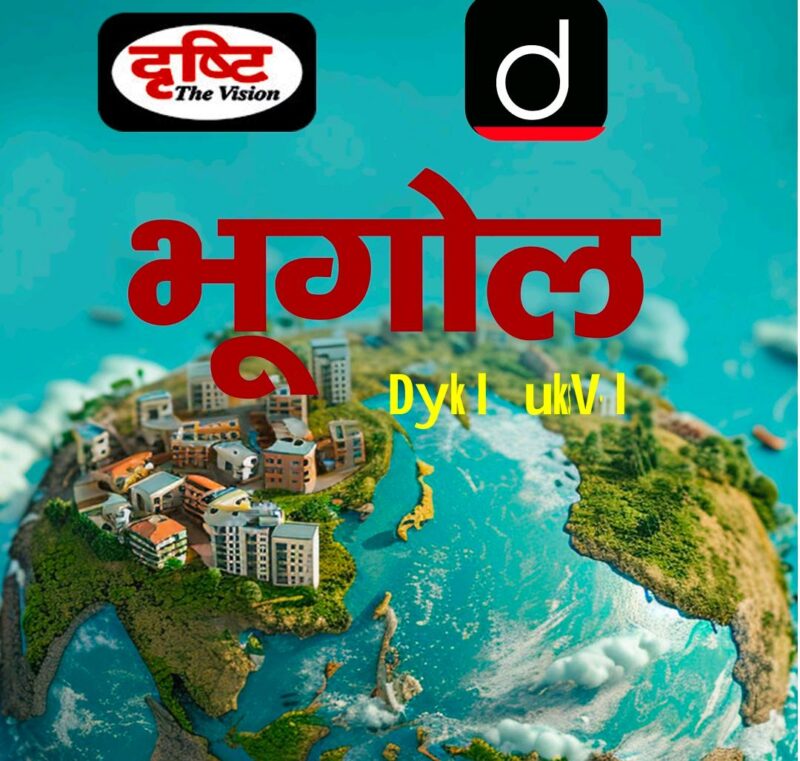
- Booklet 4: भूगोल (Geography) — Physical geography, geomorphology, weather systems, climate zones, water bodies, mountain ranges, and human geography essential for both UPSC prelims and mains General Studies Papers I and II.
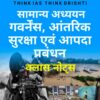
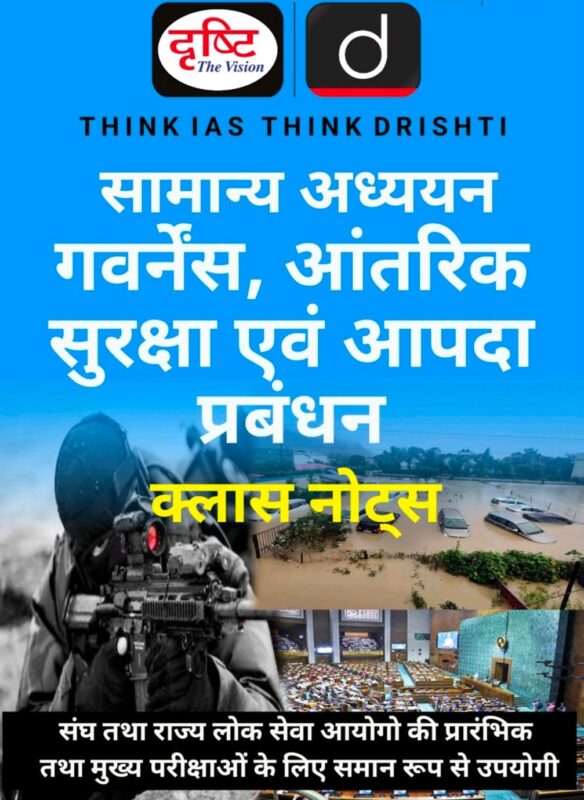
- Booklet 5: शासन, आंतरिक सुरक्षा और आपदा प्रबंधन (Governance, Security & Disaster) — Government structures, constitutional mechanisms, internal security challenges, terrorism, cybersecurity, natural disasters, disaster management, and emergency response systems for UPSC mains General Studies Paper III.
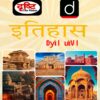
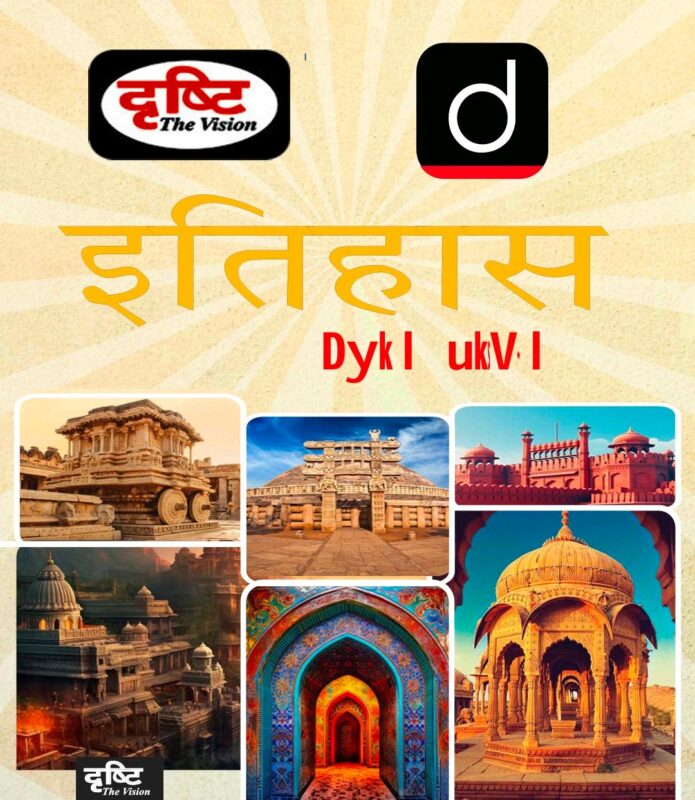
- Booklet 6: इतिहास एवं कला-संस्कृति (History & Art-Culture) — Ancient, medieval, and modern Indian history covering major dynasties, kingdoms, empires, architectural styles, and cultural movements essential for UPSC prelims and mains General Studies Papers I and II.
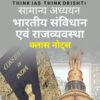
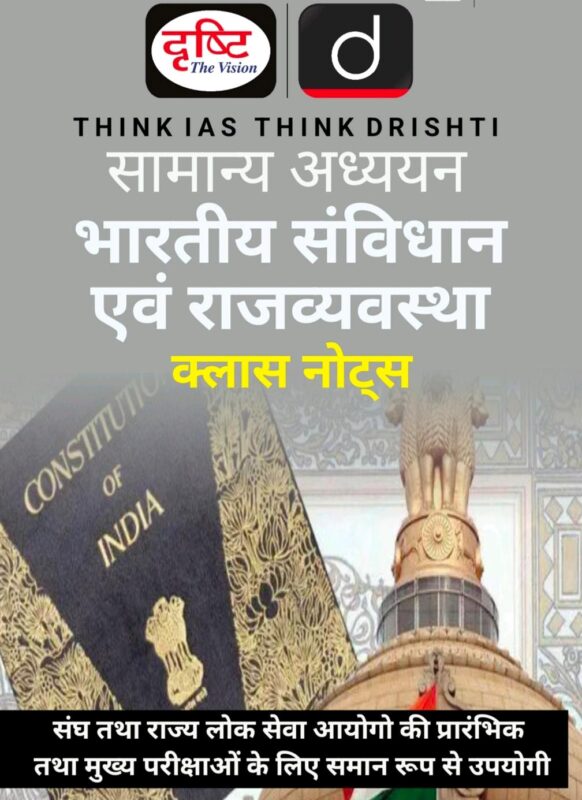
- Booklet 7: भारतीय राजनीति एवं संविधान (Polity) — Indian Constitution, governmental structures, legislature, executive, judiciary, federalism, union and state powers, rights and duties, electoral system, and constitutional amendments for UPSC General Studies Paper II.
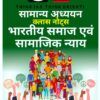
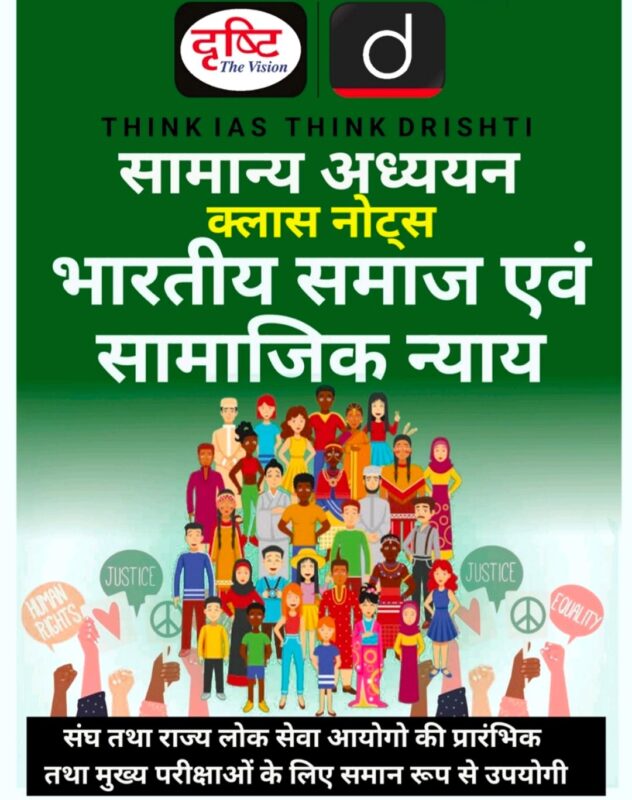
- Booklet 8: भारतीय समाज एवं सामाजिक न्याय (Society & Social Justice) — Social structure, caste system, gender issues, poverty, education, health, social welfare schemes, rights of minorities, backward classes, and social development indices for UPSC General Studies Paper I and Paper II.
- Booklet 9: अंतरराष्ट्रीय संबंध (International Relations) — India’s foreign policy, bilateral relations with major powers, regional cooperation frameworks, United Nations, international organizations, global geopolitics, and strategic partnerships for UPSC mains General Studies Paper II.
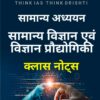
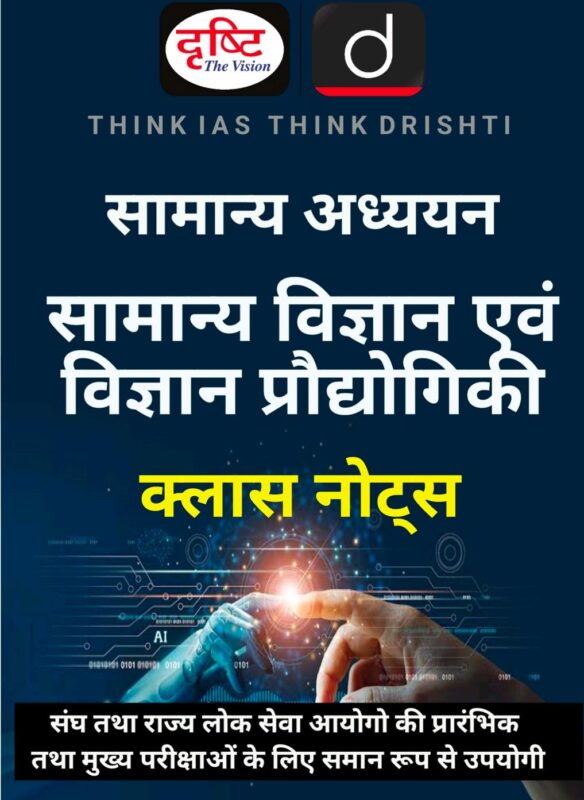
- Booklet 10: सामान्य विज्ञान एवं प्रौद्योगिकी (Science & Technology) — Physics, chemistry, biology, space technology, information technology, biotechnology, renewable energy, climate science, and scientific developments relevant to UPSC prelims and mains General Studies Papers III and I.
- Booklet 11: UPSC CSE Syllabus (Prelims + Mains) — Complete UPSC Civil Service Examination syllabus with breakup of all General Studies papers, optional subjects, interview, and detailed topic mapping for 2026-27 examination cycle.
- Booklet 12: भूगोल मानचित्रण (Geography Mapping) — Detailed maps, cartography, map-based questions, location-based General Studies content, physiographic divisions, river systems, mineral resources, and economic zones with regional context.
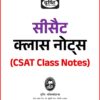
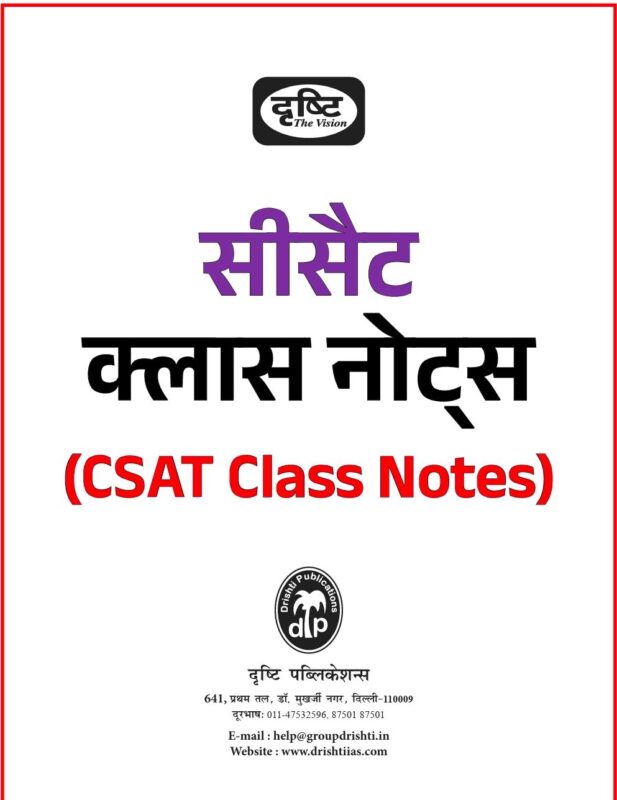
- Booklet 13: CSAT Class Notes — Civil Service Aptitude Test preparation including logical reasoning, analytical ability, decision-making, numerical reasoning, and comprehension strategies for UPSC prelims Paper II qualifying exam.
- Booklet 14: विश्व इतिहास (World History) — World history from ancient civilizations through modern era, major empires, revolutions, world wars, decolonization, and global movements relevant for UPSC General Studies mains and prelims comparative perspective questions.
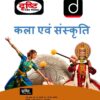
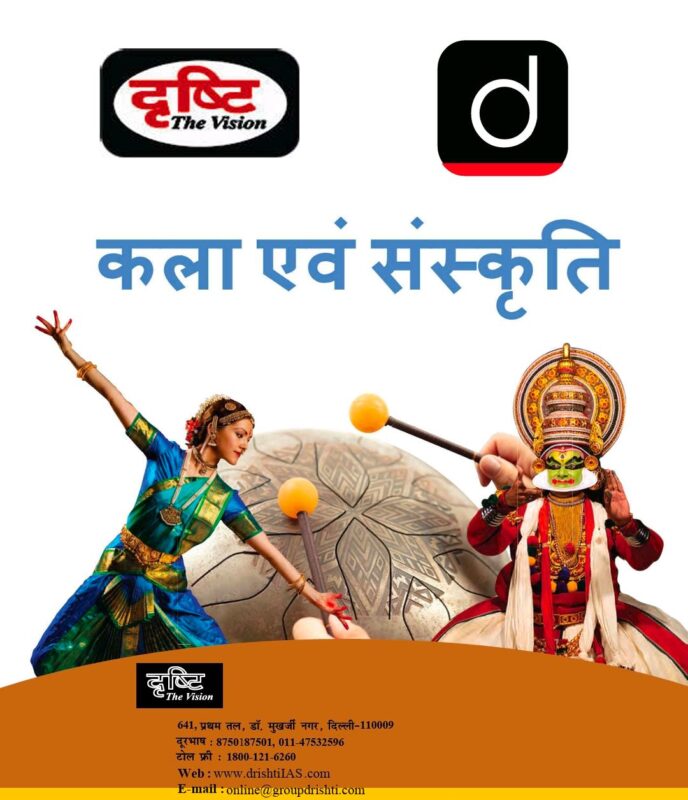
- Booklet 15: भारतीय कला एवं संस्कृति (Art & Culture) — Indian classical arts, performing arts, visual arts, architecture, literature, music traditions, cultural heritage, UNESCO sites, and contemporary cultural issues for UPSC General Studies Paper I.
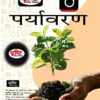
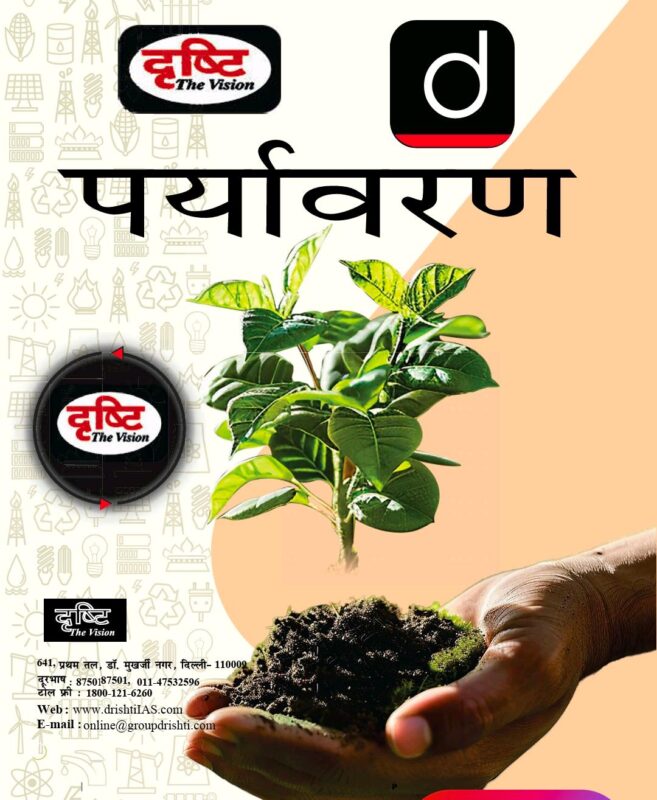
- Booklet 16: पर्यावरण एवं पारिस्थितिकी (Environment & Ecology) — Ecosystems, biodiversity, conservation, pollution, climate change, environmental policies, sustainable development, and ecological issues crucial for UPSC prelims and mains General Studies Paper III.
In-Depth Content Breakdown: Booklet by Booklet
Booklet 1: निबंध (Essay)
The Essay booklet is critical for UPSC mains General Studies Paper V where you write 1-2 essays worth 250 total marks. Drishti IAS provides 15+ sample essays on contemporary topics including governance challenges, social issues, technological impact, environmental sustainability, and cultural themes. Each sample essay follows UPSC evaluation criteria with clear thesis statements, logical flow, and conclusion frameworks. The booklet includes essay writing techniques like brainstorming, outline preparation, real-world examples integration, and time management strategies for 2.5-hour exam duration. Perfect for Hindi medium aspirants wanting to develop essay writing skills in natural Hindi language with proper vocabulary and expression.
This booklet uniquely focuses on common UPSC essay topics from past 5 years with trend analysis. You get model answers showing various approach styles — narrative, analytical, critical, and prescriptive. The content breaks down how to incorporate case studies, current affairs, historical parallels, and philosophical perspectives into essay writing. Special section on common mistakes in essay writing helps you avoid topic deviation, loose arguments, and poor conclusion. Drishti’s Hindi medium expertise shines here with naturally flowing essay samples that don’t read as translations, essential for scoring high marks in subjective paper evaluation where evaluators notice artificial language.
Booklet 2: अर्थव्यवस्था (Economy)
Economic concepts form a crucial part of UPSC mains General Studies Paper III, and this booklet covers macroeconomics, microeconomics, Indian economic policy comprehensively. Topics include GDP measurement, inflation dynamics, monetary policy transmission, fiscal policy, banking sector reforms, GST implementation, agricultural economics, and industrial policy frameworks. The booklet explains how Reserve Bank of India operates, how interest rates affect economy, what fiscal deficit means, and how trade policies impact Indian industries. Designed for Hindi medium students, complex economic concepts are explained with simple analogies and real Indian examples like demonetization impact, GST rollout challenges, and inflation in essential commodities.
Special features include latest economic data (2024-25 onwards), current economic challenges India faces, and government policy responses. Charts and diagrams show trends in India’s GDP growth, inflation rate movements, foreign investment inflows, and trade balance over time. The booklet connects economic concepts to UPSC prelims multiple-choice questions with examples of past questions and how economic theory answers them. For mains preparation, you get framework-based answers showing how to structure economics answers using data, policy context, and forward-looking analysis. Hindi medium content ensures you understand nuances without translation confusion, critical for explaining complex economic mechanisms in exam answers.
Booklet 3: नैतिकता और अंतर्संबंध (Ethics & Integrity)
Ethics and Integrity booklet directly supports UPSC mains General Studies Paper IV, which tests your ethical values, honesty, integrity, and decision-making capability. The booklet provides 25+ real case studies of ethical dilemmas faced by civil servants, engineers, judges, and administrators in practical governance scenarios. Each case presents a situation, asks what ethical principle is being tested, and provides multiple decision paths with ethical implications. Topics covered include conflict of interest, bribery resistance, transparency in governance, whistleblower protection, justice delivery, and social responsibility. Perfect for Hindi medium aspirants who need to articulate ethical reasoning clearly in exam responses without struggling with English terminology.
The booklet includes frameworks for ethical decision-making based on virtue ethics, consequentialism, deontological approaches, and justice theories. It connects philosophical ethics to practical administration showing how bureaucrats handle corruption pressure, favoritism demands, and ethical compromises in real work environment. Special section on values in governance explains neutrality, impartiality, dedication to public service, and social consciousness expected from IAS officers. Case study analysis helps you develop structured approach to ethics case studies — identifying stakeholders, defining ethical principles at stake, weighing options, and justifying your decision. Drishti’s approach emphasizes natural Hindi expression of ethical concepts making your mains paper answers more authentic and evaluator-friendly.
Booklet 4: भूगोल (Geography)
Geography booklet covers physical geography (landforms, climate, water bodies, weather systems) and human geography (population, culture, economy, settlements) essential for both UPSC prelims and mains. Physical geography section explains plate tectonics, mountain formation, river systems, monsoon dynamics, and various climate zones across India and world. You learn why Western Ghats receive high rainfall, how monsoons form, what causes earthquakes in Himalayan region, and climate adaptation strategies different regions follow. Human geography covers population distribution patterns, urbanization trends, agricultural systems, industries, and cultural landscapes. Organized by geographical regions — North India, South India, Northeast, coastal areas, and international context.
Special focus on Indian geography includes detailed study of Western Ghats, Eastern Ghats, Indo-Gangetic Plain, Himalayan systems, Thar Desert, Deccan Plateau, and major river systems with their tributaries and ecological significance. Maps and diagrams show physical features, climate zones, vegetation types, and population density variations. For mains preparation, the booklet includes case studies on geographical issues like coastal erosion, desertification, water scarcity, and climate change impacts on specific regions. Climate change section covers India’s vulnerability, monsoon variability, glacier retreat in Himalayas, and sea-level rise threats to coastal areas. Hindi medium content explains geographical terminology naturally — समुद्र तल, जलवायु पैटर्न, पारिस्थितिकी तंत्र — without awkward translations.
Booklet 5: शासन, आंतरिक सुरक्षा और आपदा प्रबंधन (Governance, Security & Disaster)
This booklet addresses UPSC mains General Studies Paper III topics on governance structures, administration mechanisms, and internal security frameworks. Governance section covers Union and State government structures, constitutional bodies like Election Commission, Supreme Court, Parliament, cabinet system, and bureaucracy. You understand how policy making happens, how laws are enacted, implementation challenges, and accountability mechanisms. Internal security section covers terrorism, communal violence, left-wing extremism, insurgencies in Northeast, Jammu-Kashmir security situation, and counter-terrorism strategies. Disaster management section includes natural disaster types — earthquakes, floods, cyclones, tsunamis — and human-made disasters, India’s disaster management framework, and mitigation strategies.
Current governance challenges covered include federalism issues, center-state relations, decentralization through panchayats and municipalities, administrative reforms, and corruption control mechanisms. Internal security content ties to recent incidents and policy responses showing how India’s security apparatus works — intelligence agencies, paramilitary forces, coast guard, and police systems. Disaster management section explains National Disaster Management Authority (NDMA), state mechanisms, community-based disaster risk reduction, and lessons from major disasters in India. Maps show terrorism-affected regions, disaster-prone areas, and security deployment zones. Hindi medium explanation of governance mechanisms and security operations helps Hindi medium aspirants articulate complex administrative concepts clearly in mains answers, improving evaluation scores significantly.
Booklet 6: इतिहास एवं कला-संस्कृति (History & Art-Culture)
History and Art-Culture booklet covers ancient Indian history (Harappa, Vedic period, Maurya, Gupta empires), medieval history (Delhi sultanate, Mughal empire, regional kingdoms), modern history (British colonization, independence movement, post-independence), alongside classical and contemporary art forms. Each period includes major empires, key rulers, administrative systems, economic organization, art, and architecture. For instance, Mauryan section covers Ashoka’s conversion to Buddhism, his edicts, administration under Chandragupta Maurya, and trade networks. Mughal section details architectural achievements like Taj Mahal, administrative innovations like mansabdari system, and cultural synthesis. Independence movement section traces major events from 1857 revolt through 1947 freedom struggle with key figures and movements.
Art and Culture section covers classical dances (Bharatanatyam, Kathak, Kathakali), classical music traditions (Hindustani, Carnatic), temple architecture (South Indian gopurams, North Indian nagara style), and Buddhist and Jain art. UNESCO World Heritage sites in India are mapped showing architectural diversity across regions. Contemporary art movements, literature, and cinema are included for mains questions connecting history to modern cultural context. The booklet provides chronological tables, dynasty charts, and architectural styles comparison for quick revision. UPSC prelims questions from history are interspersed throughout showing exam-oriented approach. Hindi medium content brings Indian history alive with naturally flowing narrative — राज्य, साम्राज्य, कला, संस्कृति — making it relatable for Hindi medium students while maintaining historical accuracy required for UPSC.
Booklet 7: भारतीय राजनीति एवं संविधान (Polity)
Polity booklet is fundamental for UPSC as Indian Constitution forms core of General Studies Paper II questions. The booklet provides detailed study of Constitution structure, Preamble, fundamental rights (Articles 12-35), directive principles (Articles 36-51), and fundamental duties (Article 51A). You understand the three-fold structure of Indian government — legislature (Parliament with Lok Sabha and Rajya Sabha), executive (President, Prime Minister, Cabinet), and judiciary (Supreme Court, High Courts). Federal structure section explains how power is distributed between Union and States, concurrent list, and state list subjects. Electoral system section covers how President is elected, how Parliament members are chosen, and electoral commission role.
Constitutional amendments are detailed showing how Constitution has evolved since 1950, with focus on major amendments like those affecting federalism, representation, and rights. Special sections cover Union Public Service Commission (UPSC recruitment mechanism itself), state civil services, and merit-based selection. Recent constitutional developments, Supreme Court judgments on constitutional interpretation, and legislative history of important laws are included. The booklet has framework-based summaries of complex concepts like Article 370 (now repealed), federalism principles, and emergency provisions. Comparison of Indian Constitution with other democracies helps understand India’s unique constitutional choices. Hindi medium content explains अनुच्छेद (articles), मौलिक अधिकार (fundamental rights), राज्य नीति के निर्देशक सिद्धांत (directive principles) in natural Hindi making constitutional nuances clear for Hindi medium aspirants scoring well in mains answers.
Booklet 8: भारतीय समाज एवं सामाजिक न्याय (Society & Social Justice)
Social structure and social justice booklet covers caste system evolution, gender disparities, communal diversity, poverty, education access, health disparities, and social welfare schemes. Caste section traces how caste originated, its evolution over centuries, and constitutional provisions for social justice including reservations (SC/ST/OBC). Gender section covers women’s status across different indicators — literacy, workforce participation, crime against women, political participation — with policy responses like PNDT Act, laws against dowry, and gender sensitization. Social diversity section explains India’s religious, linguistic, and ethnic composition with focus on minority rights and communal harmony frameworks.
Special sections cover important social welfare schemes — MGNREGA (rural employment), PM-JAY (health insurance), education schemes, and targeted programs for vulnerable populations. Health and education disparities are analyzed with regional variations and government initiatives to reduce gaps. The booklet includes data on poverty lines, human development indices, and social indicators compared across states and with international comparisons. Backward caste movement, women’s movements, and social reform movements in Indian history are connected to contemporary social justice issues. Bonded labor, child marriage, dowry systems, and gender-based violence are discussed with legal and policy frameworks addressing them. Hindi medium content naturally expresses social issues — दलित उत्पीड़न, महिला सशक्तिकरण, सामाजिक न्याय — helping Hindi medium aspirants analyze complex social issues with nuance in mains examination answers.
Booklet 9: अंतरराष्ट्रीय संबंध (International Relations)
International Relations booklet covers India’s foreign policy, bilateral relations, regional cooperation, and global role in international system. India’s foreign policy section begins with Nehru’s principles of non-alignment, evolution through Cold War, and contemporary doctrine under current government. Bilateral relations cover major powers — USA, Russia, China — with strategic depth on Indo-US defense cooperation, Indo-Russia historical ties, and India-China border issues. Regional cooperation section covers SAARC, BIMSTEC, Shanghai Cooperation Organization (SCO), BRICS, and India’s role in Asian geopolitics. India’s relations with key regional neighbors — Pakistan, Bangladesh, Nepal, Sri Lanka, Myanmar, Afghanistan — are analyzed with historical context and current issues.
International organizations section covers UN system, World Bank, IMF, WTO, and India’s participation and voting positions. Global issues like climate change (Paris Agreement), nuclear non-proliferation, terrorism, refugee crises, and pandemic response show India’s diplomatic approach. Geopolitical hotspots — Palestine-Israel, Korea, Ukraine, South China Sea — are examined from India’s perspective. India’s maritime strategy, Indian Ocean security, and freedom of navigation principles are explained with current incidents and policy implications. Arctic region and space technology diplomacy are covered for contemporary relevance. The booklet includes India’s aid programs (SAARC Aid, Line of Credit), humanitarian relief operations, and development partnerships showing India as responsible global actor. Hindi medium explanations of foreign policy concepts — अंतरराष्ट्रीय संबंध, कूटनीति, भू-राजनीति — make diplomatic nuances accessible for Hindi medium aspirants expressing foreign policy positions clearly in mains answers.
Booklet 10: सामान्य विज्ञान एवं प्रौद्योगिकी (Science & Technology)
Science and Technology booklet covers physics fundamentals, chemistry concepts, biology systems, and emerging technologies relevant to UPSC General Studies. Physics section includes mechanics, thermodynamics, electricity, and modern physics with practical applications. Chemistry covers atomic structure, chemical reactions, organic chemistry, and industrial chemical processes. Biology section covers cellular biology, genetics, evolution, human physiology, and ecology. Medical science updates include pandemic-related information, vaccine development, and health technology advances. The booklet connects scientific concepts to real-world applications and environmental implications important for mains questions linking science to society.
Technology section covers space science (ISRO missions, satellite technology), information technology (AI, blockchain, cybersecurity), biotechnology (genetic engineering, CRISPR), renewable energy (solar, wind, green hydrogen), and nanotechnology. Recent ISRO missions like Chandrayaan, Mangalyaan, and Gaganyaan program are covered with India’s space ambitions. Digital transformation in India — e-governance, digital payments, startup ecosystem — is explained with government initiatives like Make in India and Digital India. Emerging technologies like artificial intelligence, Internet of Things, and quantum computing are demystified for UPSC aspirants. Environmental technology section covers pollution monitoring technology, water purification systems, and climate tech innovations. Science and technology policy in India, research funding, and innovation ecosystem are covered. Hindi medium content explains complex scientific concepts — कृत्रिम बुद्धिमत्ता, जैव प्रौद्योगिकी, पुनर्नवीकरणीय ऊर्जा — making scientific literacy accessible for Hindi medium aspirants explaining technology impact in mains answers.
Booklet 11: UPSC CSE Syllabus (Prelims + Mains)
The UPSC CSE Syllabus booklet is your roadmap for the entire Civil Service Examination covering prelims, mains, and interview stages. Prelims section details General Studies Paper I (current affairs, history, geography, society, science) and Paper II (CSAT covering comprehension, logic, numeracy). Mains section breaks down four General Studies papers — Paper I (culture, society, constitution history), Paper II (polity, governance, social justice), Paper III (economy, infrastructure, security), Paper IV (ethics, aptitude, integrity) — plus optional subject syllabus frameworks. Interview preparation section explains personality assessment, work experience evaluation, and current affairs questioning expected in final stage.
The booklet provides topic mapping showing which UPSC CSE questions have come from which topics historically, helping you identify high-weight areas for focused preparation. Trend analysis shows evolution of question patterns over 5-10 years indicating which topics are gaining emphasis. Weight distribution shows percentage of marks from different subjects in prelims and mains helping prioritize preparation. Integration of optional subjects with General Studies is explained showing how specialized knowledge in optional enhances GS performance. Last-minute revision checklists help you cover critical topics before exam. The syllabus booklet is your constant reference throughout preparation ensuring no topic is missed and preparation remains systematic. Hindi medium context is provided explaining how Hindi medium aspirants can leverage language advantage in mains GS papers requiring natural expression and cultural sensitivity understanding.
Booklet 12: भूगोल मानचित्रण (Geography Mapping)
Geography Mapping booklet is unique visual resource containing detailed maps of India and world showing physical features, political boundaries, economic zones, disaster-prone regions, and strategic locations. Map types include physical maps (mountains, rivers, plateaus, plains), political maps (states, union territories, international boundaries), climate maps (rainfall zones, temperature zones, monsoon patterns), vegetation maps (forest types, grasslands, desert regions), and economic maps (mineral resources, agricultural zones, industrial regions). Each map is accompanied by geographical explanation connecting cartography to UPSC syllabus topics relevant for both prelims and mains examination success.
Specific map series cover Himalayan region (geography, geopolitics, climate change impact), Western and Eastern Ghats (biodiversity, tribal populations, terrain), peninsular rivers (flow patterns, dam locations, irrigation), coastal regions (maritime zones, ports, climate vulnerability), and deserts (Thar desert, ecology, development challenges). Political maps show states undergoing boundary changes, reorganization history, and administrative divisions. Strategic maps show military deployment zones, border areas, and geopolitical flashpoints. The booklet includes latitude-longitude grids, scale references, and legend explanations for map reading. Disaster maps show earthquake zones, flood-prone areas, cyclone paths, and drought-prone regions helping understand India’s vulnerability patterns. Historical maps trace territorial evolution, ancient kingdoms, trade routes, and colonization boundaries. This visual geography resource is especially valuable for Hindi medium aspirants who can now access detailed cartographic information in Hindi context instead of struggling with English geography textbooks.
Booklet 13: CSAT Class Notes
CSAT (Civil Service Aptitude Test) booklet prepares you for UPSC prelims Paper II which is qualifying exam (minimum 33% marks required) testing mental ability rather than subject knowledge. The booklet covers logical reasoning with syllogism, logical deduction, and analytical puzzles. Comprehension section includes unseen passages in Hindi and English with question-answer frameworks teaching how to extract relevant information from complex texts. Numerical reasoning covers arithmetic, percentages, averages, ratios, time-distance-work problems, and data interpretation with graph analysis. Decision-making section presents scenarios asking how you would handle specific situations showing your judgment and practical reasoning ability.
The booklet includes strategy guides for each question type explaining how to approach different problem categories systematically. Time management techniques help you solve 80 questions in 120 minutes — the actual CSAT exam constraint. Error analysis section helps you learn from common mistakes in logical reasoning and numerical calculation. Practice problems are categorized by difficulty level (easy, medium, hard) allowing progressive skill building. Recent CSAT papers (past 5 years) are analyzed showing question trends and recurring problem types. Hindi medium advantage is explained showing how Hindi medium aspirants can use language skills for comprehension section advantage. The booklet emphasizes that CSAT is not knowledge test but ability test — logic thinking, reading comprehension, and numerical sense — skills independent of medium of instruction.
Booklet 14: विश्व इतिहास (World History)
World History booklet provides global historical context essential for UPSC mains General Studies Paper II questions often comparing India with world developments. Ancient history section covers major civilizations — Egyptian, Mesopotamian, Greek, Roman — their political systems, economic organization, art, and decline. Medieval history covers Islamic civilization, Renaissance in Europe, and developments in East Asia. Early modern history covers Age of Exploration, colonization of Americas and Asia, and mercantilism. Industrial Revolution section explains technological changes, economic transformation, and labor system shifts in Europe spreading to America. Social and political movements — French Revolution, American Independence, Liberal and Socialist movements — are detailed with ideological significance.
Modern history section covers World War I (causes, consequences, peace treaties), interwar period, World War II (causes, WWII impacts, Holocaust), Cold War (bipolarity, proxy wars, decolonization), and contemporary international relations. Decolonization section is especially important showing how Asian and African colonies became independent, comparing India’s independence struggle with other colonies’ experiences. Cultural history includes artistic movements, philosophical thought, literature, and scientific revolutions showing intellectual evolution of humanity. Economic history traces mercantilism, capitalism evolution, colonial economic systems, and modern global economy. The booklet emphasizes interconnection between world history and Indian history showing India’s role in global events. Comparative analysis shows how political systems, economic models, and social structures differ across civilizations helping understand India’s unique historical choices. Hindi medium learners benefit from world history explained in natural Hindi without heavy English historical terminology creating accessibility.
Booklet 15: भारतीय कला एवं संस्कृति (Art & Culture)
Indian Art and Culture booklet covers classical and contemporary art forms, architecture, literature, performing arts, and intangible cultural heritage. Classical Indian arts section covers major dance forms — Bharatanatyam (South India temple tradition), Kathak (North India court tradition), Kathakali (Kerala dramatic dance), Odissi (Odisha dance), Kuchipudi (Andhra Pradesh), and Manipuri (Northeast). Each dance form is explained with origins, characteristics, costumes, and repertoire. Classical music covers Hindustani music (North India vocal and instrumental traditions) and Carnatic music (South India system) with raga system, taals, and major musicians. Instruments are described with geographical origins and modern modifications.
Architecture section covers distinct styles — Mauryan (simple stone), Gupta (classical refinement), Hindu-nagara style (North India temples), Dravidian-dravida style (South India temples with gopurams), Indo-Islamic (mosque and tomb architecture like Taj Mahal), and colonial architecture. Temple complexes like Khajuraho, Konark Sun Temple, and Meenakshi Temple are detailed with artistic and religious significance. Literature section covers Sanskrit epics (Mahabharata, Ramayana), classical poetry, medieval literature (devotional movements), and modern Indian literature in different languages. UNESCO intangible cultural heritage designations for Indian art forms are listed. Folk arts and tribal art traditions across regions are covered showing India’s cultural diversity. Contemporary art movements and cultural issues like art preservation, copyright, and cultural commodification are discussed. Hindi medium presentation makes Indian cultural concepts — नृत्य, संगीत, वास्तुकला — naturally accessible for Hindi medium aspirants appreciating cultural nuances essential for mains examination answers.
Booklet 16: पर्यावरण एवं पारिस्थितिकी (Environment & Ecology)
Environment and Ecology booklet covers ecosystem types, biodiversity patterns, environmental degradation, climate change, conservation strategies, and environmental policies critical for UPSC mains General Studies Paper III. Ecosystem section explains biotic and abiotic components, food chains, energy flow, and ecosystem services. Forest ecosystems cover tropical rainforests (Western Ghats, Northeast forests), tropical deciduous forests, temperate forests, and desert ecosystems with their vegetation and animal diversity. Aquatic ecosystems include freshwater (rivers, lakes) and marine ecosystems with unique biodiversity. Biodiversity section explains species distribution, endemism (species found only in specific regions), and India’s biodiversity hotspots — Western Ghats, Northeast India, Sundarbans. Endangered species and conservation programs are detailed with focus on Project Tiger, Project Elephant, and marine conservation initiatives.
Climate change section explains greenhouse effect, global warming mechanisms, and climate change impacts specific to India — monsoon variations, glacier retreat in Himalayas, sea-level rise threatening coastal areas, and changing agricultural productivity patterns. Pollution chapter covers air pollution (sources, health effects, pollution control acts), water pollution (industrial discharge, agricultural runoff, plastic pollution), soil degradation, and noise pollution. Conservation strategies include protected area network (national parks, wildlife sanctuaries), buffer zones, and community-based conservation models. Environmental policies cover Environment Protection Act, Wildlife Protection Act, Forest Conservation Act, and recent regulations on pollution control. Renewable energy transition and sustainable development goals are covered showing environmental solutions. The booklet emphasizes ecosystem services approach showing economic value of environmental conservation. Hindi medium environmental terminology — जैव विविधता, पारिस्थितिकी तंत्र, संरक्षण — is naturally explained making environmental concepts accessible for Hindi medium aspirants required to discuss ecological issues clearly in mains examination answers.
Physical Construction and Quality Standards
These Drishti IAS 16-booklet set is manufactured with premium quality standards ensuring durability throughout your rigorous UPSC preparation spanning 6-12 months of intensive study. Each booklet undergoes quality checks for print clarity, binding strength, and paper consistency. The manufacturing process uses industrial-grade machinery ensuring uniform printing across 5583 total pages maintaining high legibility standards necessary for long study hours.
Paper Quality: 75 GSM Anti-Glare White Paper
The booklets use 75 GSM ultra-white paper selected specifically for UPSC study material avoiding eye strain during extended reading sessions. The paper opacity prevents ink show-through from reverse side even with heavy underlining and highlighting. Multiple highlighter colors (yellow, pink, green, blue) work seamlessly without bleeding through to reverse page — critical feature when studying 5583 pages across 16 booklets. The anti-glare surface reduces reflective brightness preventing eye fatigue during multiple study rounds. Paper smoothness enables effortless pen writing for marginal notes and annotation without paper resistance. The ultra-white tone provides contrast with black printed text ensuring crisp readability from distance too. Paper thickness prevents page warping even in humid climates where document storage becomes challenging.
Printing Technology: High-Resolution Laser Printing
Drishti IAS uses high-resolution laser printing technology ensuring crisp, sharp text output across all 5583 pages. Diagrams, flowcharts, maps, and charts in Geography Mapping and other booklets maintain clarity without pixelation or blurriness. Black toner is permanent and smudge-proof — your notes won’t get dirty even if booklets are accidentally rubbed or handled roughly during travel. Color printing for maps and diagrams uses quality color laser technology producing vibrant outputs without color bleeding. Printing resolution of 1200+ DPI ensures even small text in tables and footnotes remains clear. The laser printing process applies toner uniformly preventing dark and light patches across pages. Print permanence ensures no fading over months of study and reference — text and images remain equally visible in month 12 as in month 1 of your preparation.
Binding and Durability
The booklets come in two binding options serving different study preferences. Spiral binding opens completely flat allowing you to write notes alongside text without awkward angle — essential when studying lengthy chapters in Economy, Polity, or Science & Technology booklets. The spiral mechanism allows individual booklet to stay open at any page without closing back up, ideal for simultaneous reference with other materials during mains answer writing practice. Book binding provides compact storage and portability — the set weighs 10.50 kg in book format versus 12.50 kg in spiral format making travel to coaching centers easier. Book binding uses 300 GSM laminated cover protecting content from damage during handling and transportation. Both binding options feature colored spines with clear labeling enabling quick booklet identification in your study setup. Pages are sewn into binding, not just glued, preventing page separation even with frequent leafing through during revision.
Key Features and Study Design
These Drishti IAS GS Foundation booklets are specifically designed for UPSC 2026-27 preparation combining comprehensive content, Hindi medium accessibility, and exam-focused structure for maximum utility during your entire preparation journey.
- 16-Booklet Modular Structure: Dividing complete General Studies curriculum into 16 focused booklets allows targeted study of each topic without overwhelming volume in single book. You can assign 2-3 weeks per booklet completing entire GS syllabus systematically. Modular approach prevents knowledge gaps where full syllabus books require skipping topics due to time constraints.
- 5583 Total Pages Comprehensive Coverage: The extensive page count ensures no UPSC syllabus topic is left without detailed explanation. Economy booklet covers microeconomics and macroeconomics depth. Polity booklet explains every Constitutional article and amendment. History booklet provides dynasty-by-dynasty coverage. Science booklet covers physics, chemistry, biology, and technology separately ensuring specialist depth impossible in shorter books.
- Naturally Written Hindi Medium Content: Unlike translated English materials, Drishti’s Hindi content is originally written by Hindi-speaking faculty ensuring natural language flow and cultural appropriateness. Hindi medium aspirants don’t struggle understanding concepts due to translation awkwardness. Historical concepts use appropriate Hindi terminology — राज्य, साम्राज्य, शासन, नीति — that resonate naturally with Hindi medium educational background reducing concept absorption time significantly.
- UPSC Question-Pattern Based Organization: Content is structured mirroring how UPSC asks questions rather than strictly following textbook sequencing. For instance, History booklet emphasizes administrative systems, economic organization, and art-culture of each period because UPSC focuses on these angles rather than chronological lists of rulers. Economy booklet prioritizes current Indian economic policy and challenges reflecting mains examination focus rather than pure economic theory.
- Multiple Choice and Mains Answer Frameworks: Booklets include both prelims-style multiple-choice questions and mains-style answer frameworks with key points and examples. This dual approach prepares you simultaneously for both exam stages. Prelims sections help you develop quick decision-making skills for competitive MCQ environment. Mains answer frameworks teach you how to structure 250-300 word answers for subjective papers using data, examples, and logical flow.
- Maps, Charts, Diagrams and Tables: Visual learning aids are extensively used throughout all 16 booklets. Geography booklet provides detailed maps of India and world with strategic locations marked. Economy booklet includes trending charts for inflation, GDP growth, and trade data. History booklet has timeline tables for dynasties and major events. Polity booklet contains flowcharts for government structure and constitutional provisions. These visuals are essential for topics like Geography Mapping, Science diagrams, and Art-Culture architectural styles where visual understanding supplements text learning.
- Current Affairs Integration Till 2025: Booklets include latest policy changes, recent events, and current affairs integration up to early 2025 ensuring your preparation remains contemporary for 2026 exam. Recent developments like new cabinet positions, recent Supreme Court judgments, latest government schemes, and recent international developments are integrated into relevant chapters rather than kept separate from static content.
Shipping, Packaging and Delivery
Your Drishti IAS 16-booklet GS Foundation order is carefully packaged ensuring all 5583 pages and free materials (highlighters, sticky notes, maps) arrive in perfect condition at your doorstep. The booklets are individually shrink-wrapped preventing dust accumulation and minor handling damage. The shrink-wrap is transparent allowing you to verify booklet condition before opening. Entire set is placed in sturdy corrugated box (Kraft box, 5-ply construction) providing shock absorption during transit. Edge protectors and cardboard dividers prevent booklets from shifting inside box during transportation. The corrugated box is sealed with quality tape and includes your order number and delivery address clearly printed preventing misrouting.
Delivery is guaranteed within 3-5 business days across pan-India territory using professional logistics partners with real-time tracking capability. You receive WhatsApp updates at +91 85802 57424 with order confirmation, dispatch notification, and expected delivery date. Tracking ID is provided enabling you to monitor shipment movement. Delivery happens Monday-Saturday (not Sunday holidays) at addresses accessible to delivery personnel. If any booklet is damaged in transit or missing in the package, contact us immediately with photo evidence and we replace the missing booklet within 48 hours without additional charges. If delivery doesn’t happen within 5 days, we investigate with logistics partner and provide refund or re-shipment option at zero cost to you. Packaging quality and delivery reliability are our commitment to UPSC aspirants whose exam preparation cannot be delayed due to logistics issues.
Frequently Asked Questions (FAQ)
A: Yes, these 16 booklets comprehensively cover UPSC General Studies syllabus for both prelims and mains examinations. Prelims-specific content includes current affairs, recent developments, and quick-reference formats for MCQ preparation. Mains content provides detailed explanations, case studies, and answer frameworks for subjective papers. Combined preparation from these booklets enables simultaneous prelims and mains readiness. However, supplement with current affairs sources (newspapers, magazines) for last 2-3 months of exam as booklets content gets finalized 4-5 months before exam date.
A: The package includes exactly 16 booklets: (1) निबंध (Essay), (2) अर्थव्यवस्था (Economy), (3) नैतिकता और अंतर्संबंध (Ethics & Integrity), (4) भूगोल (Geography), (5) शासन, आंतरिक सुरक्षा और आपदा प्रबंधन (Governance, Security & Disaster), (6) इतिहास एवं कला-संस्कृति (History & Art-Culture), (7) भारतीय राजनीति एवं संविधान (Polity), (8) भारतीय समाज एवं सामाजिक न्याय (Society & Social Justice), (9) अंतरराष्ट्रीय संबंध (International Relations), (10) सामान्य विज्ञान एवं प्रौद्योगिकी (Science & Technology), (11) UPSC CSE Syllabus (Prelims + Mains), (12) भूगोल मानचित्रण (Geography Mapping), (13) CSAT Class Notes, (14) विश्व इतिहास (World History), (15) भारतीय कला एवं संस्कृति (Art & Culture), (16) पर्यावरण एवं पारिस्थितिकी (Environment & Ecology).
A: Yes, Drishti IAS GS Foundation 16-booklet set is available exclusively in Hindi medium (हिंदी माध्यम). The Hindi version is originally written by Hindi-medium faculty rather than translated from English ensuring natural language flow, appropriate Hindi terminology, and cultural relevance for Hindi medium aspirants. The content structure follows same UPSC-aligned curriculum but Hindi expression makes concepts more accessible. Hindi medium aspirants benefit significantly as complex topics like Constitutional articles, economic principles, and philosophical ethics are explained using natural Hindi vocabulary without awkward translations. This version particularly benefits students from Hindi-medium educational backgrounds who think naturally in Hindi.
A: For UPSC 2026 examination (expected notification in 2025, exam in September 2026), ideal time to start GS Foundation preparation is by January-March 2025. This allows 15-18 months for comprehensive GS preparation following study plan: spend 2-3 weeks per booklet (16 booklets = 5-6 months for first completion), then revise entire syllabus 2-3 times adding current affairs and optional subject integration. If starting after June 2025, focus immediately on important topics (Polity, History, Geography, Economy) completing them first before less-weighted subjects. The modular 16-booklet structure allows flexible scheduling — you can complete 1 booklet per week if studying full-time or 1 booklet per 2 weeks if working simultaneously.
A: These 16 Drishti booklets provide thorough coverage of entire UPSC General Studies syllabus (both prelims Paper I and mains Papers I-IV). The 5583 total pages ensure no topic is left without detailed explanation. However, for complete UPSC preparation, supplement these booklets with: (1) Current affairs sources (newspapers, magazines, online portals) for last 6 months before exam as booklet content gets finalized 4-5 months prior, (2) Optional subject books if you’ve chosen any optional, (3) Newspaper reading daily for Editorial analysis and current events, (4) Practice test series for mains answer writing and time management. The booklets form your base knowledge foundation making subsequent current affairs additions and practice more effective.
A: Drishti IAS GS Foundation booklets offer several competitive advantages: (1) Naturally written Hindi medium content for Hindi-medium aspirants rather than translations from English, (2) 16-booklet modular structure enabling focused systematic study of each subject, (3) 5583 total pages providing comprehensive depth impossible in condensed materials, (4) UPSC question-pattern based organization mirroring actual exam structure, (5) Dual preparation for prelims and mains simultaneously, (6) Maps, diagrams, and visual aids extensively used for complex topics like Geography and Science, (7) Latest edition (2026-27) incorporating 2024-25 updates and recent policy changes, (8) Combined with free highlighters, sticky notes, and maps providing complete study toolkit. These features collectively make Drishti materials more suitable for Hindi medium aspirants than competitor materials which are often English translations or lack Hindi medium focus.
A: Completing 16 booklets containing 5583 pages in 6 months requires approximately 3-4 hours daily study commitment (11-14 pages daily). With simultaneous job or other commitments limiting you to 2 hours daily, realistic completion timeline is 9-12 months. Strategy: allocate 1-2 weeks per booklet for initial reading, then 1 week for revision per booklet in second round. For working professionals, weekend-focused study works — complete 1 full booklet every 10 days (2-3 hours daily for 5-6 days). Don’t rush through booklets compromising retention; rather complete 4-6 booklets thoroughly in 3-4 months, then increase pace as your reading speed improves. The modular structure allows flexibility — prioritize heavily-weighted subjects (Polity, History, Economy, Geography) first, then lighter topics.
A: When you buy this Drishti IAS 16-booklet set from our store, you receive free items worth ₹1,200+: (1) Multi-color Highlighter Set (yellow, pink, green, blue pens) for color-coded revision, (2) Sticky Notes Bundle (self-adhesive repositionable notes) for quick reference flags, (3) India Political & Physical Maps (full-color laminated wall maps), (4) World Map (comprehensive geography reference), (5) UPSC CSE 2026-27 Syllabus Booklet showing complete exam structure and subject mapping. These freebies are included at zero additional cost and shipped together with your 16 booklets. The maps are especially valuable for Geography mapping study and History period understanding. The syllabus booklet helps you understand how each of 16 booklets aligns with UPSC’s prelims and mains structure maximizing preparation efficiency.
A: The booklets use premium 75 GSM ultra-white paper specifically chosen for high opacity preventing ink bleed-through to reverse page. Multiple highlighter colors (yellow, pink, green, blue) work seamlessly without staining back page — tested and verified. Gel pens, ballpoint pens, and fountain pens all work without paper resistance or bleed-through. The anti-glare surface reduces eye strain during extended study sessions. Paper smoothness enables effortless writing for marginal notes and annotation. The ultra-white tone provides excellent contrast with black printed text ensuring comfortable readability from distance. Paper thickness (75 GSM standard) prevents warping even in humid climates. You can confidently highlight, underline, and annotate all 5583 pages across 16 booklets without worrying about paper quality degradation or reverse-side damage — essential feature when studying multiple rounds of revision.
A: We deliver across all pan-India locations including remote areas using reliable logistics partners with experience in educational material delivery. Delivery timeframe is 3-5 business days for metro and tier-1 cities, 5-7 business days for tier-2/tier-3 cities, and 7-10 business days for remote locations. Every order receives tracking ID enabling you to monitor shipment in real-time. WhatsApp updates are sent at +91 85802 57424 with dispatch notification and expected delivery date. If your area has logistics restrictions, we’ll contact you with alternative delivery arrangements. If delivery doesn’t complete within promised timeline, we investigate with logistics partner and provide refund or re-shipment at zero cost. Delivery failure is rare with our partners given educational material’s stable demand, but customer satisfaction is our priority if any issue occurs.
A: Yes, Drishti IAS GS Foundation booklets are highly useful for state PSC examinations including BPSC (Bihar), UPPSC (Uttar Pradesh), MPPSC (Madhya Pradesh), RAS (Rajasthan), KPSC (Karnataka), JPSC (Jharkhand), and OPSC (Odisha). The reason is that state PSC General Studies syllabi heavily overlap with UPSC General Studies covering same subjects — History, Geography, Polity, Economy, Science, Society, Ethics. The only differences are state-specific content in governance (state administration), local history, and regional current affairs which you can supplement separately. These 16 booklets provide the solid foundation essential for all state PSCs. Additionally, many state PSCs are shifting examination pattern toward UPSC-like format making UPSC-prepared materials even more relevant. Hindi medium advantage is especially valuable for Hindi medium state PSC aspirants.
A: Quality assurance is critical for us given educational material’s importance to exam-preparing students. Each order is checked before dispatch ensuring all 16 booklets are included and properly packaged. During shipping, booklets are shrink-wrapped and placed in protective corrugated boxes with edge protectors minimizing damage risk. If despite precautions any booklet arrives damaged or is missing in the package, immediately contact us at +91 85802 57424 with photographs of damage/missing item and order number. We replace damaged or missing booklets within 48 hours at zero cost — you don’t repay anything. Replacement booklets are dispatched same day via express courier ensuring no delay to your preparation timeline. This 48-hour replacement guarantee reflects our confidence in product quality and commitment to customer satisfaction. In extremely rare cases where replacement isn’t possible (logistics failure), we provide proportional refund of damaged booklet cost.
Summary
| Specification | Value |
|---|---|
| Booklets | 16 Printed Booklets — Complete GS Foundation Curriculum |
| Total Pages | 5583 Pages Across All Booklets |
| Language | Hindi Medium (हिंदी माध्यम) — Naturally Written |
| Paper Quality | 75 GSM Ultra-White — Highlighter Safe, Zero Bleed-Through |
| Binding Options | Spiral Binding (12.50 kg) or Book Binding (10.50 kg) |
| Print Quality | High-Resolution Laser Printing — Crisp Text and Clear Diagrams |
| Edition | 2026-27 — Latest Updates Till Early 2025 |
| Freebies Included | Highlighters, Sticky Notes, India Map, World Map, Syllabus Booklet (₹1,200+ Value) |
| Delivery Timeline | 3-5 Business Days Pan India — Tracked with WhatsApp Updates |
| Replacement Guarantee | 48-Hour Replacement for Damaged/Missing Booklets — Zero Cost |
| Also Useful For | BPSC, UPPSC, MPPSC, RAS, KPSC, JPSC, OPSC and all State PSC Examinations |
Available at UPSC Store, Mukherjee Nagar, Delhi — WhatsApp +91 85802 57424 for order updates | Pan India delivery 3-5 days.
Reference: Civil Services Examination
Customer Reviews
No reviews yet
Be the first — bought this set? Tap “Write a Review” and tell other students how it arrived.
Only real buyers — we never post fake reviews.
Aspirants Also Bought
Same exam · bestsellers first

Vision IAS Prelims 2026-27 GS Test Series | 15–35 Tests | English Medium

Vajiram & Ravi General Studies Prelims Test Series 2026-27 | 10–30 Tests | English Medium | UPSC Study Material

Next IAS General Studies Prelims Test Series 2026-27 | 10–35 Tests | English Medium | UPSC Study Material
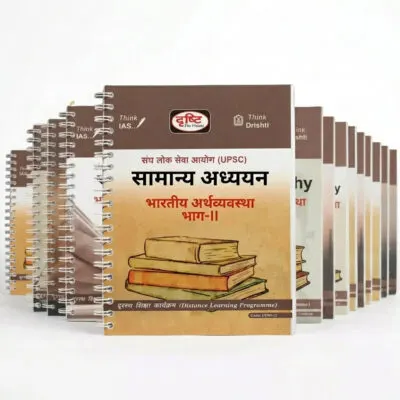
Drishti IAS Hindi Medium Complete GS Notes 2025-26 | 18 Booklets | Hindi Medium | UPSC Study Material
Drishti IAS Prelims Test Series 2026-27 | 10–35 Tests | English Medium | UPSC Study Material
Drishti IAS GS Foundation Notes 2025-26 | 27 Booklets | English Medium | UPSC Study Material

PW Only IAS Prelims 2026-27 Hindi Test Series | 10–35 Tests | Hindi Medium | UPSC Study Material

Forum IAS Prelims Topic-wise PYQs 1992-2025 | 7 Booklets | English Medium | UPSC Study Material

Shubhra Ranjan PSIR Optional Handwritten Notes 2026-27 | 11 Booklets | English Medium | UPSC Study Material
PW Only IAS Prelims Test Series 2026 | 10–35 Tests | English Medium | UPSC Study Material
About Drishti IAS GS Foundation + Additional Booklets Hindi Medium 2026-27
Drishti IAS GS Foundation + Additional Booklets Hindi Medium 2026-27 is an original printed study material set from Drishti IAS, covering GS Foundation + 6 Additional Booklets (16 Booklets). Available in Hindi medium, this set is counted booklet by booklet before dispatch — no photocopies, no missing booklets.
Product Details
- Institute: Drishti IAS
- Subject: GS Foundation + 6 Additional Booklets (16 Booklets)
- Medium: Hindi
- Pages: 5583
- Format: Spiral & Book Binding
- Delivery: Pan-India delivery in 4–7 working days, free over ₹1,999
- Condition: New, original print — counted before dispatch
Why Buy from UPSC Store?
- ✓ Original Printed Notes — no photocopies, every booklet counted before it ships
- ✓ Fast Dispatch — ships within 24 hours from Delhi, arrives in 4–7 days pan-India
- ✓ Secure Packaging — bubble-wrapped and boxed to prevent damage in transit
- ✓ 180+ Orders Shipped — to 25 states across India
- ✓ WhatsApp Support — ask which set fits your optional and medium before ordering
Frequently Asked Questions
Original print — the same printed booklets the institute issues. Every set is counted booklet by booklet before dispatch.
Orders are dispatched within 24 hours from Delhi and delivered across India in 4–7 working days. Delivery is free over ₹1,999.
Returns are accepted only if the problem is from our side: wrong item, damaged or defective copy, or missing booklets or pages. Report it within 7 days of delivery and we arrange a free pickup and send a free replacement or a full refund. We do not accept change-of-mind returns, so please check the medium, edition and binding before ordering. WhatsApp us to start a return.