
Drishti IAS GS Foundation Notes 2025-26
About Drishti IAS GS Foundation Notes
The Drishti IAS GS Foundation Notes is a printed UPSC study material set sold by UPSC Store — India’s trusted source for genuine, latest-batch civil services preparation books. This page covers full booklet details, syllabus coverage, pricing, shipping, and frequently asked questions. Useful for UPSC CSE, BPSC, UPPSC, MPPSC, RAS and other state PSC examinations.
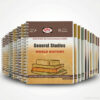
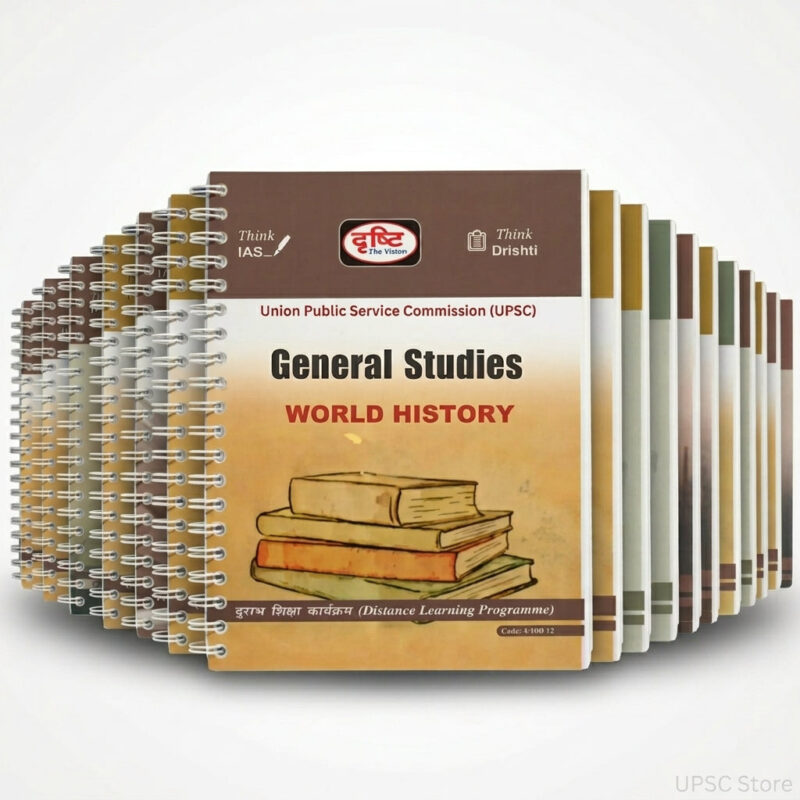
Drishti IAS GS Foundation Notes 2025-26 — 27 English Medium Printed Booklets for UPSC GS Paper 1, 2, 3 and 4
Related: Drishti IAS notes · General Studies notes
Product Overview
| Feature | Details |
|---|---|
| Booklets Count | 27 Individual Printed Booklets — Full GS Coverage: Paper 1, 2, 3 and 4 |
| Language | English Medium |
| Publisher | Drishti IAS (GS Foundation — Distance Learning Programme) |
| Edition | 2025-26 — Latest Genuine Batch |
| Condition | Brand New, Unmarked, Fresh Stock |
| Format | High-Quality Printed Booklets — Spiral or Book Binding |
| Paper Quality | 75 GSM Ultra-White — Highlighter Safe, Zero Bleed-Through |
| Shipping | Pan India Delivery in 3-5 Business Days — Tracked |
| Also Useful For | BPSC, UPPSC, MPPSC, RAS and all State PSC Exams |
Complete Booklet Catalog
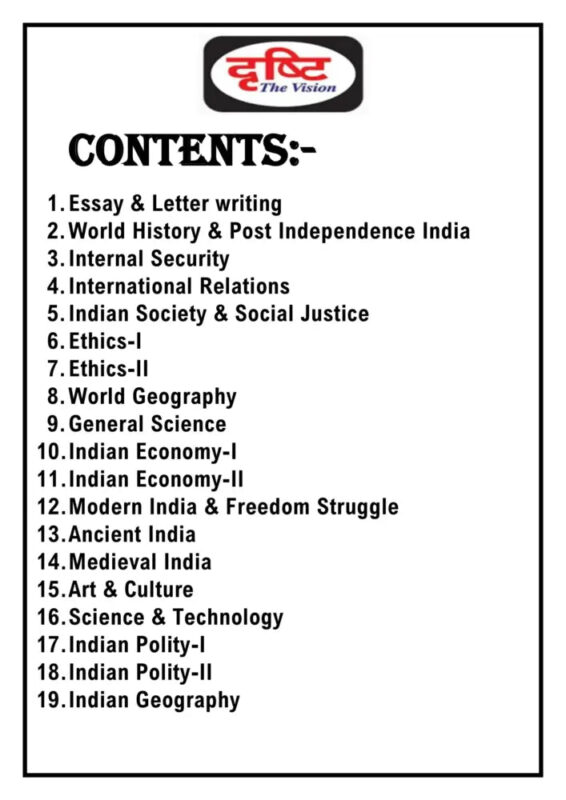
The Drishti IAS GS Foundation Notes 2025-26 set spans all four General Studies papers tested in UPSC Prelims and Mains, broken into 27 focused printed booklets that together cover the entire official UPSC syllabus. Whether you are beginning your UPSC preparation or revisiting key subjects before Mains, this set provides structured, exam-oriented coverage across History, Geography, Polity, Economy, Environment, Science and Technology, and Ethics.
- Booklet 1: Ancient and Medieval Indian History — Indus Valley Civilisation, Vedic Period, Mahajanapadas, Mauryan and Gupta Empires, Bhakti and Sufi movements, Vijayanagara Kingdom, Delhi Sultanate, Mughal administration, art and architecture traditions, religious reforms and cultural developments relevant to UPSC GS Paper 1.
- Booklet 2: Modern Indian History — British colonial entry and expansion, Revolt of 1857, Indian National Congress formation, partition of Bengal, extremist vs moderate debate, Non-Cooperation, Civil Disobedience, Quit India Movements, role of Gandhi, Nehru, Bose, Ambedkar, and the Independence and Partition of 1947.
- Booklet 3: World History — French Revolution, American Independence, Imperialism and Colonialism, World War I and II causes and consequences, Cold War, decolonisation, formation of the United Nations, Non-Aligned Movement, and significant post-war global political realignments covered in UPSC GS Paper 1.
- Booklet 4: Indian Society and Social Issues — Diversity of India, regionalism, communalism, secularism, role of women and women’s organisations, social empowerment, poverty, urbanisation, globalisation and its effects on Indian society, population and associated issues, and social justice themes from UPSC GS Paper 1.
- Booklet 5: Indian Physical Geography — Physiographic divisions of India, Himalayan ranges, peninsular plateau, rivers and drainage, Indian Ocean and Bay of Bengal significance, soils and natural vegetation, Indian monsoon mechanism, climate zones, earthquakes, volcanoes and disaster-prone regions mapped to UPSC GS Paper 1.
- Booklet 6: World Physical Geography — Interior of the earth, plate tectonics, landforms, ocean currents, atmosphere layers, climate classification, biomes and their distribution, important straits and passes, latitudes and longitudes, time zones, global wind patterns and their UPSC Prelims and Mains relevance.
- Booklet 7: Indian and World Economic Geography — Agriculture and cropping patterns, irrigation systems, mineral resources, energy resources, industries, transport networks in India, world economic geography — trade routes, major ports, multinational corporations and economic blocs, covered under GS Paper 1 and GS Paper 3.
- Booklet 8: Indian Polity — Constitutional Framework — Historical background of the Indian Constitution, Constituent Assembly debates, Preamble, Fundamental Rights, Directive Principles, Fundamental Duties, constitutional amendments, emergency provisions, and federalism principles critical for UPSC GS Paper 2 and Prelims.
- Booklet 9: Indian Polity — Parliament and State Legislature — Structure of Parliament, Lok Sabha and Rajya Sabha powers, legislative procedures, joint sitting, Budget and Finance Bill process, State Legislatures, Anti-Defection Law, Parliamentary committees, privileges, and question hour — all high-frequency UPSC GS Paper 2 topics.
- Booklet 10: Indian Polity — Executive and Judiciary — President, Vice President, Prime Minister, Council of Ministers, Governor, Chief Minister, State Councils, Supreme Court, High Courts, subordinate judiciary, judicial review, PIL, judicial activism, tribunals, and constitutional bodies relevant to UPSC GS Paper 2.
- Booklet 11: Governance and Social Justice — Important aspects of governance, transparency, accountability, e-governance, citizens’ charters, RTI, Lokpal, welfare schemes, health policy, education policy, poverty alleviation programmes, reservation and affirmative action — a vital section of UPSC GS Paper 2.
- Booklet 12: International Relations — India’s foreign policy evolution, bilateral relations with USA, China, Russia, Japan, ASEAN, SAARC, India and the United Nations, India’s nuclear doctrine, diaspora, recent geopolitical developments including Indo-Pacific, SCO, QUAD, and multilateral forums under UPSC GS Paper 2.
- Booklet 13: Indian Economy — Basics and Growth — National income accounting, GDP vs GNP, economic growth models, planning in India, NITI Aayog, inclusive growth, poverty measurement, inequality, employment, monetary and fiscal policy basics, and Indian economy overview relevant to UPSC GS Paper 3.
- Booklet 14: Indian Economy — Banking and Finance — Reserve Bank of India functions, monetary policy tools, banking sector reforms, NBFCs, financial inclusion, Jan Dhan Yojana, capital markets, insurance sector, government budget components, fiscal deficit, FRBM Act, GST, and direct and indirect taxation under UPSC GS Paper 3.
- Booklet 15: Agriculture and Rural Development — Green Revolution, Second Green Revolution, MSP and procurement, food security, PDS, agricultural marketing, APMC reforms, irrigation and water management, land reforms, rural employment (MGNREGA), PM Kisan, PM Fasal Bima Yojana — UPSC GS Paper 3 essentials.
- Booklet 16: Industry, Infrastructure and Investment — Industrial policy evolution, Make in India, Atmanirbhar Bharat, FDI and FII, SEZs, PPP model, infrastructure sectors (roads, railways, ports, airports), logistics, smart cities, DPIIT, and investment climate reforms under UPSC GS Paper 3.
- Booklet 17: Science and Technology — Part 1 — Space technology (ISRO missions), Defence technology (DRDO), nuclear energy, biotechnology basics, nanotechnology, robotics, artificial intelligence, and government technology missions — high-value topics in UPSC GS Paper 3 and Prelims.
- Booklet 18: Science and Technology — Part 2 — Information and Communication Technology, cyber security, emerging technologies (blockchain, quantum computing, 5G), intellectual property rights, technology transfer, indigenous defence production, digital India programme, and science policy frameworks for UPSC GS Paper 3.
- Booklet 19: Environment and Ecology — Part 1 — Ecosystem structure and function, biodiversity hotspots, protected area network, wildlife conservation, CITES, Convention on Biological Diversity, National Biodiversity Authority, species extinction, invasive species, and India’s biodiversity-related targets under UPSC GS Paper 3.
- Booklet 20: Environment and Ecology — Part 2 — Climate change, UNFCCC, Paris Agreement, India’s NDC commitments, carbon markets, pollution (air, water, soil, noise, plastic), solid waste management, green energy transition, environmental laws, NGT, EIA process — UPSC GS Paper 3 environment section.
- Booklet 21: Disaster Management — Types of disasters, NDMA framework, NDRF, Sendai Framework, disaster risk reduction, state disaster management plans, early warning systems, post-disaster reconstruction, community resilience, India’s international disaster relief role and recent disaster events for UPSC GS Paper 3.
- Booklet 22: Internal Security — Challenges to internal security — insurgency, Naxalism, terrorism, border management, cyber threats, organised crime-terror linkages, role of external actors, communication networks and internal security, security forces, AFSPA, and NIA — UPSC GS Paper 3 internal security topics.
- Booklet 23: Ethics — Foundations and Theory — Moral philosophy: determinism, free will, consequentialism, deontology, virtue ethics, Indian ethical thought (Gita, Buddhist ethics), normative vs descriptive ethics, moral reasoning, bias and prejudice, and attitude formation — the conceptual base of UPSC GS Paper 4.
- Booklet 24: Ethics — Integrity, Aptitude and Foundational Values — Integrity in public service, emotional intelligence, social influence, persuasion, civil service values (honesty, impartiality, dedication), foundational values, dedication to public service, empathy, tolerance — critical for UPSC GS Paper 4 scoring.
- Booklet 25: Ethics — Governance, Probity and Case Studies — Code of conduct, citizen charters, work culture, utilisation of public funds, challenges of corruption, RTI and ethics, corporate governance, international ethics, philosophies of administrators, and solved model case studies for UPSC GS Paper 4.
- Booklet 26: Current Affairs Integration — GS Paper 1 and 2 — Thematic current affairs mapped to the static syllabus of GS Paper 1 and GS Paper 2 — art and culture events, governance reforms, bilateral summits, constitutional amendments, social sector developments, and toppers’ integration notes for UPSC Mains 2025-26.
- Booklet 27: Current Affairs Integration — GS Paper 3 and 4 — Economy and environment current developments, technology policy updates, security-related events, ethics-related case studies from current events, government schemes, India’s international commitments and budget highlights — all integrated with the static syllabus for UPSC Mains 2025-26.
In-Depth Content Breakdown: Booklet by Booklet
Booklet 1: Ancient and Medieval Indian History
This booklet addresses the UPSC GS Paper 1 demand for a thorough understanding of Indian History from prehistoric times through the medieval period. It opens with pre-historic India and moves sequentially through the Indus Valley Civilisation, Vedic society, rise of Janapadas, Mauryan state structure under Ashoka, and the cultural flourishing of the Gupta era. Every topic is presented with UPSC Mains answer-writing in mind — key facts are highlighted, timelines are concise, and linkages between periods are drawn clearly.
The medieval section focuses on the Delhi Sultanate’s administrative and revenue innovations, Mughal architecture and art, and the transformative Bhakti-Sufi synthesis — a recurring UPSC Mains topic. Drishti IAS structures this content in short, answer-sized paragraphs that are easy to memorise and reproduce under exam pressure. Maps of key dynasties and trade routes add a visual dimension that supports both UPSC Prelims MCQs and Mains descriptive answers.
Booklet 2: Modern Indian History
Modern Indian History is among the highest-weightage topics in UPSC GS Paper 1 Mains and Prelims alike. This booklet traces the entry and consolidation of British power, the economic impact of colonialism — drain of wealth, deindustrialisation, land revenue systems — and the emergence of Indian nationalism. The 1857 Revolt is treated as a turning point, with multiple perspectives on its causes, spread and consequences presented so students can write multi-dimensional answers.
The freedom struggle section is presented thematically: the moderates’ constitutional methods, the extremists’ assertive nationalism, the Gandhian mass movement phase, and the final transfer of power including the complex Partition narrative. Key personalities — Gandhi, Nehru, Bose, Ambedkar, Bhagat Singh — are profiled with their ideologies and contributions. This booklet makes it easy to buy into a revision strategy because all high-frequency UPSC exam questions on modern history are addressed with factual precision.
Booklet 3: World History
World History forms an important but often under-prepared section of UPSC GS Paper 1. This booklet covers the syllabus from the 18th century onward: the philosophical foundations of the French Revolution, the American Declaration of Independence and constitutional democracy, European imperialism and its Asian and African impact, and the two World Wars with their causes, major events, treaties and consequences. The content is structured to enable 150-word and 250-word answers with clear argument flow.
The post-World War II section includes the Cold War, formation of the United Nations and specialised agencies, decolonisation waves, Non-Aligned Movement and India’s role, Korean War, Cuban Missile Crisis, Vietnam War, and the eventual collapse of the Soviet Union. Drishti IAS maps these to the UPSC syllabus precisely, avoiding unnecessary detail while ensuring all syllabus-specified events are covered. Comparison tables between major events help UPSC aspirants write analytical answers quickly.
Booklet 4: Indian Society and Social Issues
UPSC GS Paper 1 increasingly tests the social dimensions of Indian development. This booklet begins with the diversity of India — linguistic, religious, regional — and then examines threats to social harmony such as communalism, regionalism and casteism. The role of women in society, women’s organisations, challenges of gender inequality and key legislation protecting women’s rights are discussed with data and recent examples to support Mains answers.
The booklet further covers globalisation’s social consequences, urbanisation trends and challenges, population growth and demographic dividend, social empowerment through education and economic participation, and poverty as a multidimensional challenge. Drishti IAS integrates relevant government schemes (Beti Bachao Beti Padhao, PM Awas Yojana) with their social impact, giving UPSC aspirants ready-to-use contemporary examples. The content is structured to support both 10-mark and 15-mark UPSC Mains answers effectively.
Booklet 5: Indian Physical Geography
Physical Geography of India is tested across UPSC Prelims and GS Paper 1 Mains, and this booklet gives a structured map-supported treatment of all major physiographic units. The Himalayan system — Greater Himalayas, Lesser Himalayas, Shivaliks — and the Northern Plains are covered with formation processes, drainage patterns, and strategic significance. The Peninsular Plateau, its drainage rivers (Narmada, Tapi, Mahanadi, Godavari, Krishna, Kaveri), and their importance for irrigation are detailed.
The Indian monsoon mechanism — South-West and North-East monsoons, their onset, branches and retreat — is explained with clarity using diagrams described in text. Soil types, natural vegetation zones, and climate regions mapped to India’s geography give UPSC aspirants a foundation to link physical geography to agriculture, disaster management and environment topics. Drishti IAS presents this interconnected geography in a manner that makes cross-topic UPSC Mains answers significantly easier to write.
Booklet 6: World Physical Geography
World Physical Geography underpins UPSC Prelims questions on geomorphology, oceanography, and climatology. This booklet opens with the internal structure of the earth, rock types, plate tectonics and associated phenomena — earthquakes, volcanoes, fold mountains. Landforms produced by river action, wind action and glaciation are covered with practical UPSC MCQ-oriented fact boxes. Ocean floor topography, ocean currents (warm and cold), tides and their impact on human activity are presented concisely.
Atmospheric layers, composition, insolation, temperature distribution, global wind belts, precipitation types, and climate classification systems (Koppen) are treated systematically. Biomes — tropical rainforest, savannah, temperate grassland, tundra — are mapped to world regions. This booklet helps UPSC aspirants build the conceptual vocabulary needed to answer current affairs questions on climate change, extreme weather events, and international environmental agreements in GS Paper 3 as well.
Booklet 7: Indian and World Economic Geography
Economic Geography bridges the GS Paper 1 geography syllabus and GS Paper 3 economy topics. This booklet covers India’s cropping patterns — Kharif, Rabi, Zaid — major crops region-wise, irrigation methods and their efficiency, and India’s mineral and energy resource distribution. Industrial location factors, major industrial clusters, and the evolution of India’s transport network (national highways, railways, inland waterways, major ports) are covered with maps described through text for UPSC Prelims and Mains both.
World economic geography covers major trade routes, Panama and Suez canals, important ports and their strategic significance, multinational corporations, global value chains, and major economic blocs (EU, ASEAN, NAFTA/USMCA, RCEP). Drishti IAS integrates these world geography facts with current affairs topics like India’s trade policy and ASEAN relations, making this booklet valuable for both UPSC Prelims static questions and GS Paper 2 and 3 Mains answers on international economics.
Booklet 8: Indian Polity — Constitutional Framework
Polity is among the most scoring sections in UPSC GS Paper 2, and this booklet builds the entire constitutional foundation. It begins with the historical background of the Constitution — Government of India Acts 1919 and 1935, Cabinet Mission Plan, Constituent Assembly composition and working, and the sources of the Constitution. The Preamble’s words — Socialist, Secular, Democratic, Republic — are examined with their judicial interpretation over decades of Supreme Court rulings.
Fundamental Rights (Articles 12–35) are covered with landmark cases (Kesavananda Bharati, Maneka Gandhi, Minerva Mills), Directive Principles of State Policy, and Fundamental Duties. Constitutional amendments — especially the 42nd, 44th, 86th, 97th, 101st and 103rd — are explained in context. This booklet gives UPSC aspirants a framework to write analytically on constitutional morality, judicial activism versus parliamentary supremacy, and India’s constitutional evolution — frequent UPSC Mains Essay and GS Paper 2 themes.
Booklet 9: Indian Polity — Parliament and State Legislature
Parliament is the centrepiece of India’s democratic architecture and draws consistent attention in UPSC GS Paper 2. This booklet explains Lok Sabha and Rajya Sabha — composition, powers, privileges, and the constitutional provisions that differentiate them on Money Bills, Constitutional Amendment Bills and ordinary legislation. The legislative process — introduction, reading stages, joint sitting provisions — is mapped clearly to UPSC question patterns.
The Budget process — Union Budget, Vote on Account, Finance Bill and Appropriation Bill — is explained step by step, including parliamentary control over public finance. Anti-Defection Law under the Tenth Schedule, parliamentary committees (PAC, Estimates, DRSCs), question hour, zero hour and private member bills are covered with recent examples. State Legislature structures and their relationship with Parliament on Concurrent List subjects complete this booklet’s coverage for UPSC GS Paper 2.
Booklet 10: Indian Polity — Executive and Judiciary
The constitutional executive and the judiciary are tested in UPSC GS Paper 2 through both factual and analytical questions. This booklet covers the President of India — election, powers (executive, legislative, judicial, emergency), and the critical question of real vs nominal executive. The Vice President, Prime Minister, Cabinet and Council of Ministers — their collective responsibility, individual accountability and constitutional conventions — are presented with clarity suited to UPSC Mains.
The judiciary section covers the Supreme Court’s original, appellate and advisory jurisdictions, fundamental duties of the judiciary to protect rights, judicial review, PIL and judicial activism. High Courts, subordinate courts, and the National Green Tribunal are covered with their roles and recent landmark judgments. Constitutional bodies like the Election Commission, CAG, UPSC, and Finance Commission are profiled with their functions, independence and significance for UPSC GS Paper 2 answers.
Booklet 11: Governance and Social Justice
Governance has become an increasingly important theme in UPSC GS Paper 2, going beyond constitutional structures to examine actual administrative performance. This booklet covers transparency and accountability mechanisms — RTI Act, Lokpal and Lokayukta, whistleblower protection — and the philosophy of good governance: responsiveness, rule of law, efficiency and inclusiveness. E-governance and digital delivery of services, including DigiLocker, UMANG and GeM portal, are covered with their UPSC relevance.
Social justice topics include health policy (NHM, Ayushman Bharat), education policy (NEP 2020), poverty alleviation programmes (PM Garib Kalyan), skill development (PMKVY), and the reservation system including creamy layer jurisprudence. Drishti IAS links each programme to the constitutional Articles they fulfil (DPSP articles), giving UPSC aspirants the analytical framework needed to write answers that go beyond listing schemes to evaluating their social justice implications — a skill UPSC examiners reward.
Booklet 12: International Relations
International Relations in UPSC GS Paper 2 tests both India’s bilateral diplomacy and its multilateral engagement. This booklet traces India’s foreign policy from Non-Alignment through strategic autonomy to the contemporary era of multi-alignment. India-USA relations (civil nuclear deal, QUAD, technology partnerships), India-China (border disputes, economic interdependence, competition), India-Russia (S-400, Vostro accounts), India-Japan (strategic partnership, investment corridors) are covered with factual depth and analytical framing.
Regional and global bodies — SAARC, BIMSTEC, SCO, ASEAN, G20, BRICS, Commonwealth — are covered with India’s roles and recent summit outcomes. India’s nuclear doctrine, Missile Technology Control Regime, Wassenaar Arrangement, and India’s permanent membership bid for the UN Security Council are addressed. The Indo-Pacific concept, QUAD security dialogue, and India’s Act East Policy are given focused treatment as contemporary high-priority UPSC Mains themes for the 2025-26 examination cycle.
Booklet 13: Indian Economy — Basics and Growth
A solid conceptual foundation in economics is essential for UPSC GS Paper 3. This booklet begins with basic economic concepts — national income accounts (GDP, GNP, NNP, GVA), measurement methods (expenditure, income, production), and the difference between nominal and real GDP. India’s growth trajectory — from the license-permit-quota raj through 1991 liberalisation to the post-pandemic recovery — is narrated with relevant data points suited to UPSC Mains answers.
NITI Aayog’s role versus the erstwhile Planning Commission, Five Year Plans versus the current strategy documents, and inclusive growth debates — inequality, Gini coefficient, multidimensional poverty index — are covered with current data. Employment frameworks (organised vs unorganised, formal vs informal), the Economic Survey’s key messages, and India’s growth targets under Viksit Bharat 2047 give UPSC aspirants a current-affairs-integrated economics foundation that makes this booklet valuable beyond just static preparation.
Booklet 14: Indian Economy — Banking and Finance
Banking and public finance are recurrent themes in UPSC GS Paper 3 and Prelims. This booklet gives a structured treatment of RBI’s structure, functions and monetary policy instruments — repo rate, reverse repo, CRR, SLR, OMOs and LAF. Banking sector reforms — NPA resolution, IBC 2016, bank mergers, SARFAESI Act — are covered with their purpose and outcomes. Financial inclusion through Jan Dhan Yojana, Pradhan Mantri Mudra Yojana, and digital payment infrastructure is addressed with data.
The Union Budget — revenue and capital accounts, fiscal deficit, revenue deficit, primary deficit, FRBM targets — is explained so UPSC aspirants can write answer-ready content on fiscal consolidation challenges. GST architecture — dual GST, GST Council, input tax credit, composition scheme — is covered in detail. Direct tax reforms (faceless assessment, new tax regime), capital markets (SEBI, types of funds), and insurance sector (IRDAI, crop insurance) complete this finance-heavy booklet for UPSC GS Paper 3.
Booklet 15: Agriculture and Rural Development
Agriculture consistently features in UPSC GS Paper 3 Mains, and this booklet provides the most relevant content on this subject. It begins with India’s agrarian structure — landholding patterns, land reforms (ceiling acts, tenancy reforms, Bhoodan movement), and their limitations. Green Revolution — its achievements and social, economic and ecological consequences — is examined alongside the Second Green Revolution’s focus on eastern India and dryland farming. MSP, procurement, food security and PDS reforms are covered with the UPSC 2025-26 policy context.
Rural development programmes — MGNREGA, PM Kisan, PM Fasal Bima Yojana, Pradhan Mantri Gram Sadak Yojana, PMAY-Gramin — are listed with their objectives and current status. Agricultural marketing reforms — APMC Act, e-NAM, FPOs, contract farming — and the controversy surrounding the three Farm Laws and their repeal are analysed factually. Water management (drip irrigation, watershed development, Jal Jeevan Mission) and soil health card scheme add practical dimensions to this UPSC GS Paper 3 agriculture module.
Booklet 16: Industry, Infrastructure and Investment
India’s industrial transformation is a key UPSC GS Paper 3 theme. This booklet traces industrial policy from the Industrial Policy Resolution 1956 through liberalisation’s disinvestment programmes to Make in India and PLI schemes. The evolution of FDI policy — sectoral caps, automatic vs approval routes, and India’s FDI inflows record — is covered with data. SEZs, their role and controversies, and the PPP model in infrastructure — NITI Aayog’s framework, successful and unsuccessful projects — are examined critically.
Infrastructure sectors — road (Bharatmala), railways (dedicated freight corridors, Vande Bharat), ports (Sagarmala), airports, inland waterways, and logistics (ULIP, PM Gati Shakti) — are covered with their current status and UPSC examination relevance. Smart Cities Mission, AMRUT 2.0, and digital infrastructure (BharatNet, 5G rollout) are integrated. Drishti IAS presents investment climate indicators — Ease of Doing Business, World Bank rankings, and India’s competitiveness — providing UPSC aspirants data for both Prelims and analytical Mains answers.
Booklet 17: Science and Technology — Part 1
Science and Technology is one of the highest-volatility sections in UPSC GS Paper 3, requiring both conceptual clarity and current affairs awareness. This booklet covers space technology in depth — ISRO’s mission history, Chandrayaan and Mangalyaan missions, Gaganyaan human spaceflight programme, commercial space policy, and IN-SPACe’s role in enabling private sector participation. Defence technology covers DRDO’s achievements, Agni, BrahMos, Tejas and ASAT test, aligning with UPSC’s emphasis on indigenisation.
Nuclear energy — India’s three-stage nuclear programme, nuclear reactors in operation and under construction, civil nuclear agreements, and nuclear non-proliferation debates — is covered comprehensively. Biotechnology applications in agriculture (GM crops), medicine (biosimilars, mRNA vaccines), and environment are discussed with UPSC answer-writing examples. Nanotechnology, robotics and Artificial Intelligence applications in governance and healthcare are introduced with sufficient depth for UPSC GS Paper 3 Mains 150-word answers.
Booklet 18: Science and Technology — Part 2
ICT and emerging technologies are tested with increasing frequency in UPSC GS Paper 3 and even Prelims. This booklet covers Information Technology — India’s IT sector, Digital India programme, UMANG, DIKSHA, COWIN — and their transformative impact on governance. Cybersecurity threats — ransomware, phishing, state-sponsored attacks — India’s national cyber security policy, CERT-In, and the IT Amendment Act are covered with the UPSC perspective of linking technology policy to governance challenges.
Emerging technologies — Blockchain (applications in land records, supply chain), Quantum Computing (India’s National Mission on Quantum Technology), 5G and its economic implications, and the Internet of Things in smart cities and agriculture — are given introductory but exam-relevant treatment. Intellectual Property Rights — types of IP, TRIPS Agreement, India’s IP policy, pharmaceutical patent debates — and the ethics of technology deployment (algorithmic bias, data privacy, PDPB) complete this booklet’s UPSC GS Paper 3 content.
Booklet 19: Environment and Ecology — Part 1
Environment and Ecology is tested across UPSC Prelims (high weightage) and GS Paper 3 Mains. This booklet builds from ecological foundations — ecosystem components, food chains and webs, energy flow, biogeochemical cycles (carbon, nitrogen, phosphorus) — and moves to biodiversity: species diversity, genetic diversity, ecosystem diversity, measurement metrics, and India’s rich biodiversity heritage. Biodiversity hotspots in India — Western Ghats, Eastern Himalayas — are covered with their endemic species and threats.
India’s protected area network — National Parks, Wildlife Sanctuaries, Biosphere Reserves, Tiger Reserves, Ramsar Wetlands — is detailed with flagship conservation projects (Project Tiger, Project Elephant, Project Dolphin). International conventions — Convention on Biological Diversity, Cartagena Protocol, Nagoya Protocol, CITES — and India’s compliance are explained. The National Biodiversity Authority, State Biodiversity Boards, and Biodiversity Management Committees give UPSC aspirants the institutional framework content needed for UPSC GS Paper 3.
Booklet 20: Environment and Ecology — Part 2
Climate change is the defining challenge of the 21st century and a recurring UPSC GS Paper 3 topic. This booklet covers the UNFCCC process — from Kyoto Protocol to Copenhagen Accord to Paris Agreement — India’s NDC commitments, LT-LEDS, and COP outcomes (COP26, COP28). Carbon markets, carbon credit mechanisms, and India’s carbon market framework under the Energy Conservation (Amendment) Act 2022 are explained for both Prelims and Mains.
Pollution types — air (AQI system, major pollutants, National Clean Air Programme), water (river rejuvenation, Namami Gange), soil, noise, light and plastic pollution — are covered with India’s legal and policy responses. Solid waste management rules, e-waste management, extended producer responsibility, and single-use plastic ban are included. The National Green Tribunal’s jurisdiction, landmark NGT orders, Environmental Impact Assessment process, and India’s environment laws (EPA 1986, Wildlife Protection Act, Forest Conservation Act) complete this UPSC environment module.
Booklet 21: Disaster Management
Disaster Management is explicitly part of UPSC GS Paper 3 and draws questions almost every year in Mains. This booklet covers the Disaster Management Act 2005, National Disaster Management Authority structure and mandate, State Disaster Management Authorities, District Disaster Management Committees, and the National Disaster Response Force. The Sendai Framework for Disaster Risk Reduction 2015-30 — its four priorities and seven global targets — is explained with India’s commitments and progress.
Disaster types — floods, cyclones, earthquakes, landslides, droughts, tsunamis, heat waves — are covered with India’s vulnerability, historical events, and management responses. Early warning systems — cyclone warning, earthquake monitoring (NDMA seismic zonation), flood forecasting (CWC) — are detailed. Community-based disaster management, the role of NGOs, India’s Coalition for Disaster Resilient Infrastructure (CDRI), and post-disaster reconstruction case studies (Odisha cyclone model, Gujarat earthquake) make this booklet a strong UPSC GS Paper 3 resource.
Booklet 22: Internal Security
Internal Security is a dedicated UPSC GS Paper 3 section. This booklet addresses the full spectrum of internal security challenges — Left Wing Extremism (Naxalism), insurgency in the Northeast, Jammu and Kashmir terrorism, organised crime, drug trafficking, human trafficking, and money laundering. Each challenge is analysed with causes, geography, government response, and current status — the four-part framework that UPSC Mains evaluators expect in 250-word answers.
Institutional frameworks — National Investigation Agency, NATGRID, NTRO, Multi-Agency Centre, Unified Command Structure — and key security legislation (UAPA, AFSPA, NSA) are covered with their constitutional debates and recent judicial pronouncements. Border management — India-Pakistan, India-China, India-Bangladesh, India-Myanmar borders — and the challenges of porous borders for internal security are addressed. Cybersecurity as an internal security threat, critical information infrastructure protection, and India’s cyber warfare preparedness complete this UPSC GS Paper 27 Booklet.
Booklet 23: Ethics — Foundations and Theory
Ethics GS Paper 4 requires both philosophical depth and applied understanding, and this booklet builds the conceptual foundation. Western moral philosophy — Utilitarianism (Bentham, Mill), Kantian deontology, Aristotelian virtue ethics, Social Contract theory (Hobbes, Locke, Rousseau) — is explained with UPSC answer-writing applications for each theory. Indian ethical traditions — the Bhagavad Gita’s concept of Nishkama Karma, Buddhist ethics (Eight-Fold Path), Gandhian ethics (truth, non-violence, simplicity) — are covered with their relevance to public service.
Normative vs descriptive ethics, moral relativism, ethical absolutism, moral intuition vs moral reasoning, and the role of conscience in decision-making are addressed. Attitude formation — components (cognitive, affective, behavioural), processes of attitude change, prejudice and discrimination, social influence on moral choices — is given the structured treatment required by UPSC GS Paper 4. Drishti IAS provides model introductions and conclusions for philosophy-based UPSC ethics answers using these concepts.
Booklet 24: Ethics — Integrity, Aptitude and Foundational Values
This booklet directly addresses the UPSC GS Paper 4 syllabus section on integrity, emotional intelligence, and foundational values for civil services. Emotional intelligence — Goleman’s framework, self-awareness, self-regulation, motivation, empathy, social skills — is explained with examples from administrative scenarios that mirror actual UPSC case study formats. Civil service values — dedication to public service, honesty, impartiality, non-partisanship, objectivity — are defined and illustrated through administrative examples.
Aptitude and foundational values sections cover public service motivation, compassion in administration, tolerance and pluralism as administrative values, and the concept of servant leadership. Drishti IAS structures this content to directly support 10-mark UPSC answers on concepts like emotional intelligence, moral courage, and the conflict between private moral convictions and constitutional duties. The booklet includes short model answers for frequently asked UPSC GS Paper 4 conceptual questions from previous years.
Booklet 25: Ethics — Governance, Probity and Case Studies
Probity in governance is the applied heart of UPSC GS Paper 4. This booklet covers the concept of probity, its components (integrity, transparency, accountability, commitment to public service), and why it is fundamental to democratic governance. Codes of conduct and ethics codes for civil servants, conflict of interest management, asset disclosure, and post-retirement restrictions are discussed with their purpose and limitations. The role of ethical leadership in government organisations is examined.
Corporate governance — principles (fairness, transparency, accountability, responsibility), SEBI guidelines, and CSR obligations — is covered for the governance-ethics intersection tested in UPSC. International ethics — ethical dimensions of India’s foreign policy, humanitarian intervention, climate justice — are addressed. The case studies section provides 10 model case studies with step-by-step structured answers using the identify-stakeholders–ethical-dilemmas–options–decision framework that UPSC evaluators reward in GS Paper 4.
Booklet 26: Current Affairs Integration — GS Paper 1 and 2
Drishti IAS’s current affairs integration booklets are what distinguish this set from purely static notes. This booklet maps events and developments from the 2024-25 period to the GS Paper 1 and GS Paper 2 syllabus. Heritage and cultural events — UNESCO World Heritage nominations, ASI findings, Intangible Cultural Heritage listings — are linked to the Art and Culture syllabus. Constitutional developments — SC judgments on fundamental rights, electoral bonds verdict, governors’ discretionary powers — are mapped to the Polity syllabus.
Bilateral summits — India-USA 2+2 dialogue, India-ASEAN summit, SCO meeting, G20 outcomes — are summarised with their significance for India’s foreign policy for UPSC GS Paper 2. Social sector data from the latest Economic Survey, NFHS reports, and NITI Aayog’s SDG India Index are included to support Governance and Social Justice answers. This integration saves UPSC aspirants significant research time and ensures no major current-affairs angle is missing from their Mains preparation.
Booklet 27: Current Affairs Integration — GS Paper 3 and 4
This final booklet integrates 2024-25 current affairs with GS Paper 3 and GS Paper 4 syllabi. Economic developments — Union Budget highlights, RBI monetary policy decisions, GDP growth data, inflation trends, trade deficit, and major government scheme launches — are integrated with the static economy content. Technology milestones — ISRO’s missions, AI governance initiatives, semiconductor mission, quantum computing developments — are mapped to the Science and Technology syllabus for UPSC GS Paper 3.
Environment-related current affairs — COP outcomes, India’s renewable energy capacity additions, river pollution events, new Ramsar sites, and NGT orders — are linked to the environment syllabus. Internal security developments — LWE-affected districts list update, NIA chargesheet milestones, border infrastructure progress — are integrated with the internal security section. Ethics-related current affairs — administrative corruption cases and their institutional handling — provide fresh case study material for UPSC GS Paper 4. This booklet is the most frequently updated in the entire set.
Physical Construction and Quality Standards
Every booklet in the Drishti IAS GS Foundation Notes 2025-26 set is manufactured to withstand the rigorous daily use of a serious UPSC aspirant — multiple readings, extensive highlighting, margin annotations, and months of revision cycles without deterioration in print or binding quality.
Paper Quality: 75 GSM Anti-Glare White Paper
The 75 GSM ultra-white paper used in these booklets is selected specifically for high-intensity UPSC study sessions. Its elevated opacity ensures that text and diagrams printed on one side do not shadow through to the reverse, even when multiple highlighter colours are applied. The anti-glare surface reduces eye strain during long study hours under desk lamps or tube lights — a practical feature for aspirants studying 12-16 hours daily. The paper accepts gel pens, fine-liners and fluorescent markers without feathering, making structured colour-coded revision easy.
Printing Technology: High-Resolution Laser Printing
All 27 booklets are printed using high-resolution laser printing technology that produces sharp, well-defined text at 1200 DPI or above. Maps, flowcharts, comparison tables, and diagrams — which feature prominently in UPSC study material — are reproduced with the crispness needed to read small labels and legends without magnification. Laser-bonded toner is permanently fused to the paper, meaning the print does not smear when pages are turned quickly, does not fade with humidity, and remains legible through repeated use across an entire UPSC preparation cycle.
Binding and Durability
Binding is executed in either spiral or book-bound format depending on the booklet. Spiral binding allows each booklet to open completely flat on a desk — ideal when writing notes alongside the printed text during UPSC Mains answer practice. Book-bound booklets have reinforced spine gluing that maintains integrity even after the booklet is opened and closed hundreds of times. Covers are printed on 300 GSM thick card with a matte laminate that resists moisture, scuffing and corner wear. The combined result is a set of 27 booklets that remains study-ready throughout the UPSC preparation year.
Key Features and Study Design
The Drishti IAS GS Foundation Notes 2025-26 set is engineered around how UPSC toppers actually study — from conceptual understanding through structured revision to answer-writing practice — making it distinct from generic printed notes available elsewhere.
- Full UPSC Syllabus Coverage in 27 Booklets: Every topic listed in the official UPSC CSE syllabus for GS Paper 1, 2, 3 and 4 is addressed across the 27 booklets, ensuring no syllabus gap remains when you buy and complete this set systematically before UPSC Mains.
- Answer-Writing Optimised Structure: Content is presented in short, paragraphed modules of approximately 150-250 words — precisely the length required for UPSC Mains 10-mark and 15-mark answers — so aspirants unconsciously internalise the right answer length and structure through regular reading.
- Current Affairs Integration: Two dedicated booklets (26 and 27) map the most recent developments in every GS subject area to the static syllabus, closing the gap between standard printed notes and the current-affairs-integrated answers that top UPSC scorers produce.
- Visual Learning Aids: Tables comparing legislation, timeline charts for historical events, process flowcharts for constitutional procedures, and schematic diagrams for scientific concepts are embedded throughout, supporting both UPSC Prelims MCQ preparation and Mains answer enrichment.
- Drishti IAS Exam-Tested Framework: These notes originate from Drishti IAS’s Distance Learning Programme — the same content that Drishti IAS classroom and online students use — giving self-study UPSC aspirants access to the same structured material without relocating to Delhi.
Shipping, Packaging and Delivery
Each order of the Drishti IAS GS Foundation Notes 2025-26 — 27 Booklets set is individually packed with care to ensure the booklets arrive in the same pristine condition they leave our Mukherjee Nagar, Delhi warehouse. Every booklet is first wrapped in a protective shrink-film layer that seals out moisture during transit. The full set of 27 booklets is then placed in a rigid corrugated cardboard box with bubble-wrap cushioning on all six inner surfaces. Cardboard edge protectors are applied to the corners of the box, the most vulnerable points during courier handling. The outer box is sealed with reinforced tape and labelled with a fragile-item sticker to alert courier handlers.
Orders are dispatched within 24 hours of payment confirmation. Standard delivery across India takes 3-5 business days via tracked courier, and a tracking ID is shared via WhatsApp and email once the shipment is picked up. For any query about your order — tracking updates, delivery address changes, or damaged-item reports — reach us on WhatsApp at +91 70045 49563. In the rare event that a booklet is found damaged or missing upon delivery, we replace the affected booklet within 48 hours at no additional charge. Buy with confidence — your order is fully protected from dispatch to delivery.
Frequently Asked Questions (FAQ)
A: This set contains 27 individual printed booklets covering all four GS papers for UPSC CSE — GS Paper 1 (History, Geography, Society), GS Paper 2 (Polity, Governance, IR), GS Paper 3 (Economy, Environment, S&T, Security), and GS Paper 4 (Ethics). Two additional booklets provide integrated current affairs coverage. All 27 booklets are shipped together as a single tracked order and delivered in 3-5 business days across India.
A: Yes. The set listed here is the English medium edition of Drishti IAS GS Foundation Notes 2025-26. All 27 booklets are written and printed entirely in English. Drishti IAS is well known for its Hindi medium materials, but this English medium edition follows the same structured, syllabus-mapped approach — giving English medium UPSC aspirants the same quality of organisation and content depth that Drishti IAS is recognised for.
A: Yes, all four General Studies papers are covered across the 27 booklets. GS Paper 1 topics — Ancient and Medieval History, Modern History, World History, Indian Society, Indian Geography, World Geography — occupy approximately 27 Booklets. GS Paper 2 (Polity, Governance, International Relations) takes 27 Booklets. GS Paper 3 (Economy, Agriculture, Industry, S&T, Environment, Disaster Management, Internal Security) spans 27 Booklets. GS Paper 4 (Ethics) is covered in 27 Booklets, including model case studies.
A: Absolutely. The content is written primarily for UPSC Mains but is structured so that key facts, definitions, and conceptual summaries naturally serve Prelims preparation too. Factual tables, timelines, and comparison boxes throughout the booklets are ideal for Prelims MCQ revision. The analytical paragraphs and model answer frameworks serve UPSC Mains GS preparation. Many aspirants use this set as their primary static notes base and supplement with current affairs resources for complete UPSC Prelims and Mains coverage.
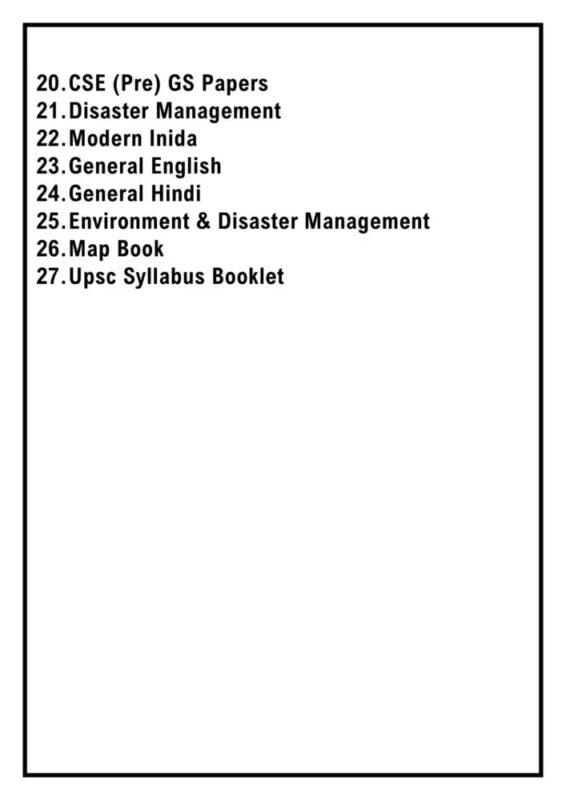
A: The 27 booklets cover: Ancient and Medieval Indian History, Modern Indian History, World History, Indian Society, Indian Physical Geography, World Physical Geography, Economic Geography, Constitutional Framework, Parliament, Executive and Judiciary, Governance, International Relations, Indian Economy Basics, Banking and Finance, Agriculture, Industry and Infrastructure, Science and Technology (Parts 1 and 2), Environment and Ecology (Parts 1 and 2), Disaster Management, Internal Security, Ethics Theory, Ethics Values and Integrity, Ethics Probity and Case Studies, and two Current Affairs Integration booklets for GS 1-2 and GS 3-4.
A: Both are respected UPSC study material sources, but they differ in style. Vision IAS notes are known for crisp, bullet-point dense content optimised for speed revision. Drishti IAS GS Foundation Notes tend to present content in more elaborated paragraphs with greater contextual explanation, which some aspirants find easier for initial concept building. The Drishti set also includes dedicated current affairs integration booklets. The best choice depends on your learning style — many UPSC aspirants buy both for cross-referencing before UPSC Mains.
A: Yes. The 2025-26 edition is updated to reflect the current UPSC syllabus, recent constitutional amendments, latest government schemes, current India-centric data points, and important 2024-25 current affairs developments integrated into the static chapters. This edition is the latest genuine batch as distributed through Drishti IAS’s Distance Learning Programme for the 2025-26 UPSC examination cycle. The edition year printed on the cover is 2025-26, confirming its currency for the upcoming UPSC Mains and Prelims examinations.
A: You can buy Drishti IAS GS Foundation Notes 2025-26 directly on this product page. We are a UPSC study material store based in Mukherjee Nagar, Delhi — India’s premier UPSC coaching hub — and we dispatch all orders within 24 hours. When you buy online from our store, you receive the complete 27-booklet set in brand new, unmarked condition with pan India tracked delivery in 3-5 business days. For bulk orders or queries before you buy, reach us on WhatsApp at +91 70045 49563.
A: These booklets use 75 GSM ultra-white paper chosen for high opacity — multiple highlighter colours and gel pens work without bleed-through to the reverse side, ideal for colour-coded revision. The paper’s anti-glare surface also reduces eye fatigue during extended UPSC study sessions. Whether you use yellow, green, pink or blue highlighters for your revision strategy, the paper handles all without shadowing the content on the opposite side of each sheet.
A: Yes. While these notes are designed for UPSC CSE, the GS content — Indian History, Polity, Economy, Geography, Environment, Science and Technology, and Ethics — forms the core syllabus of most state PSC examinations including BPSC, UPPSC, MPPSC, RAS and others. UPPSC PCS and BPSC 70th exam aspirants in particular find the Drishti IAS GS Foundation Notes highly relevant because the content depth and subject coverage aligns closely with state PSC GS paper requirements. Buy this set once and use it for multiple exams.
A: Yes. All 27 booklets are packaged together and shipped as a single consignment in one reinforced corrugated box. You will receive a single tracking ID covering all 27 booklets, and the full set will be delivered in 3-5 business days across India. We do not ship booklets in multiple separate deliveries. If upon opening you find any booklet missing or damaged in transit, contact us on WhatsApp at +91 70045 49563 within 48 hours and we will dispatch the replacement booklet immediately at no cost.
A: The standard listing is for the complete 27-booklet set, which offers the best value and ensures full UPSC syllabus coverage. However, if you need only specific subject booklets — for example, only the Ethics booklets or the International Relations booklet — please contact us on WhatsApp at +91 70045 49563 before placing your order. We will check stock availability for individual booklets and provide a custom quote. Most UPSC aspirants choose to buy the complete set for uninterrupted syllabus coverage throughout their preparation.
Summary
| Specification | Value |
|---|---|
| Booklets | 27 Printed Booklets |
| Language | English Medium |
| Paper | 75 GSM Ultra-White |
| Binding | Spiral or Book Binding |
| Delivery | 3-5 Business Days Pan India |
| Also Useful For | BPSC, UPPSC, MPPSC, RAS and all State PSC Exams |
Dispatched from our UPSC study material store in Mukherjee Nagar, Delhi — India’s most prominent UPSC coaching hub. Buy Drishti IAS GS Foundation Notes 2025-26 online today and receive all 27 booklets at your doorstep anywhere in India with pan India delivery in 3-5 days.
Reference: UPSC official syllabus
Customer Reviews 124
Booklets bilkul neat aur organized the. Padh padh ke maza aa gaya!
Sabhi topics comprehensively explain kiye gaye hain. Notes se conceptual clarity aa gaya.
27 booklets ka set complete hai aur concepts clear hote hain. Mast product for GS prep.
Excellent quality booklets! Sab kuch organized hai.
Bohot helpful hai yeh material. Sab topics properly covered hain.
Booklets bilkul premium quality ke hain aur content top-notch hai.
These notes are really comprehensive and well-structured for GS foundation preparation.
Bohot mast booklets hain, sabkuch detailed samjhaya gaya hai. UPSC ke liye perfect!
Aspirants Also Bought
More from the same category
Drishti IAS BPSC Samanya Adhyayan Notes 2025-26 | 24 Booklets | Hindi Medium | UPSC Study Material
Dr. Udaybhan Singh Economics Optional Notes | 3 Booklets | Hindi Medium | UPSC Study Material
Drishti IAS PSIR Notes 2025-26 | 6 Booklets | English Medium | UPSC Study Material
Vision IAS मासिक समसामयिकी (Masik Samsamayiki) December 2025-26 | 1 Booklet | Hindi Medium | UPSC Study Material
Next IAS Prelims GS Anubhav Test 1-4 English 2026 | 4 Booklets | English Medium | UPSC Study Material
Vision IAS Economics Hindi Notes 2025-26 | 5 Booklets | Hindi Medium | UPSC Study Material

Dias IAS Chemistry Optional Notes 2025-26 | 6 Booklets | English Medium | UPSC Study Material
Vision IAS GS 2025-26 Complete Study Material Set of 46 Booklets | English Edition
Vajiram and Ravi Indian Economy GS Yellow Book | 1 Booklet | English Medium | UPSC Study Material
Next IAS General Studies Prelims Test Series Notes 2026-27 | 22 Booklets | Hindi Medium | UPSC Study Material
Vision IAS Polity and Governance PT 365 | Comprehensive English Medium Annual Edition
Vajiram & Ravi Ethics Notes 2025-26 | 2 Booklets | English Medium | UPSC Study Material
About Drishti IAS GS Foundation Notes 2025-26
Drishti IAS GS Foundation Notes 2025-26 is a highly recommended UPSC study material from Drishti IAS, specially designed for GS Foundation preparation. Available in English medium, this material is crafted to match the exact requirements of the UPSC Civil Services Examination syllabus — covering both Prelims and Mains comprehensively.
Product Details
- Institute: Drishti IAS
- Subject: GS Foundation
- Medium: English
- Format: Printed
- Delivery: Pan-India delivery in 3–5 working days
- Format: Original printed material, verified authentic
Why Buy from UPSC Store?
- ✅ 100% Genuine Printed Material — Original printed notes, no photocopies or fake copies
- ✅ Fast Delivery — Ships within 24 hours, arrives in 3–5 days pan-India
- ✅ Secure Packaging — Bubble-wrapped and boxed to prevent damage in transit
- ✅ Trusted by 10,000+ Aspirants — India's most reliable UPSC material marketplace
- ✅ WhatsApp Support — Get expert guidance on material selection before ordering
Frequently Asked Questions
Yes, all products at UPSC Store are 100% genuine printed materials. We do not sell photocopies or fake copies.
Orders are dispatched within 24 hours and delivered across India in 3–5 working days via reputed courier partners.
Yes, we accept returns within 7 days if the product is damaged or incorrect. Check our refund policy for details.
We recommend pairing this with current affairs notes and a UPSC test series for comprehensive preparation. Browse more in Drishti IAS, Economy, General Studies, Geography, UPSC.