


Vajiram & Ravi Economics Optional Notes 2025-26
Vajiram & Ravi Economics Optional β UPSC Study Material
Related: Vajiram & Ravi notes Β· Economics Optional books
Buy Vajiram & Ravi Economics Optional printed booklets for UPSC Civil Services Examination preparation. This page lists complete details about Vajiram & Ravi Economics Optional including booklet count, language, syllabus coverage, pricing, and shipping.
Vajiram & Ravi Economics Optional Notes 2025-26 β 5 English Medium Printed Booklets for UPSC Mains Optional Paper
Product Overview
| Feature | Details |
|---|---|
| Booklets Count | 5 Individual Printed Booklets β Full UPSC Economics Optional Syllabus Coverage (Paper I & Paper II) |
| Language | English Medium |
| Publisher | Vajiram & Ravi (A Unit of Vajiram & Ravi IAS Study Centre LLP) |
| Edition | 2025-26 β Latest Genuine Batch |
| Condition | Brand New, Unmarked, Fresh Stock |
| Format | High-Quality Printed Booklets β Spiral or Book Binding |
| Paper Quality | 75 GSM Ultra-White β Highlighter Safe, Zero Bleed-Through |
| Shipping | Pan India Delivery in 3-5 Business Days β Tracked |
| Also Useful For | BPSC, UPPSC, MPPSC, RAS, and all State PSC Economics Optional Exams |
Complete Booklet Catalog
This 5-booklet set from Vajiram & Ravi covers the complete UPSC Economics Optional syllabus across both Paper I and Paper II, structured with the signature crisp bullet-point format and high fact density that Vajiram & Ravi is known for. Designed for UPSC Mains aspirants who have chosen Economics as their optional subject, this printed set covers micro and macroeconomics, Indian economic development, international economics, growth theory, and contemporary policy issues.
- Booklet 1: Micro and Macro Economics β Foundations β Covers demand and supply theory, consumer behaviour, production and cost theory, market structures (perfect competition, monopoly, oligopoly, monopolistic competition), factor pricing, national income accounting, Keynesian economics, IS-LM framework, aggregate demand and supply analysis, and classical vs Keynesian debates relevant to UPSC Economics Optional Paper I.
- Booklet 2: Money, Banking and Public Finance β Covers quantity theory of money, money supply and demand, credit creation, central banking functions and monetary policy tools, fiscal policy, public expenditure, taxation theory, budget concepts, public debt, FRBM Act, deficit financing, and their macroeconomic implications for UPSC Economics Optional Paper I.
- Booklet 3: Growth, Development and International Economics β Covers classical and modern theories of economic growth (Harrod-Domar, Solow, endogenous growth), development economics, Rostow’s stages, structural transformation, international trade theories (comparative advantage, Heckscher-Ohlin), terms of trade, balance of payments, exchange rate systems, WTO framework, and trade policy analysis for UPSC Economics Optional Paper I.
- Booklet 4: Indian Economy β Historical and Structural Analysis β Covers colonial legacy and the Indian economy, planning era analysis, economic liberalisation of 1991, structural changes in agriculture, industry and services, poverty and inequality measurement, employment challenges, land reforms, Green Revolution, and India’s Five Year Plans and NITI Aayog policy framework for UPSC Economics Optional Paper II.
- Booklet 5: Indian Economy β Contemporary Issues and Policy β Covers current economic policy issues including monetary policy and RBI operations, fiscal federalism, GST regime, banking sector reforms, financial inclusion, infrastructure development, external sector management, India’s trade policy, sustainable development goals, demographic dividend, digital economy, and recent Union Budget analysis for UPSC Economics Optional Paper II.
In-Depth Content Breakdown: Booklet by Booklet
Booklet 1: Micro and Macro Economics β Foundations
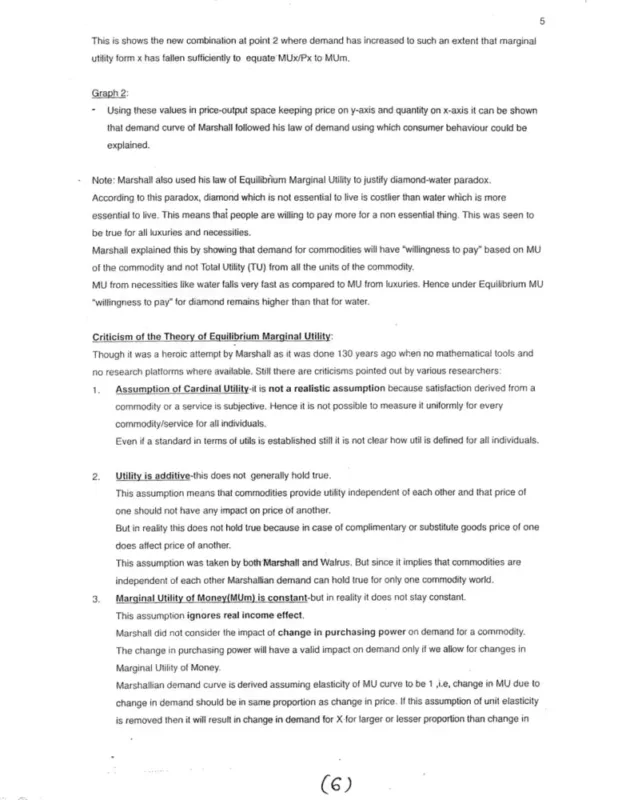
Booklet 1 lays the theoretical foundation for the entire Economics Optional UPSC syllabus. It begins with microeconomics essentials β utility theory, indifference curve analysis, demand elasticity, cost curves, and revenue concepts β before moving to the full spectrum of market structures. The treatment of Keynesian macroeconomics, including the multiplier effect, accelerator principle, and the IS-LM framework, is presented through structured diagrams and clear derivations that help aspirants answer both analytical and application-based questions in the UPSC Mains optional paper.
What distinguishes this booklet is the Vajiram & Ravi approach of presenting complex economic theory through numbered bullet points, comparative tables, and labelled diagrams rather than lengthy prose. The IS-LM and AD-AS sections include clearly labelled graphs drawn for easy reproduction in a UPSC answer sheet. Classical versus Keynesian debates are presented in table format for quick revision. The booklet also includes short notes on welfare economics and Pareto optimality β topics that have appeared in past UPSC Economics Optional question papers and require sharp conceptual clarity.
Booklet 2: Money, Banking and Public Finance
Booklet 2 addresses one of the highest-weightage areas in UPSC Economics Optional Paper I β money and banking combined with public finance theory. The monetary economics section covers the quantity theory of money (Fisher and Cambridge versions), Friedman’s reformulation, liquidity preference theory, and modern approaches to money demand. Central banking, instruments of monetary policy (repo rate, CRR, SLR, open market operations), and the transmission mechanism of monetary policy are covered with Indian examples, making this directly applicable to both the theoretical Paper I and the applied Paper II sections.
The public finance module covers classical public expenditure theories, Wagner’s Law, Peacock-Wiseman hypothesis, and modern functional finance. Tax incidence, shifting and burden analysis, optimal taxation theory, and the Laffer Curve are explained with clear diagrams. The India-specific section covers the Union Budget structure, fiscal deficit concepts, FRBM targets, and centre-state fiscal relations. Vajiram & Ravi’s strength in connecting theoretical content to Indian policy reality is evident throughout this booklet, making it especially valuable for Paper II crossover questions that test applied understanding of fiscal and monetary policy.
Booklet 3: Growth, Development and International Economics
Booklet 3 is one of the most analytically dense modules in this Vajiram & Ravi Economics Optional set. It opens with classical growth models β the Harrod-Domar framework and its instability problem β before progressing to the neoclassical Solow growth model with the concepts of steady state, golden rule of accumulation, and convergence hypothesis. Endogenous growth theory, including Romer and Lucas models, is also introduced. Development economics sections cover the Lewis dual-sector model, Myrdal’s circular causation, dependency theory, and the Human Development Index framework as tested in UPSC Economics Optional Paper I questions.
International economics β a highly scoring area for Economics Optional UPSC aspirants β is treated with rigour. Ricardian comparative advantage, Heckscher-Ohlin factor proportions theory, the Leontief Paradox, and the Stolper-Samuelson theorem are presented with worked examples. The balance of payments structure, theories of exchange rate determination (purchasing power parity, interest rate parity), and fixed vs flexible exchange rate debates are covered with both theoretical and Indian context. WTO dispute settlement, TRIPS, TRIMS, and the current global trade policy environment complete this booklet’s international section.
Booklet 4: Indian Economy β Historical and Structural Analysis
Booklet 4 transitions the Economics Optional UPSC aspirant from theoretical frameworks to the applied study of the Indian economy as required by Paper II. It opens with the colonial economic legacy β drain of wealth theory, deindustrialisation, land revenue systems, and the structural distortions inherited at Independence. The planning era is covered in detail: the rationale for planning, Mahalanobis model, import substitution industrialisation, the evolution of Five Year Plans, and the shift from central planning to indicative planning. This historical grounding is essential for Paper II questions that ask aspirants to evaluate India’s development trajectory.
The structural analysis module covers agriculture’s role in development β land reforms (Zamindari abolition, tenancy reforms, land ceiling legislation), Green Revolution technology and its regional impact, agricultural marketing, minimum support price mechanism, and food security policy. Industrial policy evolution β from the Industrial Policy Resolution of 1956 to the liberalisation of the 1990s β is covered with a critical lens. The services sector’s rise and its employment implications are also analysed. Poverty measurement methodologies (Tendulkar, Rangarajan committees), inequality trends, and employment data form the closing module of this essential booklet.
Booklet 5: Indian Economy β Contemporary Issues and Policy
Booklet 5 brings the UPSC Economics Optional preparation fully up to date with contemporary Indian economic policy β the area where answer quality is most differentiated in the actual Mains examination. The monetary policy framework post-2016 (inflation targeting, MPC structure, RBI’s evolving mandate), banking sector reforms (NPA resolution, IBC framework, recapitalisation), and financial sector development (SEBI regulations, capital market deepening, fintech and UPI) are all covered with current data and policy context. This booklet ensures aspirants can write data-supported, policy-aware answers in the UPSC Economics Optional Paper II.
The fiscal federalism section covers the 15th Finance Commission recommendations, GST architecture and its revenue implications for states, and centre-state resource sharing disputes. Infrastructure investment policy, the National Infrastructure Pipeline, and public-private partnership models are also included. The external sector module covers India’s trade policy, current account management, FDI and FPI trends, and the rupee’s exchange rate management. Sustainable development, climate finance, and India’s commitments under the Paris Agreement are covered as emerging topics. The Union Budget analysis section provides a framework for interpreting any budget year’s key economic decisions β a critical skill for the UPSC Economics Optional Paper II.
Physical Construction and Quality Standards
These Vajiram & Ravi Economics Optional printed booklets are manufactured to withstand the intense daily use of a serious UPSC aspirant β multiple revision cycles, annotation with pens and highlighters, and months of active study across the full optional preparation timeline.
Paper Quality: 75 GSM Anti-Glare White Paper
Each booklet in this Vajiram & Ravi Economics Optional set is printed on 75 GSM ultra-white paper selected specifically for UPSC study use. The paper’s high opacity ensures zero bleed-through when using gel pens, ball-point pens, or multiple highlighter colours simultaneously β essential for the colour-coded revision systems used by Economics Optional aspirants. The anti-glare surface reduces eye strain during extended study sessions that are common during the UPSC Mains optional preparation phase, where reading for 8-10 hours daily is routine. The paper handles marginal annotations cleanly without wrinkling.
Printing Technology: High-Resolution Laser Printing
All five booklets are produced using high-resolution laser printing technology that delivers crisp, sharp text and perfectly reproduced economic diagrams β IS-LM curves, AD-AS graphs, Solow growth model diagrams, and trade theory illustrations. Laser toner bonds permanently to the paper surface, ensuring the printed content remains smudge-proof and does not fade even with repeated handling over a long UPSC preparation cycle. Fine-line diagrams, comparative tables, and flowcharts central to Vajiram & Ravi’s teaching methodology are rendered with the precision required for Economics Optional study where diagram accuracy directly affects answer quality.
Binding and Durability
These Economics Optional booklets are available in either spiral binding or book binding format. Spiral-bound booklets open completely flat on a study desk, allowing the aspirant to write margin notes, annotate diagrams, and cross-reference alongside the printed content without the booklet closing. The 300 GSM laminated cover provides structural rigidity and protects the booklet’s contents from dust, moisture, and daily wear during transport. Book-bound editions offer a compact form factor for storage on a bookshelf alongside other optional subject materials. Spine printing identifies each booklet by topic for instant retrieval during timed revision sessions before the UPSC Mains examination.
Key Features and Study Design
Vajiram & Ravi Economics Optional notes are structured around the specific demands of the UPSC Mains answer-writing format β balancing conceptual depth, factual density, and quick-revision accessibility across all five booklets.
- Crisp Bullet-Point Format: Each topic is broken into numbered bullet points rather than continuous prose, enabling faster reading during revision and direct transfer of point-based structures into UPSC Mains answer sheets where structured answers score higher than essay-style writing.
- Integrated Diagrams Throughout: Economic diagrams β market equilibrium graphs, growth model curves, IS-LM and AD-AS frameworks, trade theory illustrations β are embedded within the relevant text rather than collected separately, so conceptual explanation and visual representation are always seen together during study.
- Paper I and Paper II Alignment: The five booklets are structured to map directly onto the UPSC Economics Optional syllabus division between Paper I (theory) and Paper II (Indian economy), with cross-references where theoretical concepts from Paper I are directly applicable to Paper II policy analysis questions.
- Contemporary Data Integration: Indian economic data β GDP growth figures, inflation trends, fiscal deficit ratios, trade statistics, poverty headcount ratios β are integrated within the relevant theoretical discussions, ensuring aspirants have current factual support for both Papers without needing to consult separate data sources.
- High Fact Density for Scoring: Vajiram & Ravi’s Economics Optional notes are designed for maximum information per page β committee names, act provisions, policy dates, quantitative targets, and analytical frameworks are presented in tabular form and boxed summaries that allow rapid scanning during the final revision weeks before the UPSC Mains examination date.
Shipping, Packaging and Delivery
All five Vajiram & Ravi Economics Optional booklets are packaged as a complete set using a multi-layer protective system designed for safe transit to any location in India. Each booklet is individually shrink-wrapped to prevent moisture exposure and cover scuffing during handling. The full 5-booklet set is then packed in a rigid double-wall corrugated cardboard box with foam edge protectors at all corners. A waterproof outer wrap is applied for shipments during monsoon months. The package dimensions are calculated to prevent internal movement during transit β eliminating the risk of spine damage or page creasing common with poorly packed study material shipments.
Orders are dispatched within 24 hours of payment confirmation on all working days. Pan India delivery is completed in 3-5 business days with full tracking β a tracking ID is sent via WhatsApp to your registered number upon dispatch. For any queries, replacements, or delivery issues, contact the store directly on WhatsApp at +91 70045 49563. If any booklet from the 5-booklet Economics Optional set arrives damaged or is found missing, a replacement booklet is shipped within 48 hours of your complaint at no additional cost. Buy with confidence β every order is backed by our complete delivery assurance policy.
Frequently Asked Questions (FAQ)
A: Vajiram & Ravi Economics Optional notes provide a strong foundation covering the complete UPSC syllabus for both Paper I and Paper II. Most aspirants use these printed booklets as their primary study material and supplement them with standard reference books like Mankiw for micro, Dornbusch for macro, and Economic Survey for current Indian economy data. Combined with consistent answer writing practice, this set is widely regarded as a reliable core resource for UPSC Economics Optional preparation.
A: This product includes exactly 5 printed booklets covering the full UPSC Economics Optional syllabus. The set is divided across micro and macro theory, money and public finance, growth and international economics, historical Indian economy analysis, and contemporary Indian economic policy. All 5 booklets ship together as a complete set in a single tracked package with pan India delivery in 3-5 business days.
A: The 5-booklet set covers the complete UPSC Economics Optional syllabus: microeconomic theory (consumer behaviour, market structures, factor pricing), macroeconomics (national income, IS-LM, AD-AS), money and banking, public finance, growth and development theories, international trade and finance, and Indian economy covering planning history, agriculture, industry, poverty, fiscal policy, monetary policy, banking reforms, and current economic policy issues including GST, FDI, and trade policy.
A: Yes, this is the English medium edition of Vajiram & Ravi Economics Optional notes for 2025-26. All five booklets β theory and Indian economy β are written in clear, precise English suited to UPSC Mains answer writing standards. If you are preparing for UPSC Economics Optional in English medium, this is the correct product. Buy the complete 5-booklet English set online directly from this listing with fast delivery across India.
A: Vajiram & Ravi Economics Optional notes are particularly valued for their crisp bullet-point structure, high fact density, and integrated diagrams β making them more efficient for revision compared to textbook-style notes from some other sources. The Vajiram approach prioritises UPSC answer-writing readiness: structured points, labelled diagrams, comparative tables, and boxed summaries. Aspirants often use these notes as their primary resource and supplement with standard economics textbooks for deeper conceptual understanding of selected topics.
A: Yes, this is the genuine 2025-26 edition of Vajiram & Ravi Economics Optional printed notes. The content reflects the latest updates to the Indian economy section including recent RBI monetary policy decisions, Union Budget analysis, current fiscal data, GST collections, banking sector reforms, and trade policy developments. The theoretical Paper I content is consistent with the stable UPSC Economics Optional syllabus while the Paper II Indian economy content is updated to reflect the current policy environment.
A: These booklets use 75 GSM ultra-white paper chosen for high opacity β multiple highlighter colors and gel pens work without bleed-through to the reverse side, ideal for color-coded revision. The anti-glare surface reduces eye strain during long Economics Optional study sessions. The paper is also suitable for marginal annotations with ball-point or ink pens without ghosting. This paper specification is standard across all booklets in the 5-booklet set.
A: Vajiram & Ravi Economics Optional notes cover the UPSC syllabus thoroughly and many successful candidates have used them as their primary source. However, Economics Optional at UPSC Mains rewards depth of understanding and answer articulation. Most toppers recommend these notes as the core resource, supplemented with Mankiw’s Principles of Economics for micro, Dornbusch-Fischer for macro, and the Economic Survey for current Indian economy data. Regular answer writing and previous year question practice are equally important alongside these printed notes.
A: You can buy Vajiram & Ravi Economics Optional printed notes 2025-26 directly from this listing. This is a legitimate store offering genuine fresh-stock printed booklets with pan India delivery in 3-5 business days. The store is based in Mukherjee Nagar, Delhi β the centre of UPSC coaching in India β and ships tracked packages to all Indian states. For bulk orders or queries before you buy, reach out on WhatsApp at +91 70045 49563 for immediate assistance.
A: Economics is considered a scoring optional for candidates with a background in Economics, Commerce, or Finance at the undergraduate or postgraduate level. The syllabus overlaps with UPSC GS Paper III (Indian Economy) which reduces extra preparation effort. It is analytical and rewards structured, data-supported answers. Aspirants who enjoy quantitative analysis, policy discussion, and can handle theoretical model-based questions tend to perform well. Vajiram & Ravi’s printed notes are specifically designed to make this transition from theory to UPSC answer-writing smooth and efficient.
A: Yes. While these Vajiram & Ravi Economics Optional notes are primarily designed for UPSC Mains preparation, the subject coverage β both theoretical economics and Indian economy β makes them directly applicable for state PSC examinations that include Economics as an optional subject. Candidates preparing for BPSC, UPPSC, MPPSC, RAS, and other state PSC Economics Optional papers will find the Indian economy booklets particularly relevant as most state PSC syllabi mirror the UPSC Economics Optional structure with minor variations in paper-specific topics.
A: All orders are dispatched within 24 hours of payment confirmation. Pan India delivery takes 3-5 business days with a tracking ID sent to your WhatsApp number upon dispatch. The 5-booklet set is individually shrink-wrapped, packed in a rigid corrugated box with foam corner protectors, and sealed with a waterproof outer layer. If any booklet arrives damaged or is missing from the set, contact us on WhatsApp at +91 70045 49563 and a replacement is shipped within 48 hours at no cost to you. Buy now for assured, safe delivery anywhere in India.
Summary
| Specification | Value |
|---|---|
| Booklets | 5 Printed Booklets |
| Language | English Medium |
| Paper | 75 GSM Ultra-White |
| Binding | Spiral or Book Binding |
| Delivery | 3-5 Business Days Pan India |
| Also Useful For | BPSC, UPPSC, MPPSC, RAS and all State PSC Economics Optional |
Sold by UPSC Store, Mukherjee Nagar, Delhi β India’s leading hub for UPSC printed study material. Order Vajiram & Ravi Economics Optional notes 2025-26 online today and receive your complete 5-booklet set with pan India delivery in 3-5 business days.
Reference: UPSC official syllabus
Customer Reviews 245
Economics optional ke aspirants ke liye ye material must-have hai. Har concept step-by-step explain kiya hai.
Best economics notes available, content is crystal clear.
Every topic explained beautifully. Couldn't have asked for better notes.
Bohot helpful tha mere liye.
Economics samajh aane lag gaya inhe padhke. Best investment for UPSC prep.
Mast booklets yaar, content bilkul comprehensive hai. Economics ko samajhne mein bahut helpful.
Notes kaafi comprehensive hain lekin ek do topics mein aur examples chahiye the. Otherwise achha hai.
Economics ko samajhne mein helpful material. Booklets well-organized hain.
Aspirants Also Bought
More from the same category
About Vajiram & Ravi Economics Optional Notes 2025-26
Vajiram & Ravi Economics Optional Notes 2025-26 is a highly recommended UPSC study material from Vajiram & Ravi, specially designed for Economics Optional preparation. Available in English medium, this material is crafted to match the exact requirements of the UPSC Civil Services Examination syllabus β covering both Prelims and Mains comprehensively.
Product Details
- Institute: Vajiram & Ravi
- Subject: Economics Optional
- Medium: English
- Format: Printed
- Delivery: Pan-India delivery in 3β5 working days
- Format: Original printed material, verified authentic
Why Buy from UPSC Store?
- β 100% Genuine Printed Material β Original printed notes, no photocopies or fake copies
- β Fast Delivery β Ships within 24 hours, arrives in 3β5 days pan-India
- β Secure Packaging β Bubble-wrapped and boxed to prevent damage in transit
- β Trusted by 10,000+ Aspirants β India's most reliable UPSC material marketplace
- β WhatsApp Support β Get expert guidance on material selection before ordering
Frequently Asked Questions
Yes, all products at UPSC Store are 100% genuine printed materials. We do not sell photocopies or fake copies.
Orders are dispatched within 24 hours and delivered across India in 3β5 working days via reputed courier partners.
Yes, we accept returns within 7 days if the product is damaged or incorrect. Check our refund policy for details.
We recommend pairing this with current affairs notes and a UPSC test series for comprehensive preparation. Browse more in Economy, Optional, UPSC, Vajiram and Ravi.