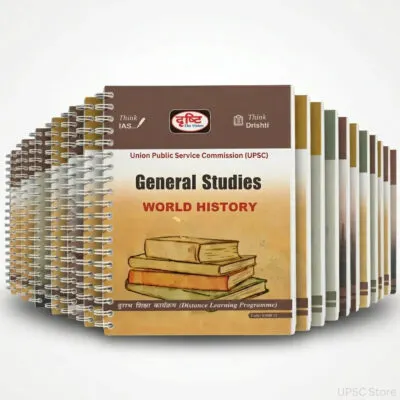
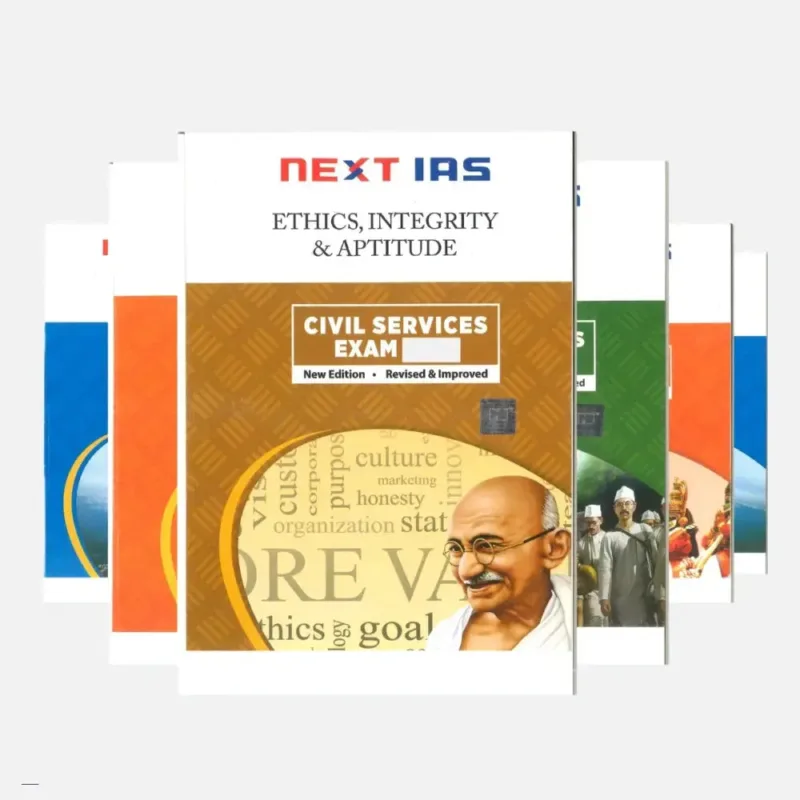

Next IAS Study Material 2025-26

18 Booklets | English Medium | UPSC Study Material

Key Highlights:
πŸ“˜ 54 Booklets
πŸ“š UPSC Civil Services (IAS/IFS/IPS), State PSCs
πŸŽ“ Next IAS
🏷️ Printed
πŸ‡¬πŸ‡§ English Medium
β‚Ή4,288
πŸŒ€ spiral βœ“
πŸ“˜ book-binding βœ“
Only 23 sets left
Selling fast (88 sold this week)
5% OFF Use UPSC5% (COD Available)
10% OFF Use UPI10 (UPI Only)
Secure Payment
Fast Delivery
Safe Packaging

About Next IAS Study Material 2025-26

The Next IAS Study Material 2025-26 is a printed UPSC study material set sold by UPSC Store β€” India’s trusted source for genuine, latest-batch civil services preparation books. This page covers full booklet details, syllabus coverage, pricing, shipping, and frequently asked questions. Useful for UPSC CSE, BPSC, UPPSC, MPPSC, RAS and other state PSC examinations.

Next IAS Study Material 2025-26 β€” 42 English Medium Printed Booklets for UPSC GS Paper 1, 2, 3 & 4

Related: Next IAS notes Β· GS notes

Product Overview

FeatureDetails
Booklets Count42 Individual Printed Booklets β€” Complete GS Coverage for UPSC Mains & Prelims
LanguageEnglish Medium
PublisherNext IAS (Civil Services Exam β€” New Edition, Revised & Improved Series 2025-26)
Edition2025-26 β€” Latest Genuine Batch
ConditionBrand New, Unmarked, Fresh Stock
FormatHigh-Quality Printed Booklets β€” Spiral or Book Binding
Paper Quality75 GSM Ultra-White β€” Highlighter Safe, Zero Bleed-Through
ShippingPan India Delivery in 3-5 Business Days β€” Tracked
Also Useful ForBPSC, UPPSC, MPPSC, RAS and all State PSC Examinations

Complete Booklet Catalog

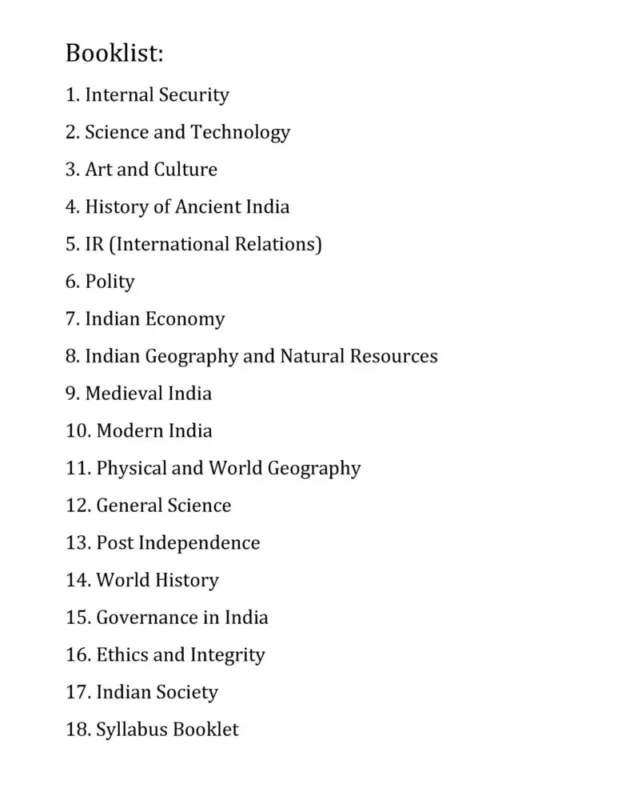
This 18-booklet set from Next IAS covers the entire UPSC General Studies spectrum β€” GS Paper 1, GS Paper 2, GS Paper 3, and GS Paper 4 β€” in a structured, subject-by-subject printed format revised and improved for the 2025-26 civil services examination cycle. Whether you are a first-attempt aspirant or a repeat candidate looking to strengthen weak areas, this full-stack study material gives you every major GS subject in one purchase.

  • Booklet 1: Ethics and Integrity (Part 1) β€” Foundations of ethics, moral philosophy, Indian ethical traditions, Attitude: content, structure and function, Aptitude and foundational values for civil services, emotional intelligence, and their application in governance and public administration contexts for UPSC GS Paper 4.
  • Booklet 2: Ethics and Integrity (Part 2) β€” Probity in governance, philosophical thinkers, moral dilemmas, accountability and ethical concerns in public service, codes of ethics, codes of conduct, citizen charter, and case study frameworks aligned with the UPSC Mains GS Paper 4 pattern.
  • Booklet 3: Indian Polity (Part 1) β€” Constitution of India: historical background, making of the constitution, salient features, Preamble, Fundamental Rights, Directive Principles of State Policy, Fundamental Duties, amendment procedures, and landmark Supreme Court judgements with constitutional evolution.
  • Booklet 4: Indian Polity (Part 2) β€” Federal structure, Centre-State relations, parliamentary system, President, Governor, Prime Minister, Council of Ministers, Parliament structure and functioning, Speaker, sessions, bills, budget, committees, and legislative processes for UPSC GS Paper 2.
  • Booklet 5: Indian Polity (Part 3) β€” Judiciary: Supreme Court, High Courts, judicial review, judicial activism, subordinate courts; local self-government, 73rd and 74th Amendments, Panchayati Raj institutions, urban local bodies, and constitutional bodies including Election Commission, CAG, UPSC, and Finance Commission.
  • Booklet 6: Governance in India (Part 1) β€” Good governance concepts, transparency, accountability, e-governance, RTI, citizen charter, grievance redressal, welfare schemes, social sector initiatives, government programmes, and role of NGOs and civil society for UPSC Mains GS Paper 2.
  • Booklet 7: Governance in India (Part 2) β€” Development processes, development industry, pressure groups, SHGs, decentralisation, district administration, statutory bodies, regulatory bodies, quasi-judicial bodies, tribunals, and UPSC GS Paper 2 topics on government policies for various sectors of the Indian economy.
  • Booklet 8: International Relations (Part 1) β€” India’s foreign policy evolution post-independence, Panchsheel, NAM, India-USA relations, India-Russia relations, India-China border dispute, India-Pakistan relations, Look East and Act East policy, India and its neighbourhood β€” SAARC, BIMSTEC framework for UPSC.
  • Booklet 9: International Relations (Part 2) β€” India and the United Nations, Security Council reforms, multilateral organisations, WTO, IMF, World Bank, G20, BRICS, SCO, India-Africa relations, India-EU relations, diaspora, and international institutions relevant to current affairs and UPSC GS Paper 2.
  • Booklet 10: Indian Economy (Part 1) β€” Indian economic history, Five Year Plans, economic reforms of 1991, GDP, GNP, national income concepts, sectors of Indian economy, poverty, unemployment, inclusive growth, Planning Commission to NITI Aayog, and budget-related concepts for UPSC GS Paper 3.
  • Booklet 11: Indian Economy (Part 2) β€” Banking and financial sector, RBI, monetary policy, fiscal policy, inflation, currency, capital markets, insurance, investment models, FDI, FPI, infrastructure financing, public-private partnerships, and economic growth indicators for UPSC Mains GS Paper 3.
  • Booklet 12: Indian Economy (Part 3) β€” Agriculture: issues and related constraints, crop patterns, irrigation systems, MSP, food security, PDS, land reforms, cooperative farming, e-NAM, PM-KISAN, MGNREGS, rural economy, and allied sectors including animal husbandry, fisheries, and food processing for UPSC.
  • Booklet 13: Indian Economy (Part 4) β€” Industry and services sector, industrial policy, MSME, start-up ecosystem, Make in India, PLI schemes, digital economy, e-commerce, balance of payments, current account deficit, foreign exchange reserves, and India’s external sector for UPSC GS Paper 3.
  • Booklet 14: Internal Security (Part 1) β€” Challenges to internal security: role of external state and non-state actors, insurgency in Northeast India, Naxalism and Left-Wing Extremism, Jammu & Kashmir situation, cyber security threats, organised crime, drug trafficking, and money laundering for UPSC GS Paper 3.
  • Booklet 15: Internal Security (Part 2) β€” Security agencies in India, Intelligence Bureau, RAW, NIA, NSG, CRPF, border management, coastal security post 26/11, critical infrastructure protection, border area development programmes, and UPSC Paper 3 topics on security challenges with special focus on recent incidents.
  • Booklet 16: Science and Technology (Part 1) β€” Developments in science and technology: space technology, ISRO missions, Chandrayaan, Gaganyaan, Aditya L1, satellite navigation, nuclear technology, India’s nuclear programme, Defence Research and Development Organisation (DRDO) achievements, and indigenisation of defence technology for UPSC.
  • Booklet 17: Science and Technology (Part 2) β€” Biotechnology, genetically modified organisms, CRISPR, nanotechnology, robotics, 3D printing, quantum computing, Internet of Things, 5G technology, artificial intelligence in governance, e-governance tools, Aadhaar, and digital India initiatives for UPSC GS Paper 3.
  • Booklet 18: Science and Technology (Part 3) β€” Health technology, pharmaceutical industry, vaccine development, bioethics, intellectual property rights in science, TRIPS agreement, compulsory licensing, climate science, clean energy technologies including solar, wind, green hydrogen, and energy transition for UPSC Mains 2025-26.
  • Booklet 19: Art and Culture (Part 1) β€” Indian art forms: Indus Valley art, Mauryan art, Gupta period paintings, cave architecture, rock-cut temples, Ajanta, Ellora, Khajuraho, South Indian temple architecture, Nagara and Dravida styles, Vesara style, Indo-Islamic architecture, Mughal architecture for UPSC GS Paper 1.
  • Booklet 20: Art and Culture (Part 2) β€” Classical dance forms: Bharatanatyam, Kathak, Odissi, Kuchipudi, Manipuri, Kathakali, Mohiniyattam, Sattriya; classical music: Hindustani and Carnatic traditions, instruments, folk dances, folk music, puppetry, martial arts forms, and intangible cultural heritage for UPSC Prelims and Mains.
  • Booklet 21: Art and Culture (Part 3) β€” Literature: Sanskrit, Tamil Sangam, Bhakti and Sufi literature, colonial-era literature, Indian languages and scripts, UNESCO World Heritage Sites in India, GI tags, tribal art forms like Madhubani, Warli, Pattachitra, Gond, and contemporary art movements relevant to UPSC culture questions.
  • Booklet 22: History of Ancient India (Part 1) β€” Prehistoric cultures, Indus Valley Civilisation, Vedic Age, Rig Vedic and Later Vedic periods, Mahajanapadas, rise of Magadha, Mauryan Empire: Chandragupta Maurya, Ashoka, Ashokan edicts, Mauryan administration, economy, art, and decline of the Mauryan Empire for UPSC GS Paper 1.
  • Booklet 23: History of Ancient India (Part 2) β€” Post-Mauryan period: Sungas, Kushanas, Satavahanas, Sangam Age, Gupta Empire: golden age, administration, literature, science and technology, Harshavardhana, Chalukyas, Pallavas, Cholas, trade routes, economic history, religious movements β€” Buddhism, Jainism, Shaivism, Vaishnavism for UPSC.
  • Booklet 24: Medieval India (Part 1) β€” Early Medieval India: Arab invasion, Rajput kingdoms, Ghaznavids, Ghurids, establishment of Delhi Sultanate β€” Slave Dynasty, Khilji Dynasty, Tughlaq Dynasty, Sayyids, Lodis; administrative and revenue systems, Iqta system, architecture of the Sultanate period for UPSC GS Paper 1.
  • Booklet 25: Medieval India (Part 2) β€” Vijayanagara Empire, Bahmani Kingdom, Mughal Empire: Babur, Humayun, Akbar’s administration, Mansabdari system, Din-i-Ilahi, Jahangir, Shah Jahan, Aurangzeb; Maratha Empire, Shivaji, Peshwa period, Bhakti and Sufi movements, regional kingdoms of medieval India for UPSC.
  • Booklet 26: Modern India (Part 1) β€” Advent of Europeans, East India Company, Carnatic Wars, Battle of Plassey, Battle of Buxar, Dual Government, Regulating Act 1773, Charter Acts, Governor-Generals and Viceroys, administrative and revenue policies, Permanent Settlement, Ryotwari System, Mahalwari System for UPSC GS Paper 1.
  • Booklet 27: Modern India (Part 2) β€” 1857 Revolt: causes, spread, suppression, significance; rise of Indian nationalism, formation of Indian National Congress, Moderate phase, Extremist phase, Bal-Pal-Lal, Swadeshi Movement, partition of Bengal 1905, Home Rule Movement, Lucknow Pact, and entry of Gandhi into Indian politics for UPSC.
  • Booklet 28: Modern India (Part 3) β€” Gandhian era: Non-Cooperation Movement, Civil Disobedience Movement, Quit India Movement, revolutionary movements, Bhagat Singh, Subhash Chandra Bose and INA, Cabinet Mission, Mountbatten Plan, Indian Independence Act 1947, partition of India, and integration of princely states for UPSC Mains.
  • Booklet 29: Post Independence (Part 1) β€” Nehruvian era: Patel and integration of princely states, making of the Constitution, Nehru’s foreign policy, Non-Aligned Movement, Korean War, Panchsheel, 1962 war with China; Planning Commission, Five Year Plans, state reorganisation, linguistic states, democratic consolidation for UPSC GS Paper 1.
  • Booklet 30: Post Independence (Part 2) β€” 1965 and 1971 wars, Indira Gandhi era, Emergency period 1975-77, Green Revolution, White Revolution, abolition of privy purses, Pokhran 1974, Rajiv Gandhi era, economic liberalisation background, V.P. Singh, Mandal Commission, 1991 economic reforms, coalition politics for UPSC GS Paper 1.
  • Booklet 31: World History β€” Industrial Revolution, French Revolution, American Revolution, unification of Germany and Italy, imperialism and colonialism, World War I: causes and consequences, Russian Revolution, rise of fascism and Nazism, World War II, Cold War, decolonisation, formation of United Nations, and end of Cold War for UPSC GS Paper 1.
  • Booklet 32: Indian Society (Part 1) β€” Indian society: salient features, diversity, multiculturalism, role of women and status, population and related issues, poverty and hunger, urbanisation, migration, social empowerment, communalism, regionalism, secularism, tribal issues, globalisation and its effects on Indian society for UPSC GS Paper 1.
  • Booklet 33: Indian Society (Part 2) β€” Social institutions: family, marriage, kinship; caste system and its transformation, Dalit issues, OBC concerns, constitutional provisions for marginalized communities, minority rights, social reform movements, education system and reforms, social issues like child labour, dowry, female foeticide for UPSC.
  • Booklet 34: Indian Geography and Natural Resources (Part 1) β€” Physical geography of India: location, extent, physiographic divisions β€” Himalayan ranges, Indo-Gangetic plains, Peninsular Plateau, Coastal Plains, islands; drainage systems β€” Himalayan and Peninsular rivers, river interlinking, water disputes, lakes, wetlands for UPSC GS Paper 1.
  • Booklet 35: Indian Geography and Natural Resources (Part 2) β€” Climate of India: monsoon mechanism, El NiΓ±o, La NiΓ±a effects on Indian monsoon, climatic regions, soils of India, natural vegetation, biosphere reserves, national parks, wildlife sanctuaries, forests, forest policy, environmental laws, and biodiversity hotspots of India for UPSC.
  • Booklet 36: Indian Geography and Natural Resources (Part 3) β€” Minerals and energy resources, coal, petroleum, natural gas, renewable energy, agriculture β€” types, cropping patterns, irrigation, green revolution; industries β€” location factors, agro-based industries, mineral-based industries, infrastructure, transport networks, ports, and economic geography of India for UPSC.
  • Booklet 37: Physical and World Geography (Part 1) β€” Geomorphology: origin of earth, internal and external forces, landforms β€” mountains, plateaus, plains; Oceanography: ocean currents, tides, waves, coral reefs, ENSO; Climatology: atmospheric composition, insolation, heat budget, pressure belts, winds, precipitation, climate classification for UPSC Prelims and Mains GS Paper 1.
  • Booklet 38: Physical and World Geography (Part 2) β€” Biogeography, biomes, ecosystem services, soil formation, world agriculture types, industrial regions of the world, world transport and communication, geopolitical regions, critical minerals, Arctic and Antarctic geopolitics, Pacific Island nations, and contemporary geographical issues for UPSC.
  • Booklet 39: General Science (Part 1) β€” Physics: basic concepts, motion, laws of thermodynamics, electricity, magnetism, modern physics, nuclear physics; Chemistry: periodic table, chemical reactions, acids, bases, salts, polymers, biomolecules; Science in everyday life β€” application-based questions for UPSC Prelims General Studies Paper 1.
  • Booklet 40: General Science (Part 2) β€” Biology: cell theory, genetics and evolution, human physiology, nutrition, diseases β€” communicable and non-communicable, immunology, biotechnology basics, plant physiology, ecology fundamentals, environmental pollution types and effects β€” topics relevant to both UPSC Prelims and Mains GS Paper 3.
  • Booklet 41: Environment and Ecology β€” Ecosystems, food chains, ecological pyramids, biodiversity and its conservation, IUCN Red List, CITES, Ramsar Convention, CBD, Paris Agreement, IPCC reports, climate change impacts, disaster management, NDMA framework, Sendai Framework, and environmental laws and acts of India for UPSC GS Paper 3.
  • Booklet 42: Syllabus Booklet and Current Affairs Supplement β€” Complete UPSC CSE Mains and Prelims syllabus breakdown subject-by-subject; strategy notes, revision framework, current affairs integration guide, important government schemes digest, and quick-reference tables covering static GS facts for final-stage UPSC Mains revision.

In-Depth Content Breakdown: Booklet by Booklet

Booklets 1–2: Ethics, Integrity and Aptitude β€” GS Paper 4

The two Ethics booklets address the entire UPSC GS Paper 4 syllabus β€” one of the most subjective and least structured papers in the civil services examination. Booklet 1 builds the conceptual foundation: moral philosophy from Aristotle to Kant to Gandhian ethics, Indian ethical traditions from Vedic thought to modern administrative ethics, the nature of attitude and its influence on behaviour, emotional intelligence in public service, and what foundational values mean for a civil servant β€” integrity, impartiality, empathy, tolerance, and compassion.

Booklet 2 covers the applied dimension of UPSC Ethics β€” probity in governance, conflict of interest, ethical dilemmas, whistleblower protection, accountability mechanisms, RTI as an ethical tool, corporate governance, and the role of family and educational institutions in forming moral character. The booklet also presents a structured approach to case studies β€” the most scoring component of GS Paper 4 β€” with sample answers, step-by-step analysis frameworks, and common dilemma scenarios that have appeared repeatedly in previous UPSC Mains examinations.

Booklets 3–5: Indian Polity β€” GS Paper 2

The three Polity booklets together cover the complete UPSC GS Paper 2 constitutional and governance syllabus. Booklet 3 addresses the foundational constitutional law β€” the historical circumstances that led to the making of the Indian Constitution, its philosophical underpinnings, the debates in the Constituent Assembly, and the key provisions including Fundamental Rights with landmark judgements such as Kesavananda Bharati, Maneka Gandhi, and recent Supreme Court verdicts that UPSC examiners regularly reference in questions.

Booklet 4 covers the operational machinery of the Indian state β€” federal structure, inter-governmental relations, the parliamentary system in practice, and constitutional officers. Booklet 5 completes the picture with the judiciary, local self-government institutions, and constitutional bodies, each presented with flowcharts, comparison tables, and highlighted UPSC-relevant facts. The three-booklet structure allows a UPSC aspirant to study constitutional law, federal governance, and institutions in sequential sessions without content overlap, which is especially helpful during revision weeks before UPSC Mains.

Booklets 6–7: Governance in India β€” GS Paper 2

Governance in India is a high-yield UPSC GS Paper 2 topic where many aspirants lose marks by giving vague or theoretical answers. These two booklets address that gap directly. Booklet 6 focuses on the concept of governance β€” what makes it good, how it is measured, and the institutional framework through which the Indian state delivers services. Topics include e-governance initiatives, Digital India, UMANG app, service delivery mechanisms, social audit, Right to Service Acts, citizen charters, and Lokpal and Lokayukta as accountability structures.

Booklet 7 takes a more analytical approach β€” examining development policy, role of pressure groups in shaping legislation, voluntary organisations in social welfare, SHGs and microfinance, district administration and the role of the Collector, and statutory versus constitutional bodies. The booklet includes a well-structured section on government schemes across health, education, agriculture, and rural development, presented in tabular format for rapid UPSC revision. This format is particularly useful for aspirants who need to answer UPSC Mains questions comparing multiple schemes.

Booklets 8–9: International Relations β€” GS Paper 2

India’s external relations form a significant and current-affairs-linked component of UPSC GS Paper 2. Booklet 8 covers India’s bilateral relationships with its most important strategic partners and neighbours β€” USA, Russia, China, Pakistan, Bangladesh, Sri Lanka, Nepal, Bhutan, and the Maldives β€” with each relationship explained through the lens of historical context, current tensions, and future trajectory. Key treaties, agreements, and diplomatic incidents are covered with dates and context, making this booklet suitable for both answer writing and UPSC Prelims MCQ preparation.

Booklet 9 addresses India’s multilateral engagement β€” its role in the United Nations system including reform debates around the Security Council, India’s membership in the G20, BRICS, SCO, and QUAD, India-Africa Forum Summit outcomes, India-EU strategic partnership, and soft power tools like yoga diplomacy, cultural diplomacy, and the Indian diaspora. The booklet concludes with international economic institutions β€” IMF, World Bank, WTO β€” and their relevance to India’s trade and development negotiations, a recurring theme in UPSC GS Paper 2 and 3 both.

Booklets 10–13: Indian Economy β€” GS Paper 3

Four dedicated booklets ensure that the UPSC GS Paper 3 economics syllabus β€” one of the widest in the civil services examination β€” is covered without the compression that single-booklet treatments force. Booklet 10 lays the macroeconomic foundation: GDP measurement, the evolution of Indian economic planning from the First Five Year Plan to NITI Aayog’s strategy documents, poverty measurement methodologies, and the conceptual framework of inclusive growth that underpins UPSC economic policy questions. Booklet 11 then addresses the financial sector in depth.

Booklet 12 covers agriculture β€” the most frequently questioned sector in UPSC GS Paper 3 β€” with detailed treatment of irrigation systems, land reforms from zamindari abolition to ULCRA, food security architecture, PDS reforms, and critical government programmes. Booklet 13 closes the economics module with industry, services, and external trade β€” topics that intersect with current affairs and require updated data. All four booklets together give a UPSC aspirant the breadth to handle any economics question in Mains as well as the depth to score above average in answers that demand policy analysis.

Booklets 14–15: Internal Security β€” GS Paper 3

Internal security is a dynamic and current-affairs-heavy component of UPSC GS Paper 3 that many aspirants underestimate until the actual examination. Booklet 14 categorises threats systematically β€” external state-sponsored threats, non-state actors, insurgencies in the Northeast, Left-Wing Extremism in the Red Corridor, and the unique security challenges in Jammu & Kashmir post-Article 370 abrogation. Each threat category is explained with its socioeconomic roots, government response mechanisms, and the legal framework β€” AFSPA, UAPA, NIA Act β€” that governs security operations, all of which are frequently tested in UPSC Mains.

Booklet 15 focuses on institutions and their mandates β€” the intelligence community, paramilitary forces, and border management architecture. Coastal security reforms post the 2008 Mumbai attacks, marine police, and the coastal surveillance network are covered in detail. Cybersecurity β€” increasingly prominent in recent UPSC Papers β€” gets its own subsection with specific coverage of CERT-In, National Cyber Security Policy, and critical infrastructure protection. This booklet helps UPSC aspirants write structured, multi-dimensional answers that address the who, how, and why of India’s internal security response.

Booklets 16–18: Science and Technology β€” GS Paper 3

Science and Technology in UPSC GS Paper 3 demands both conceptual understanding and current awareness. Booklet 16 covers India’s space programme in depth β€” ISRO’s launch vehicles (PSLV, GSLV, LVM3), planetary missions, the Chandrayaan series, Aditya L1 solar mission, Gaganyaan human spaceflight programme, and the commercialisation of space through IN-SPACe and NewSpace India Limited. Defence technology including DRDO’s missile systems, Tejas fighter, INS Vikrant, and the indigenisation push under Atmanirbhar Bharat defence policy receives detailed treatment.

Booklets 17 and 18 cover emerging and life science technologies β€” artificial intelligence, machine learning in governance, blockchain in public systems, biotechnology including gene editing and CRISPR applications in agriculture and medicine, and the ethical debates around each. Booklet 18 also integrates clean energy technology with climate science β€” making it uniquely positioned at the intersection of UPSC GS Paper 3 (science and technology, energy) and UPSC GS Paper 3 environment sections. The three-booklet division ensures that no science topic is rushed, giving aspirants space to understand concepts before applying them to UPSC answer writing.

Booklets 19–21: Art and Culture β€” GS Paper 1

Art and Culture is a consistent scorer in UPSC Prelims and GS Paper 1 Mains but requires structured study because of the sheer volume and variety of content. Booklet 19 addresses visual arts and architecture from the earliest Indus seals through the Buddhist stupa tradition, rock-cut cave architecture, Gupta-period sculpture, and the great medieval temple traditions β€” Nagara, Dravida, Vesara β€” with specific examples, locations, and distinguishing features. The comparative tables in this booklet help aspirants quickly recall differences between architectural styles β€” a format that translates directly into concise UPSC Mains answers.

Booklets 20 and 21 cover performing arts and literary traditions. Booklet 20 systematically covers all eight classical dance forms with their gharanas, founding figures, and regional roots; both Hindustani and Carnatic music traditions including major ragas, talas, and instruments; and regional folk traditions. Booklet 21 covers India’s literary heritage and moves into contemporary cultural policy β€” GI tags, UNESCO Heritage designations, and tribal art forms β€” areas that have appeared in both UPSC Prelims and Mains in recent years. Together, the three Art and Culture booklets give complete coverage without the confusion of scattered notes.

Booklets 22–23: History of Ancient India β€” GS Paper 1

Ancient Indian history in the UPSC GS Paper 1 syllabus spans from prehistoric cultures to the early medieval period β€” a span of millennia that requires careful organisation to study efficiently. Booklet 22 begins with prehistoric cultures and moves chronologically through the Indus Valley Civilisation (with detailed coverage of sites, artefacts, and debates about script and decline), the Vedic Age with its social, economic, and religious changes, the Mahajanapada period, and the Mauryan Empire in its political, administrative, and cultural dimensions. Ashoka’s edicts are covered with specific inscriptions referenced for UPSC Prelims MCQs.

Booklet 23 handles the post-Mauryan to Gupta period β€” an era of intense cultural creativity that UPSC examiners love for both Prelims and Mains questions. The Kushan period and its art (Mathura and Gandhara schools), the Sangam Age of South India, and the Gupta Golden Age with its contributions to mathematics, astronomy, literature, and metallurgy are all covered with sufficient depth for Mains answers. The booklet ends with the early medieval regional kingdoms, setting the stage for the Medieval India booklets and ensuring chronological continuity in the UPSC history preparation journey.

Booklets 24–25: Medieval India β€” GS Paper 1

Medieval India for UPSC GS Paper 1 encompasses both the Delhi Sultanate and the Mughal period β€” two centuries of political, administrative, and cultural history that generate a high volume of UPSC questions. Booklet 24 covers the Sultanate period with attention to administrative innovations like the Iqta system, revenue administration, and the urban economy of medieval India. The Khilji and Tughlaq dynasties receive extended treatment because of their administrative and economic experiments β€” topics that UPSC frequently links to themes of governance and economic policy in GS Paper 2 as well.

Booklet 25 addresses the Mughal Empire in depth β€” not just political history but the sophisticated Mughal administrative system, mansabdari, land revenue (zabti, batai, nasaq), Akbar’s religious policy and Din-i-Ilahi, and the eventual decline that UPSC uses as a case study in political and administrative failure. The Maratha Empire β€” its rise under Shivaji, administrative innovations, the Peshwa period, and ultimate decline β€” is covered as a counterpoint. Bhakti and Sufi movements run as a cultural thread through both booklets, given their recurring presence in UPSC questions about medieval social and religious history.

Booklets 26–28: Modern India β€” GS Paper 1

Modern Indian history is the highest-weight history segment for UPSC GS Paper 1 and requires three booklets to do it justice. Booklet 26 covers the colonial encounter β€” the establishment of British control, its economic impact (drain theory, deindustrialisation, land revenue exploitation), and the administrative and legal structures the British erected. The major Governor-Generals and Viceroys are covered with their policies and significance, allowing UPSC aspirants to answer both factual and analytical questions about the colonial period with confidence.

Booklets 27 and 28 cover the freedom struggle β€” from the 1857 Revolt through the organised nationalist movement to independence and partition. The social reform movements that ran parallel to the political struggle β€” movements for women’s rights, caste abolition, widow remarriage, and religious reform β€” are integrated throughout rather than treated as appendices, reflecting the UPSC Mains approach of asking candidates to see social and political history together. Booklet 28’s treatment of partition β€” its causes, course, and human consequences β€” is nuanced and supported by multiple historians’ perspectives, which helps UPSC aspirants write balanced, analytical Mains answers.

Booklets 29–30: Post Independence β€” GS Paper 1

Post-independence Indian history has gained prominence in recent UPSC cycles, with questions moving beyond simple narration toward analysis of policy choices and their long-term consequences. Booklet 29 covers the Nehruvian period with the intellectual framework to evaluate it β€” the democratic consolidation, state-building, planned economy rationale, foreign policy doctrine, and the shock of 1962 that reshaped Indian strategic thinking. The reorganisation of states and the linguistic policy debates are treated in depth because they recur in UPSC questions about federalism and centre-state relations.

Booklet 30 covers the turbulent 1965–1991 period β€” wars, Emergency, economic stagnation, and eventual liberalisation. The Emergency of 1975-77 receives particular attention because it intersects with UPSC GS Paper 2 topics on constitutional safeguards and fundamental rights. The 1991 reforms β€” their background, content, and consequences β€” form a critical bridge between post-independence history and contemporary Indian economy topics in UPSC GS Paper 3, and this booklet makes that connection explicit through cross-references that help aspirants write integrated answers.

Booklet 31: World History β€” GS Paper 1

World History in UPSC GS Paper 1 requires coverage of global events from the Industrial Revolution to the end of the Cold War β€” a span that is wide but tractable if studied systematically. This booklet organises world history thematically and chronologically β€” revolutions (American, French, Russian), world wars, the rise of ideologies (liberalism, socialism, fascism, nationalism), decolonisation of Asia and Africa, and the Cold War bipolar order. Each event is explained with its causes, course, and consequences β€” exactly the three-dimensional structure that UPSC Mains questions demand from world history answers.

The booklet pays particular attention to the formation and evolution of international institutions β€” the League of Nations, the United Nations, Bretton Woods institutions β€” because these topics bridge world history with contemporary international relations in UPSC GS Paper 2. The end of the Cold War and the emergence of the unipolar and then multipolar world order receive detailed treatment, contextualising India’s foreign policy evolution that is covered in the International Relations booklets. The booklet also includes timelines and comparative tables that make UPSC Prelims MCQ preparation for world history significantly more efficient.

Booklets 32–33: Indian Society β€” GS Paper 1

Indian Society is a wide-ranging component of UPSC GS Paper 1 that connects to current affairs, constitutional values, and governance simultaneously. Booklet 32 addresses the sociological foundations β€” what makes Indian society unique in its diversity, how caste, religion, language, and region interact, and how globalisation is changing traditional social structures. Women’s status and gender equity β€” including issues of dowry, female foeticide, domestic violence, and the legal framework addressing them β€” receive attention that reflects their prominence in recent UPSC Mains papers.

Booklet 33 addresses social institutions and social change β€” caste mobility, Dalit political assertion, OBC representation debates, tribal land rights, and the tension between development projects and tribal displacement. The role of education in social mobility, the digital divide, and urban-rural social differences are all covered with the analytical depth that UPSC GS Paper 1 Mains questions require. The booklet also covers social welfare legislation β€” SC/ST Prevention of Atrocities Act, POCSO, Protection of Women from Domestic Violence Act β€” with their implementation challenges, a recurring UPSC theme.

Booklets 34–36: Indian Geography and Natural Resources β€” GS Paper 1 & 3

Indian Geography spans both UPSC GS Paper 1 (physical and human geography) and GS Paper 3 (natural resources, agriculture, industry). The three-booklet treatment reflects this dual relevance. Booklet 34 covers physical geography β€” the formation of the Himalayas (convergence tectonics), the Himalayan and Deccan drainage systems, river basin-wise coverage of all major Indian rivers including their tributaries, flood plains, and inter-state water disputes that regularly generate UPSC questions at both Prelims and Mains levels.

Booklet 35 covers the climate-ecosystem interface β€” Indian monsoon dynamics, regional climate types, soil classification and their agricultural significance, and natural vegetation zones. The conservation architecture β€” biosphere reserves, national parks, wildlife corridors, wetlands under Ramsar, and biodiversity hotspots β€” is covered with specific examples and map-based references. Booklet 36 takes the economic geography perspective β€” mineral distribution, energy resource geography, crop ecology, irrigation network, and the locational geography of Indian industry β€” all topics that combine static geography with current policy discussions in UPSC GS Paper 3.

Booklets 37–38: Physical and World Geography β€” GS Paper 1

Physical geography for UPSC requires both conceptual understanding and the ability to apply concepts to real-world events β€” cyclones, earthquakes, droughts β€” that appear in UPSC Prelims and the integrated GS Paper 1 Mains answers. Booklet 37 covers geomorphology, oceanography, and climatology in a sequence that builds logically β€” from the interior of the earth through tectonic forces to surface landforms, then to ocean dynamics and finally to atmospheric processes that drive global climate. Each concept is illustrated with real-world examples relevant to India, which helps UPSC aspirants contextualise abstract physical geography.

Booklet 38 addresses world economic geography and geopolitical geography β€” the industrial regions of North America, Europe, and Asia; the great agricultural systems of the world; shipping lanes; chokepoints like Strait of Hormuz, Malacca, and Bab el-Mandeb that appear in both geography and international relations UPSC questions; and the geopolitics of critical minerals. World geography is increasingly asked from a current-affairs-linked perspective in UPSC, and this booklet bridges static concepts with their contemporary applications effectively.

Booklets 39–40: General Science β€” GS Paper 1 & 3

General Science for UPSC Prelims is a consistent source of 15-20 questions across Physics, Chemistry, and Biology β€” marks that well-prepared aspirants should convert at a high rate. Booklet 39 covers Physics and Chemistry with a UPSC-specific lens β€” not derivations and equations but the application-level understanding of laws, phenomena, and everyday science that UPSC question setters test. Topics like electromagnetic spectrum, semiconductors, nuclear fission and fusion, types of chemical reactions, and polymer chemistry are covered with the precision needed for MCQ-level accuracy in UPSC Prelims.

Booklet 40 covers Biology β€” from cell biology and genetics through human anatomy and physiology to ecology fundamentals. Disease coverage is particularly strong β€” communicable diseases including vector-borne, airborne, and waterborne diseases with their pathogens, vaccines where applicable, and government control programmes form a section that UPSC has repeatedly drawn questions from. The booklet connects biology to UPSC GS Paper 3 themes like biotechnology regulation, One Health approach, and environmental health β€” ensuring that general science preparation simultaneously supports the science and technology and environment topics.

Booklet 41: Environment and Ecology β€” GS Paper 3

Environment and Ecology has emerged as one of the most dynamic and scoring sections of UPSC GS Paper 3, with question setters drawing from current global negotiations, domestic policy changes, and conceptual ecology in equal measure. This booklet addresses the ecosystem concept from first principles β€” energy flow, nutrient cycling, trophic levels β€” before moving to the biodiversity architecture that UPSC tests most often: classification of species (endemic, exotic, keystone, umbrella), threats to biodiversity (habitat loss, invasive species, climate change), and the international legal framework governing conservation including CBD, CITES, Cartagena Protocol, and Nagoya Protocol.

The climate change section covers the IPCC process, the UNFCCC framework from Kyoto Protocol to Paris Agreement, India’s NDCs (Nationally Determined Contributions), and climate finance debates β€” topics that have generated significant UPSC Mains questions in recent cycles. Disaster management is covered with the Sendai Framework for Disaster Risk Reduction as the international context and the NDMA’s national guidelines as the domestic response architecture. Environmental laws including Environment Protection Act, Wildlife Protection Act, Forest Conservation Act, and Biological Diversity Act are covered with their recent amendments β€” essential for UPSC answer writing accuracy.

Booklet 42: Syllabus Booklet and Current Affairs Supplement

The 42nd booklet serves as the strategic anchor of the entire Next IAS 2025-26 study material set. It contains the complete UPSC CSE Mains and Prelims syllabus with topic-by-topic mapping to the preceding 18 Booklets, enabling aspirants to identify coverage gaps quickly during revision. A strategy guide outlines a recommended study sequence β€” foundational subjects first, then current-affairs-heavy subjects β€” that works for both fresh aspirants on a 12-month schedule and repeat candidates who need targeted preparation in the months immediately before UPSC Mains.

The current affairs supplement section provides a digest of important government schemes launched or significantly updated through the 2024-25 period, presented in tabular format with scheme name, ministry, target beneficiary, and key features β€” exactly the format needed to answer UPSC Mains questions that ask for scheme evaluation. Quick-reference tables covering constitutional amendments, landmark UPSC-relevant Supreme Court cases, important international summits with their outcomes, and India-specific economic data make this booklet an invaluable tool for the final two weeks before UPSC Mains when aspirants need rapid revision over memorisation.

Physical Construction and Quality Standards

Every booklet in the Next IAS 2025-26 set is manufactured to withstand the daily demands of UPSC preparation β€” hours of reading, repeated revision, margin notes, and highlighter sessions across a preparation cycle that can extend from months to years without the physical material deteriorating.

Paper Quality: 75 GSM Anti-Glare White Paper

The 75 GSM ultra-white paper used throughout the Next IAS 2025-26 set is selected for its optical properties as much as its physical strength. High opacity means printed content on one side does not shadow through to the reverse β€” a common problem with lighter-weight papers that makes reading exhausting during long UPSC study sessions. The anti-glare surface reduces eye strain under both natural and artificial light conditions, which matters when you are studying ethics case studies or geography for three to four hours at a stretch. Multiple highlighter colours β€” yellow, orange, pink, green β€” and gel pens can be used freely without bleed-through, enabling colour-coded UPSC revision systems.

Printing Technology: High-Resolution Laser Printing

All 18 Booklets are printed using high-resolution laser technology that renders text, diagrams, maps, and flowcharts at a clarity level that photocopied or inkjet-printed notes cannot match. River system maps in the Indian Geography booklets, architectural style comparison diagrams in the Art and Culture booklets, and constitutional structure flowcharts in the Polity booklets all print with crisp lines and legible labels at every zoom level. Laser toner is chemically bonded to the paper surface β€” it does not smudge when wet, does not fade with sunlight exposure, and remains permanently readable even after the booklet has been carried daily in a bag to a UPSC coaching centre or library for months.

Binding and Durability

Booklets in this set use either spiral binding or perfect (book) binding depending on thickness β€” spiral for thinner booklets so they open completely flat on a desk for simultaneous writing alongside, and book binding for the larger booklets to maintain compact storage. The 300 GSM laminated cover resists moisture and daily handling wear, keeping the booklet’s appearance professional throughout the preparation period. Spiral-bound booklets can be folded 180 degrees for one-handed reading during commutes β€” a small practical feature that regular UPSC students at Mukherjee Nagar coaching centres have come to expect from premium printed study material.

Key Features and Study Design

The Next IAS 2025-26 18-booklet set is purpose-built for UPSC Civil Services Examination preparation β€” structured to mirror the GS syllabus, designed for revision efficiency, and produced to the physical standards that serious aspirants require throughout a demanding preparation cycle.

  • Complete GS Coverage in One Set: All four UPSC GS Papers β€” Paper 1 (History, Geography, Society, Culture), Paper 2 (Polity, Governance, International Relations), Paper 3 (Economy, Security, Science, Environment), and Paper 4 (Ethics) β€” are covered across 42 subject-specific printed booklets, eliminating the need for multiple purchases from different sources.
  • Revised and Improved 2025-26 Edition: Content is updated to reflect the most current UPSC syllabus emphasis, recent Supreme Court judgements, updated economic data, latest government schemes, and current affairs linkages relevant to UPSC Mains 2025-26, ensuring aspirants are not preparing from outdated material that misses recent UPSC question trends.
  • Subject-Specific Booklet Structure: Each subject is contained in its own booklet or set of booklets rather than combined into thick volumes, allowing targeted study of weak areas, easy carrying of individual subjects to coaching classes, and the psychological benefit of completing defined study units that larger combined books do not provide during UPSC preparation.
  • UPSC Answer-Writing Friendly Format: Content is structured with headings, subheadings, bullet points, tables, and diagrams that mirror the structure of ideal UPSC Mains answers β€” making it easier for aspirants to directly translate what they read into well-structured written answers without a separate translation step that costs valuable time during exam preparation.
  • Also Useful for State PSC Examinations: The GS content in this set β€” covering Indian Polity, Economy, History, Geography, Science, and Ethics β€” aligns with the syllabi of BPSC, UPPSC, MPPSC, RAS, and other State PSC examinations, making the 18-booklet set a cost-effective investment for aspirants targeting both UPSC and their respective state civil services simultaneously.

Shipping, Packaging and Delivery

Each order of the Next IAS 2025-26 18-booklet set is prepared for dispatch with protective packaging designed to ensure every booklet arrives in brand new condition. The full set is first shrink-wrapped in heavy-gauge polyethylene to protect against moisture during transit. The shrink-wrapped bundle is then placed inside a double-wall corrugated cardboard box with foam padding on the base and custom-cut cardboard edge protectors on all four corners. This protects spiral bindings and book covers from the compression and impact damage that frequently damages study material in transit. A “Fragile β€” Books” label is applied on all sides of the package, and the box is taped with reinforced packing tape to prevent accidental opening during courier handling.

Orders are dispatched within 1 business day of confirmed payment and typically arrive within 3-5 business days across India β€” Delhi, Mumbai, Bengaluru, Chennai, Hyderabad, Kolkata, Lucknow, Patna, Jaipur, Bhopal, and all other major cities and towns. A tracking ID is sent via email and WhatsApp immediately upon dispatch. For queries, delivery updates, or support, WhatsApp us at +91 70045 49563 β€” response within 2 hours during business hours. In the rare event that any booklet is found damaged or missing on delivery, a replacement is dispatched within 48 hours of the issue being reported with a photograph. We want every UPSC aspirant who buys from our store to start studying without delay.

Frequently Asked Questions (FAQ)

Q1: Is Next IAS study material good for UPSC Ethics GS Paper 4?

A: Yes β€” the Next IAS 2025-26 set includes two dedicated Ethics booklets covering the complete UPSC GS Paper 4 syllabus: moral philosophy, emotional intelligence, ethical governance, probity, case study frameworks, and dilemma-resolution approaches. The content is structured to support both conceptual understanding and answer writing, which are both essential for scoring well in GS Paper 4 where UPSC rewards structured analysis over rote learning. Many aspirants find the case study section especially useful for Mains preparation.

Q2: How many booklets are included in Next IAS study material 2025-26?

A: This set contains 42 printed booklets covering the entire UPSC General Studies syllabus β€” GS Papers 1, 2, 3, and 4. The 18 Booklets span History (Ancient, Medieval, Modern, Post-Independence, World), Geography (Indian and World), Polity, Governance, International Relations, Economy, Internal Security, Science and Technology, Art and Culture, Indian Society, Environment, Ethics, General Science, and a Syllabus and Current Affairs Supplement booklet. Each subject receives dedicated booklets so you can study and revise without flipping through unrelated content.

Q3: What topics are covered in Next IAS GS Paper 4 Ethics material?

A: The two Ethics booklets cover the entire UPSC GS Paper 4 syllabus: foundations of ethics, moral philosophy (Aristotle, Kant, Gandhian ethics, Indian traditions), attitude and aptitude, emotional intelligence, ethical public administration, probity in governance, accountability, conflict of interest, codes of ethics and conduct, citizen charter, public service values, corruption and anti-corruption measures, and a structured case study section with worked examples. All topics are aligned to the exact UPSC Mains GS Paper 4 syllabus phrasing to ensure complete coverage and no missed topics.

Q4: Is Next IAS Ethics material available in English medium only?

A: This specific listing β€” the Next IAS Study Material 2025-26 18-booklet set β€” is available in English Medium. English-medium UPSC aspirants preparing for GS Paper 4 Ethics and all other GS papers will find the language clear, formal, and suitable for direct adaptation into UPSC Mains answer writing. If you are preparing in Hindi medium, please check our store for the Hindi medium listing of this or equivalent study material, as availability varies by edition and print run.

Q5: How does Next IAS Ethics material compare to Vision IAS or Vajiram?

A: Next IAS, Vision IAS, and Vajiram & Ravi are all well-established UPSC institutes whose printed study material is widely used by serious aspirants. Next IAS 2025-26 material is a revised and improved edition with updated content for the current examination cycle. Rather than choosing based on brand alone, UPSC aspirants benefit from the structure and coverage of whichever material they use consistently and revise multiple times. If you want a complete 18-booklet GS set from a leading UPSC institution, the Next IAS 2025-26 set is a strong, well-structured choice available to buy online through our store.

Q6: Is the 18-booklet set from Next IAS sufficient for complete UPSC Mains preparation?

A: The 18-booklet set covers the entire UPSC Mains General Studies syllabus across GS Papers 1 to 4 in depth β€” making it a strong foundation for complete GS preparation. For most aspirants, supplementing this printed material with daily current affairs reading (The Hindu or Indian Express) and regular answer-writing practice will constitute a robust UPSC Mains preparation plan. The set is not a substitute for NCERT foundational reading for complete beginners, but for aspirants who have basic familiarity with UPSC subjects, it provides everything needed to build Mains-ready knowledge and analytical depth.

Q7: What is the price of Next IAS Ethics Integrity Aptitude study material 2025-26?

A: The price of the Next IAS 2025-26 18-booklet complete GS set is displayed on the product page of this listing. Our store offers competitive pricing for UPSC printed study material with no hidden charges β€” the listed price includes the complete set of all 18 Booklets, protective packaging, and pan India tracked delivery within 3-5 business days. For bulk orders or discounts on multiple sets, please contact us via WhatsApp at +91 70045 49563 and we will assist with pricing for your specific requirement.

Q8: Does Next IAS Ethics material cover case studies for UPSC Mains?

A: Yes β€” case studies are covered in dedicated sections within the Ethics booklets. The structured approach includes a step-by-step framework for analysing UPSC case study scenarios: identifying stakeholders, listing ethical issues, applying relevant values and ethical theories, evaluating options, and recommending a course of action with justification. Multiple sample case studies covering public administration dilemmas, whistleblowing situations, conflict of interest scenarios, and governance ethical challenges are included β€” mirroring the types of case studies that have appeared in previous UPSC Mains GS Paper 4 examinations.

Q9: What is the paper quality? Can I use a highlighter?

A: These booklets use 75 GSM ultra-white paper chosen for high opacity β€” multiple highlighter colours and gel pens work without bleed-through to the reverse side, ideal for colour-coded revision. The anti-glare surface also reduces eye strain during long UPSC study sessions, which is an important practical consideration when you are spending four to six hours daily with these materials. The paper holds pen and pencil annotations cleanly without smearing, making margin notes and self-made summaries easy to add alongside the printed content.

Q10: Will this set arrive safely? How is it packaged for delivery?

A: Every order is shrink-wrapped to protect against moisture, placed in a double-wall corrugated box with foam base padding, and fitted with cardboard edge protectors on all four corners to prevent spiral binding damage and cover denting during courier transit. A “Fragile β€” Books” label is applied on all sides. The packaging system is designed for the specific physical vulnerabilities of multi-booklet sets β€” corner damage, spine compression, and moisture are the three most common transit problems and all three are addressed. If any damage occurs despite these precautions, WhatsApp us at +91 70045 49563 and a replacement is dispatched within 48 hours.

Q11: Can I use this study material for BPSC, UPPSC, or other State PSC examinations?

A: Yes β€” the subject coverage in the Next IAS 2025-26 18-booklet set aligns closely with the GS syllabi of major State PSC examinations including BPSC, UPPSC, MPPSC, RAS, and others. Topics like Indian Polity, Indian Economy, Modern History, Indian Geography, Science and Technology, and Ethics are common across UPSC and most State PSC examinations. Aspirants who are simultaneously targeting UPSC Mains and their State PSC will find this set covers the large GS overlap efficiently, reducing the need to buy separate state-specific material for common GS subjects.

Q12: Where can I buy Next IAS study material 2025-26 online and how long does delivery take?

A: You can buy the Next IAS Study Material 2025-26 18-booklet set directly from this product page β€” add to cart, complete checkout, and your order will be dispatched within 1 business day. Pan India delivery takes 3-5 business days with full courier tracking. We are based in Mukherjee Nagar, Delhi β€” the hub of UPSC coaching in India β€” and ship to every corner of the country including remote areas served by standard courier networks. For any questions before you buy, WhatsApp us at +91 70045 49563 and we will respond promptly with availability and delivery time for your location.

Summary

SpecificationValue
Booklets42 Printed Booklets
LanguageEnglish Medium
Paper75 GSM Ultra-White
BindingSpiral or Book Binding
Edition2025-26 β€” Revised & Improved
Delivery3-5 Business Days Pan India
Also Useful ForBPSC, UPPSC, MPPSC, RAS and all State PSC Examinations

Buy the Next IAS Study Material 2025-26 online from our store in Mukherjee Nagar, Delhi β€” trusted by UPSC aspirants across India. Order today and receive all 18 Booklets at your doorstep with pan India delivery in 3-5 days.

Reference: Civil Services Examination

Customer Reviews 263

4.5
Based on 263 reviews
5β˜…
157
4β˜…
78
3β˜…
28
2β˜…
0
1β˜…
0
N
Nikhil Chaudhary
24 Apr 2026
βœ“ Verified

Next IAS ka reputation sach mein justified hai, booklets ekdum premium quality ke.

S
Sanjay Reddy
18 Apr 2026
βœ“ Verified

Material is okay but printing quality could be improved. Content is relevant though.

R
Rahul Sharma
18 Apr 2026
βœ“ Verified

Bilkul mast booklets hain. UPSC ke liye perfect hai.

A
Arjun Singh
17 Apr 2026
βœ“ Verified

Content is relevant and helpful for UPSC exam preparation.

V
Vikram Singh
16 Apr 2026
βœ“ Verified

Crystal clear explanations and well-structured content. Already helped me understand complex topics better.

V
Vikram Desai
16 Apr 2026
βœ“ Verified

18 booklets mein sab important topics cover ho gaye hain.

A
Amit Patel
16 Apr 2026
βœ“ Verified

Best study material

S
Shreya Reddy
15 Apr 2026
βœ“ Verified

Study material shabash hai, covering all important topics nicely. Quality of booklets is premium.

πŸ›οΈ

Aspirants Also Bought

More from the same category

View All β†’

About Next IAS Study Material 2025-26

Next IAS Study Material 2025-26 is a highly recommended UPSC study material from Next IAS, specially designed for UPSC Civil Services (IAS/IFS/IPS), State PSCs preparation. Available in English medium, this material is crafted to match the exact requirements of the UPSC Civil Services Examination syllabus β€” covering both Prelims and Mains comprehensively.

Product Details

  • Institute: Next IAS
  • Subject: UPSC Civil Services (IAS/IFS/IPS), State PSCs
  • Medium: English
  • Format: Printed
  • Delivery: Pan-India delivery in 3–5 working days
  • Format: Original printed material, verified authentic

Why Buy from UPSC Store?

  • βœ… 100% Genuine Printed Material β€” Original printed notes, no photocopies or fake copies
  • βœ… Fast Delivery β€” Ships within 24 hours, arrives in 3–5 days pan-India
  • βœ… Secure Packaging β€” Bubble-wrapped and boxed to prevent damage in transit
  • βœ… Trusted by 10,000+ Aspirants β€” India's most reliable UPSC material marketplace
  • βœ… WhatsApp Support β€” Get expert guidance on material selection before ordering

Frequently Asked Questions

Is this product 100% original?

Yes, all products at UPSC Store are 100% genuine printed materials. We do not sell photocopies or fake copies.

How long does delivery take?

Orders are dispatched within 24 hours and delivered across India in 3–5 working days via reputed courier partners.

Can I return the product?

Yes, we accept returns within 7 days if the product is damaged or incorrect. Check our refund policy for details.

Which other study materials should I buy with this?

We recommend pairing this with current affairs notes and a UPSC test series for comprehensive preparation. Browse more in General Studies, Next IAS, UPSC.