
Vajiram & Ravi History Notes 2025-26

4 Booklets | English Medium | UPSC Study Material

Key Highlights:
📘 4 Booklets
📚 History
🎓 Vajiram & Ravi
🏷️ Printed
🇬🇧 English Medium
₹1,288
🌀 spiral
📘 book-binding
Only 12 sets left
Selling fast (72 sold this week)
5% OFF Use UPSC5% (COD Available)
10% OFF Use UPI10 (UPI Only)
Secure Payment
Fast Delivery
Safe Packaging

Vajiram & Ravi History Notes — UPSC Study Material

Related: Vajiram & Ravi notes · History notes

Buy Vajiram & Ravi History Notes printed booklets for UPSC Civil Services Examination preparation. This page lists complete details about Vajiram & Ravi History Notes including booklet count, language, syllabus coverage, pricing, and shipping.

Vajiram & Ravi History Notes 2025-26 — 4 English Medium Printed Booklets for UPSC GS Paper I

Product Overview

FeatureDetails
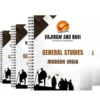
Booklets Count4 Individual Printed Booklets — Modern India, Ancient India, Medieval India, World History
LanguageEnglish Medium
PublisherVajiram & Ravi (Institute of IAS Examination — General Studies Series)
Edition2025-26 — Latest Genuine Batch
ConditionBrand New, Unmarked, Fresh Stock
FormatHigh-Quality Printed Booklets — Spiral or Book Binding
Paper Quality75 GSM Ultra-White — Highlighter Safe, Zero Bleed-Through
ShippingPan India Delivery in 3-5 Business Days — Tracked
Also Useful ForBPSC, UPPSC, MPPSC, RAS, and all State PSC History sections

Complete Booklet Catalog

This 4-booklet set from Vajiram & Ravi covers the entire History portion of the UPSC GS Paper I syllabus — from the Indus Valley Civilisation to post-World War II international order. Designed for UPSC CSE Mains aspirants who want fact-dense, bullet-pointed, exam-ready notes without the noise of raw textbooks.

  • Booklet 1: Modern India — British expansion and consolidation, socio-religious reform movements, the Indian National Congress, the Revolt of 1857, Gandhian era, Civil Disobedience, Quit India, Partition, and Independence. Covers UPSC GS Paper I syllabus topics on modern Indian history from the mid-18th century to 1947, including the role of peasant and tribal movements.
  • Booklet 2: Ancient India — Prehistoric cultures, Indus Valley Civilisation, Vedic Age, Mahajanapadas, Mauryan Empire, post-Mauryan period, Gupta Age, sangam literature, art and architecture of ancient India, religion and philosophy including Buddhism and Jainism, science and technology of ancient times.
  • Booklet 3: Medieval India — Early medieval polity, Delhi Sultanate, Vijayanagara and Bahmani kingdoms, the Mughal Empire, Bhakti and Sufi movements, regional kingdoms, administrative and revenue systems, art and architecture of medieval India, advent of Europeans, and the decline of the Mughal Empire.
  • Booklet 4: World History — The Renaissance and Reformation, Age of Exploration, American Revolution, French Revolution, Industrial Revolution, the rise of nationalism, World War I and World War II, the Cold War, decolonisation movements, formation of the United Nations, and major post-war geopolitical developments relevant to UPSC GS Paper I.

In-Depth Content Breakdown: Booklet by Booklet

Booklet 1: Modern India

Modern India is consistently one of the highest-weightage areas in UPSC GS Paper I Mains and Prelims alike. This booklet opens with the consolidation of British power — covering the Battle of Plassey, Battle of Buxar, Subsidiary Alliance, and Doctrine of Lapse — before moving into the causes, course, and consequences of the Revolt of 1857. It then traces the rise of nationalism through early Congress, the Swadeshi movement, and militant nationalism, giving aspirants a clear chronological framework. Socio-religious reform movements including Brahmo Samaj, Arya Samaj, and Aligarh Movement are mapped against the political backdrop of colonial India for integrated Mains answers.

The Gandhian phase receives detailed treatment: Non-Cooperation, Civil Disobedience, and Quit India are broken down phase-by-phase with causes, events, outcomes, and UPSC-relevant observations about Gandhi’s political philosophy. Revolutionary nationalism — Bhagat Singh, Surya Sen — and constitutional developments like the Government of India Acts of 1919 and 1935 are covered with bullet-point precision. Peasant movements, tribal uprisings, the roles of Nehru, Patel, Ambedkar, and Jinnah in the run-up to independence, and the Partition are all addressed. The booklet uses timelines, comparison tables, and key-quote boxes that make high-scoring Mains answer writing much faster and more structured.

Booklet 2: Ancient India

Ancient India for UPSC GS Paper I spans a vast chronological range — from Stone Age cultures to the early medieval period — and this booklet handles that span with well-organised thematic and chronological sections. The Indus Valley Civilisation is covered with map references, town-planning features, trade patterns, and the debate around its decline. The Vedic Age section distinguishes carefully between Early and Later Vedic periods, covering polity, economy, religion, and the position of women — all areas from which UPSC questions are directly drawn. The Mahajanapadas and the rise of Magadha lead into an extensive coverage of the Mauryan Empire, including Ashoka’s Dhamma, administrative structure, and art.

Post-Mauryan developments — Sungas, Kushanas, Satavahanas — are presented with their cultural contributions clearly highlighted. The Gupta Age is treated as a golden period covering literature, science, mathematics, and art in an integrated fashion. Sangam literature, Tamil polity, and the religious landscape including early Buddhism, Jainism, and Shaivism are covered with comparative tables. Ancient Indian art and architecture — from Sanchi to Ajanta — are presented with distinguishing features and dates in a revision-friendly format. Key facts, rulers, and archaeological sites are bolded throughout, making last-mile revision before UPSC Prelims especially efficient.

Booklet 3: Medieval India

Medieval India in UPSC GS Paper I encompasses both the Mains history section and direct Prelims questions on dynasties, architecture, and administrative systems. This booklet begins with early medieval polity in the post-Gupta period, covering the Pallavas, Rashtrakutas, Pratiharas, and the Chola Empire with their administrative features and cultural contributions. The arrival of Turkish invasions and the establishment of the Delhi Sultanate is covered dynasty-by-dynasty — Slave, Khalji, Tughlaq, Sayyid, and Lodi — with each ruler’s key policies, military campaigns, and administrative innovations. Revenue systems like the iqta and the agrarian policies of Alauddin Khalji receive focused attention due to their repeated UPSC examination relevance.

The Mughal Empire is treated in substantial depth: Babur through Aurangzeb, covering administration, land revenue (Todar Mal’s reforms), Mansabdari system, religious policies, and Mughal art and architecture — including distinguishing features of Mughal painting and architecture. The Bhakti and Sufi movements are mapped by region, saint, and philosophy, with tables comparing key figures like Kabir, Mirabai, Ramanuja, and Chishti saints. Vijayanagara and Bahmani kingdoms, regional literature, and the Maratha rise under Shivaji conclude the booklet. The arrival of the Portuguese, Dutch, and British East India Company is covered as a transition bridge to the Modern India booklet, maintaining narrative continuity across the set.

Booklet 4: World History

World History is a standalone section in the UPSC GS Paper I Mains syllabus (specifically 18th–20th century world history) and is often under-prepared by aspirants who focus only on Indian history. This Vajiram & Ravi booklet directly addresses that gap. The Renaissance, Scientific Revolution, and Reformation are covered as intellectual precursors to the modern world order. The American Revolution and French Revolution are analysed with causes, events, key documents, and global consequences — giving aspirants the analytical tools to write 150 and 250-word Mains answers on these topics. The Industrial Revolution is covered both as an economic transformation and as the root cause of imperialism and colonialism worldwide.

World War I and World War II receive focused treatment: causes, major theatres, key turning points, and aftermath — including the Treaty of Versailles, the League of Nations, and the conditions that produced Fascism and Nazism. The Cold War chapter covers the Truman Doctrine, Marshall Plan, NATO, Korean War, Cuban Missile Crisis, détente, and the collapse of the USSR in a clear cause-and-effect framework directly aligned with UPSC question patterns. Decolonisation in Asia and Africa, the Non-Aligned Movement, and the formation of the United Nations are covered with India’s role prominently highlighted. Flowcharts and comparative timelines throughout the booklet make this the most visually structured section in the entire history set.

Physical Construction and Quality Standards

Every booklet in this Vajiram & Ravi History 2025-26 set is manufactured to withstand daily UPSC preparation use — multiple reads, underlining, highlighting, and annotation — without pages yellowing, tearing, or notes bleeding through. Here is the full quality breakdown.

Paper Quality: 75 GSM Anti-Glare White Paper

The 75 GSM ultra-white paper selected for this set offers significantly higher opacity than standard 60 GSM or 65 GSM papers used in many budget photocopied notes. Text and diagrams printed on the front side remain completely invisible from the reverse — there is zero bleed-through even when using thick-tip highlighters or felt pens. The paper surface has a slight anti-glare finish that reduces eye strain during long study sessions of 4–6 hours, which is common during intensive UPSC preparation months. All four booklets use the same paper specification throughout, ensuring a consistent study experience from the first page to the last.

Printing Technology: High-Resolution Laser Printing

All four booklets are printed using high-resolution laser technology, which means every map, diagram, chart, and table is reproduced with sharp, crisp edges — not the blurry or patchy output often seen in low-cost photocopied study material. Laser toner is permanently fused to the paper surface, making the printing smudge-proof even when the pages are handled repeatedly with slightly damp fingers during summer study sessions. Flowcharts showing political timelines, architectural comparison tables, and battle maps in the history booklets are all clearly legible at the printed size, without the need to squint or use a magnifying glass. Text fonts are chosen for reading comfort across long sessions.

Binding and Durability

The booklets are available in spiral or book binding, both designed for daily UPSC study use. Spiral-bound booklets open completely flat on your desk — this is particularly useful when writing notes alongside the printed content, as you never lose text in the spine gutter. The spine coil itself is made from reinforced plastic that does not snap or deform under repeated opening and closing. Book-bound editions use PUR adhesive binding that holds pages firmly even after 50+ reads through the same booklet. All covers use 300 GSM thick card stock, printed in full colour with lamination to resist moisture, corner damage, and surface scratches during transport in a bag or backpack.

Key Features and Study Design

These Vajiram & Ravi History Notes 2025-26 are structured specifically for UPSC CSE — every design choice, from the bullet-point density to the visual layout, is driven by what works in the UPSC examination hall.

  • Prelims-Optimised Fact Density: Vajiram & Ravi notes are widely known for their crisp, bullet-pointed format that packs maximum examinable facts into minimum pages. Each line is a potential MCQ answer, making these notes ideal for UPSC Prelims revision alongside Mains preparation.
  • Full GS Paper I History Syllabus Coverage: All four major divisions of UPSC GS Paper I History — Modern India, Ancient India, Medieval India, and World History — are covered in dedicated booklets. No topic from the official UPSC syllabus is left without coverage in this set.
  • Comparison Tables and Timelines: Each booklet uses structured tables to compare dynasties, reform movements, administrative systems, and events. These ready-made comparison formats directly translate into the analytical answers that UPSC Mains evaluators reward with high marks.
  • Annotatable White Space: The page layout in every booklet includes deliberate margin space alongside printed content. UPSC aspirants can add their own notes, PYQ references, and current affairs hooks directly on the page without cluttering the core content.
  • Stand-Alone Usability Without Coaching: These notes are written for independent study — no prior Vajiram & Ravi classroom context is required to understand and use them. UPSC self-study aspirants across India use these notes as their primary history reference source without attending any coaching.

Shipping, Packaging and Delivery

Every order of the Vajiram & Ravi History Notes 2025-26 is packed with the same care we would expect for our own study material. Each booklet is first wrapped in a clear shrink-film sleeve to protect the cover lamination and pages from humidity, dust, and handling during transit. The wrapped booklets are then packed together in a rigid corrugated cardboard box — not a padded envelope — with foam edge protectors placed at all four corners. This ensures that no corner folding, spine damage, or page creasing occurs in transit, even when the parcel is handled by multiple logistics personnel across long distances in India.

We ship pan India with delivery in 3–5 business days via tracked courier services. You receive a tracking ID by SMS and WhatsApp within 24 hours of dispatch. For any query — missing booklet, damaged parcel, or delivery delay — contact us directly on WhatsApp at +91 70045 49563. Any missing or damaged booklet is replaced within 48 hours of your complaint, no questions asked. We also offer bulk order discounts for study groups, libraries, and UPSC coaching institutes placing orders for multiple sets.

Frequently Asked Questions (FAQ)

Q1: Is Vajiram and Ravi History notes enough for UPSC CSE GS Paper I?

A: Vajiram & Ravi History notes provide a strong, well-organised base for UPSC GS Paper I History sections covering Modern India, Ancient India, Medieval India, and World History. For Mains answer writing, many toppers supplement these notes with select NCERT readings and previous year question practice. For UPSC Prelims, these booklets are widely considered sufficient as a standalone history resource due to their high fact density and bullet-point format that directly maps to MCQ options.

Q2: What topics are covered in the Vajiram and Ravi 4-booklet History set?

A: The 4-booklet set covers the complete UPSC GS Paper I History syllabus. Booklet 1 covers Modern India from British expansion to Independence and Partition. Booklet 2 covers Ancient India from the Indus Valley Civilisation to the Gupta Age and beyond. Booklet 3 covers Medieval India from early medieval polity through the Mughal Empire and Maratha rise. Booklet 4 covers World History from the 18th century through the Cold War and decolonisation — all topics directly listed in the UPSC syllabus.

Q3: Are Vajiram and Ravi notes updated for the 2025-2026 UPSC syllabus?

A: Yes. This is the genuine 2025-26 edition printed by Vajiram & Ravi for the current UPSC CSE cycle. The content is revised annually to incorporate any syllabus shifts, new archaeological findings given coverage in UPSC questions, and updated analytical frameworks for Mains answers. You are buying the latest printed batch — not old stock or a previous year’s edition. The edition year is clearly printed on every booklet cover, and our store sells only current-year genuine stock.

Q4: How many booklets are in the Vajiram and Ravi History notes set?

A: This set contains exactly 4 booklets — one each for Modern India, Ancient India, Medieval India, and World History. Each booklet is a self-contained module covering its respective section of the UPSC GS Paper I History syllabus. The 4-booklet format allows aspirants to carry only the relevant section to classes, revision groups, or while travelling, rather than lugging a single heavy volume. All 4 booklets are dispatched together in one parcel.

Q5: Is World History included in the Vajiram and Ravi History booklet set?

A: Yes. World History has its own dedicated booklet — Booklet 4 — in this set. It covers the UPSC-relevant period from the 18th century onwards, including the French Revolution, Industrial Revolution, World War I and II, the Cold War, and decolonisation. World History is a frequently neglected section by UPSC aspirants despite being a fixed part of the GS Paper I Mains syllabus, and this booklet ensures that gap is fully filled without requiring any additional reference material.

Q6: Can I use Vajiram and Ravi History notes without joining their coaching?

A: Absolutely. These printed notes are designed as self-contained study material and do not require any classroom context from Vajiram & Ravi to understand or use. UPSC self-study aspirants from across India — including those in Tier 2 and Tier 3 cities — regularly buy these notes online and use them as their primary history reference. The notes are written in clear, direct language with logical flow from topic to topic, making them fully accessible for independent study without any supplementary guidance from the institute.

Q7: How are Vajiram and Ravi notes different from NCERT for UPSC History?

A: NCERTs are foundational reading that provide narrative context and conceptual grounding for history. Vajiram & Ravi notes, by contrast, are exam-oriented: they distil the UPSC-relevant content from NCERTs, standard references like Bipin Chandra and Satish Chandra, and previous year question patterns into a bullet-pointed, fact-dense format. Where NCERTs are written as educational textbooks, Vajiram & Ravi notes are written for the specific purpose of scoring in UPSC Prelims and writing structured Mains answers. Most toppers use both — NCERTs for understanding and Vajiram & Ravi notes for revision and answer writing.

Q8: What is the paper quality? Can I use a highlighter?

A: These booklets use 75 GSM ultra-white paper chosen for high opacity — multiple highlighter colours and gel pens work without bleed-through to the reverse side, ideal for colour-coded revision. The anti-glare surface finish also reduces eye strain during extended study sessions, which is particularly important during the 4–6 hour daily study blocks common in serious UPSC preparation. The paper quality is significantly superior to standard photocopy or printout material that aspirants might otherwise rely on.

Q9: What is the price of Vajiram and Ravi History Notes 2025-26 edition?

A: The current price for the complete 4-booklet Vajiram & Ravi History Notes 2025-26 set is displayed on this product page and includes all 4 booklets dispatched together in a single tracked parcel. The price reflects the cost of genuine 2025-26 printed material plus our protective transit packaging. For bulk orders — study groups, libraries, or coaching institutes — contact us on WhatsApp at +91 70045 49563 for a volume discount quote. We do not charge separately for standard pan India delivery.

Q10: Where can I buy Vajiram and Ravi History notes online?

A: You can buy Vajiram & Ravi History Notes 2025-26 directly from this product page — add to cart and complete checkout for pan India delivery in 3–5 business days. Our store is based in Mukherjee Nagar, Delhi — the heart of UPSC coaching in India — and we stock only genuine, current-year printed material. Buying online from our store means you receive the same notes available at the Mukherjee Nagar market, delivered to your doorstep anywhere in India with a tracking ID.

Q11: Are these notes useful for State PSC exams like BPSC, UPPSC, or MPPSC?

A: Yes. The History section in most State PSC exams — including BPSC, UPPSC, MPPSC, RAS, and other State PSC examinations — closely mirrors the UPSC GS Paper I history syllabus for Modern India, Ancient India, Medieval India, and World History. Vajiram & Ravi History notes are therefore useful for State PSC aspirants as well. The Modern India booklet in particular is highly relevant for UPPSC and BPSC, where questions on India’s freedom struggle, socio-religious reform movements, and constitutional history appear regularly.

Q12: How quickly will I receive my order after placing it?

A: Orders are processed and dispatched within 1 business day of payment confirmation. After dispatch, pan India delivery takes 3–5 business days via tracked courier. You receive an SMS and WhatsApp notification with your tracking ID as soon as your parcel is collected by the courier. If you have not received your tracking ID within 24 hours of placing your order, contact us on WhatsApp at +91 70045 49563 and we will resolve it immediately. Remote pin codes in Northeast India or island territories may occasionally take 1–2 extra days.

Summary

SpecificationValue
Booklets4 Printed Booklets — Modern India, Ancient India, Medieval India, World History
LanguageEnglish Medium
PublisherVajiram & Ravi (Institute of IAS Examination)
Edition2025-26 — Latest Genuine Batch
Paper75 GSM Ultra-White, Anti-Glare, Highlighter Safe
BindingSpiral or Book Binding with 300 GSM Laminated Cover
GS PaperUPSC GS Paper I — History Section
Delivery3-5 Business Days Pan India — Tracked
Also Useful ForBPSC, UPPSC, MPPSC, RAS, and all State PSC History sections

Sold by UPSC Store — Mukherjee Nagar, Delhi, the hub of India’s top UPSC coaching institutes. Buy Vajiram & Ravi History Notes 2025-26 online today and receive your complete 4-booklet set with pan India delivery in 3–5 business days, tracked to your door.

Reference: Civil Services Examination

Customer Reviews 293

4.5
Based on 293 reviews
5★
174
4★
88
3★
31
2★
0
1★
0
V
Vikram Malhotra
21 Apr 2026
✓ Verified

Brilliant content. Vajiram & Ravi never disappoints.

M
Manish Tiwari
19 Apr 2026
✓ Verified

Quality acha hai aur notes padhai ko smooth banate hain.

A
Arjun Kumar
19 Apr 2026
✓ Verified

Content is comprehensive and exam-focused.

N
Neha Gupta
19 Apr 2026
✓ Verified

These notes mein sab kuch detailed hai. Really recommended for serious preparation.

K
Kavya Menon
18 Apr 2026
✓ Verified

Notes padhke mera clarity bahot improve hua. Bahot helpful!

A
Ashok Verma
18 Apr 2026
✓ Verified

Content is detailed aur easy to understand for UPSC exam prep.

R
Rohit Malhotra
18 Apr 2026
✓ Verified

Print quality is excellent, binding is strong. Genuinely useful.

A
Ananya Singh
15 Apr 2026
✓ Verified

Vajiram notes se bohot kuch seekha, definitely recommend.

🛍️

Aspirants Also Bought

More from the same category

View All

About Vajiram & Ravi History Notes 2025-26

Vajiram & Ravi History Notes 2025-26 is a highly recommended UPSC study material from Vajiram & Ravi, specially designed for History preparation. Available in English medium, this material is crafted to match the exact requirements of the UPSC Civil Services Examination syllabus — covering both Prelims and Mains comprehensively.

Product Details

  • Institute: Vajiram & Ravi
  • Subject: History
  • Medium: English
  • Format: Printed
  • Delivery: Pan-India delivery in 3–5 working days
  • Format: Original printed material, verified authentic

Why Buy from UPSC Store?

  • 100% Genuine Printed Material — Original printed notes, no photocopies or fake copies
  • Fast Delivery — Ships within 24 hours, arrives in 3–5 days pan-India
  • Secure Packaging — Bubble-wrapped and boxed to prevent damage in transit
  • Trusted by 10,000+ Aspirants — India's most reliable UPSC material marketplace
  • WhatsApp Support — Get expert guidance on material selection before ordering

Frequently Asked Questions

Is this product 100% original?

Yes, all products at UPSC Store are 100% genuine printed materials. We do not sell photocopies or fake copies.

How long does delivery take?

Orders are dispatched within 24 hours and delivered across India in 3–5 working days via reputed courier partners.

Can I return the product?

Yes, we accept returns within 7 days if the product is damaged or incorrect. Check our refund policy for details.

Which other study materials should I buy with this?

We recommend pairing this with current affairs notes and a UPSC test series for comprehensive preparation. Browse more in General Studies, History, UPSC, Vajiram and Ravi.